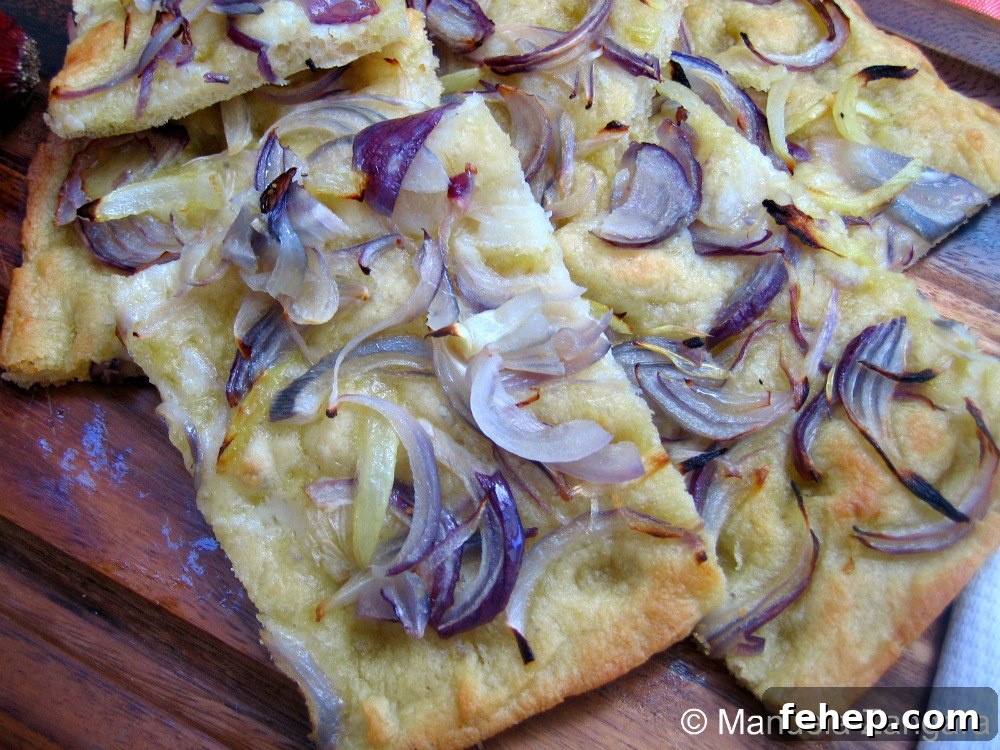
Onion Focaccia
I first shared a basic focaccia recipe and a version with olives, but this onion focaccia is my favourite. The combination of a soft, olive oil–rich focaccia topped with sweet, dressed onions is irresistible. The dough is the same as the basic focaccia, with the simple addition of onions that become richly fragrant during the final rise and bake. This recipe is part of a Regional Italian Recipe series highlighting Liguria, where focaccia is a beloved specialty. Follow these steps for authentic, delicious onion focaccia with clear, practical tips to ensure a tender crumb and a golden crust.
Recipe adapted from Viva la Focaccia.
Ingredients (makes 2 cookie sheets, about 22 x 32 cm each)
- 200 g lukewarm water
- 20 g extra virgin olive oil for the dough (plus more for the cookie sheets and surface)
- 7 g salt
- 3 g malt or ½ tsp honey
- 320 g plain (all-purpose) flour
- 6 g dry yeast dissolved in 1 tbsp warm water
- 1 onion per cookie sheet (red or white), thinly sliced and tossed with a pinch of salt and 1 tbsp extra virgin olive oil
Prepare the onions first: slice them thinly, season with a pinch of salt and 1 tablespoon of extra virgin olive oil per onion, then set aside while you make the dough. The lightly dressed onions will soften and caramelize slightly on the focaccia during the final rise and baking, adding sweetness and texture.
Method
1. In a stand mixer fitted with a dough hook (or in a large bowl if mixing by hand), combine the lukewarm water, 20 g olive oil, salt and the malt or honey. Mix briefly to incorporate.
2. Add half the flour and knead just until the ingredients begin to come together.
3. Dissolve the dry yeast in 1 tablespoon of warm water, then add it to the mixture.
4. Gradually add the remaining flour while kneading. Knead for about 15 minutes total until the dough is smooth, soft and slightly sticky. A longer knead develops the gluten and helps create a light, airy texture.
5. Transfer the dough to a lightly floured surface, cover with a clean tea towel and let it rest for 15 minutes. The dough should feel soft and tacky — this is normal.
6. Fold the dough over itself and gently flatten it, then repeat once more. Cover and rest another 15 minutes. These folds build structure without aggressive shaping.
7. Generously oil two cookie sheets (3 to 4 tablespoons of extra virgin olive oil across both pans). Divide the dough into two equal portions and place each portion on a sheet.
8. Turn each dough portion so all sides are coated in oil. This prevents a hard crust from forming and makes it easier to flatten later.
9. Let the dough rise in a warm, draft-free place for 1 hour. A convenient option is the oven turned off with only the oven light on to provide gentle warmth.
10. After the hour rise, gently flatten each dough piece with your hands. Press down rather than stretching the dough to preserve the gas pockets formed during fermentation.
11. Sprinkle three pinches of salt evenly across each focaccia and return the pans to the warm place for another 30 minutes of rising.
12. Remove the pans and pour 2–3 tablespoons of lukewarm water and 2–3 tablespoons of extra virgin olive oil over each focaccia surface. Massage this liquid gently into the dough with your hands, then use your fingertips to create the characteristic dimples across the surface.
13. Quickly arrange the dressed onion slices over the dough, pressing them lightly into the dimples so they stay in place. Return the focaccias to the warm place for a final 1-hour rise.
14. Preheat a fan-forced oven to 200–220°C (about 392–428°F). Bake the focaccias for 12–15 minutes, until they are golden on top and cooked through.
15. When they come out of the oven, transfer the focaccias to a wire rack to cool slightly and brush immediately with a little extra virgin olive oil for shine and flavor. Cut into pieces and serve warm or at room temperature.
Tips
- Use good quality extra virgin olive oil for both the dough and finishing — it makes a noticeable difference.
- Do not over-flour the work surface; the dough should remain slightly sticky to keep the focaccia light.
- If you prefer a thinner focaccia, use slightly larger baking sheets or stretch the dough a bit after the first rise.
Enjoy a slice of Ligurian-style onion focaccia alongside soups, salads, or simply on its own. The sweet, caramelized onions and olive oil–rich crumb make this bread a crowd-pleaser for any meal.