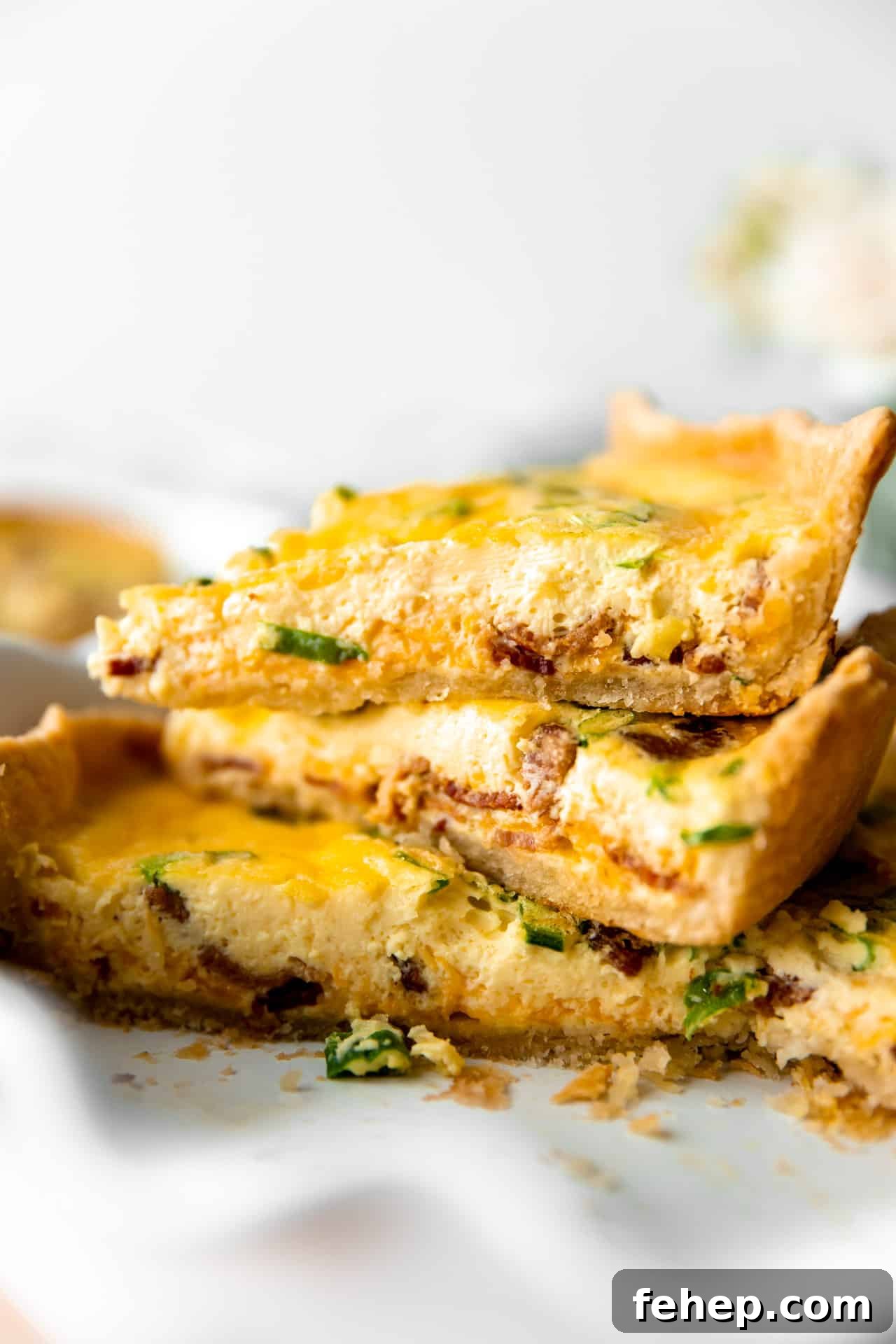
This basic quiche recipe is foolproof and flexible—perfect for any meal. Follow these clear steps to create a silky, creamy egg custard and a flaky crust, then customize with your favorite fillings. Below you’ll find essential tips, ingredient substitutions, and serving and storage guidance to ensure success every time.
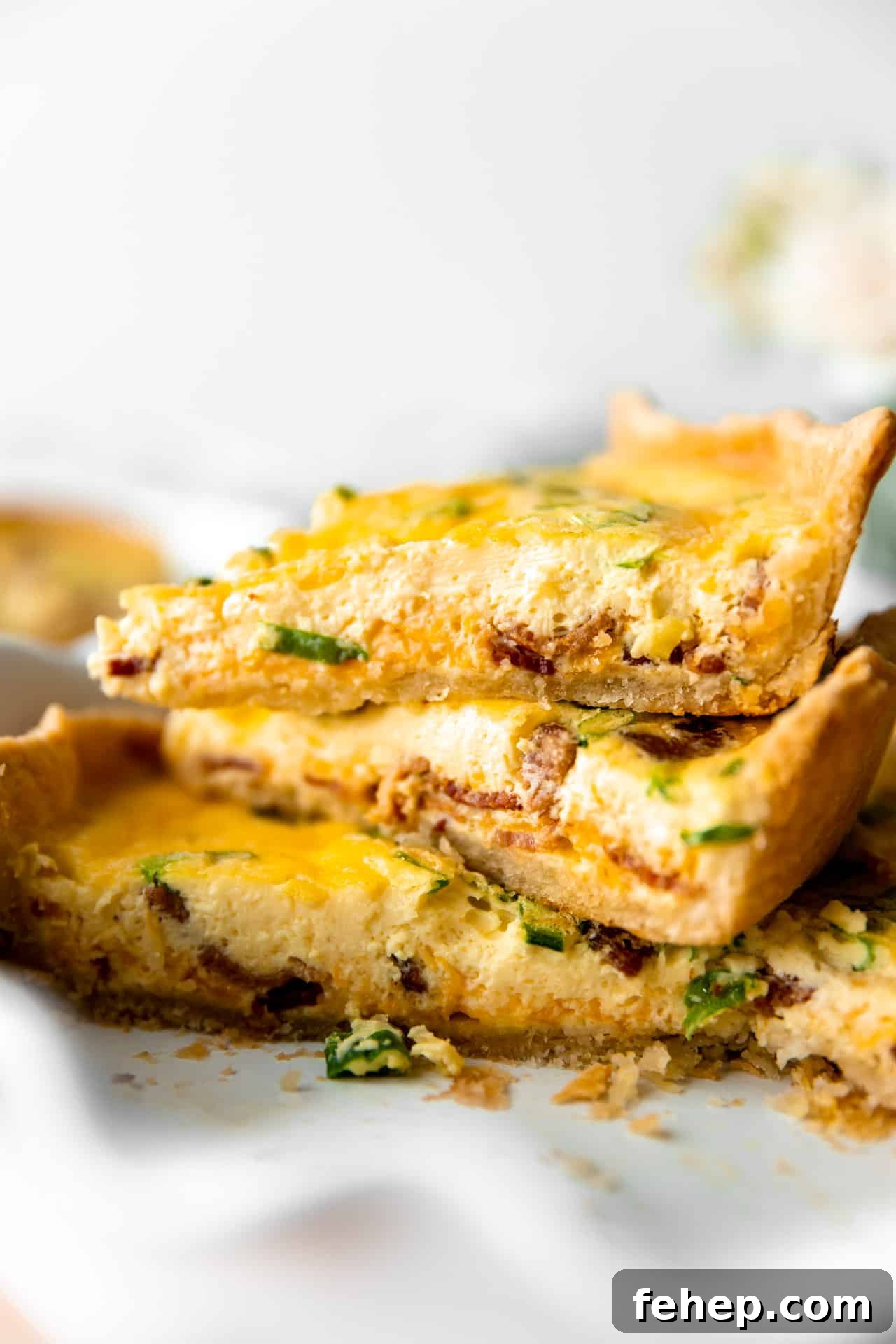
All About This Quiche Recipe
- Quiche is a savory custard made from eggs combined with milk and/or cream, baked in a pie crust and filled with meats, vegetables, cheeses, or seafood.
- Quiche works equally well for breakfast, brunch, lunch, or dinner and is easy to customize for any occasion.
- Quiche is best served at room temperature, though it can also be served warm or cold.
- This recipe gives you the technique and ratios to make any quiche variation using fillings you prefer.
Ingredients & Substitutions
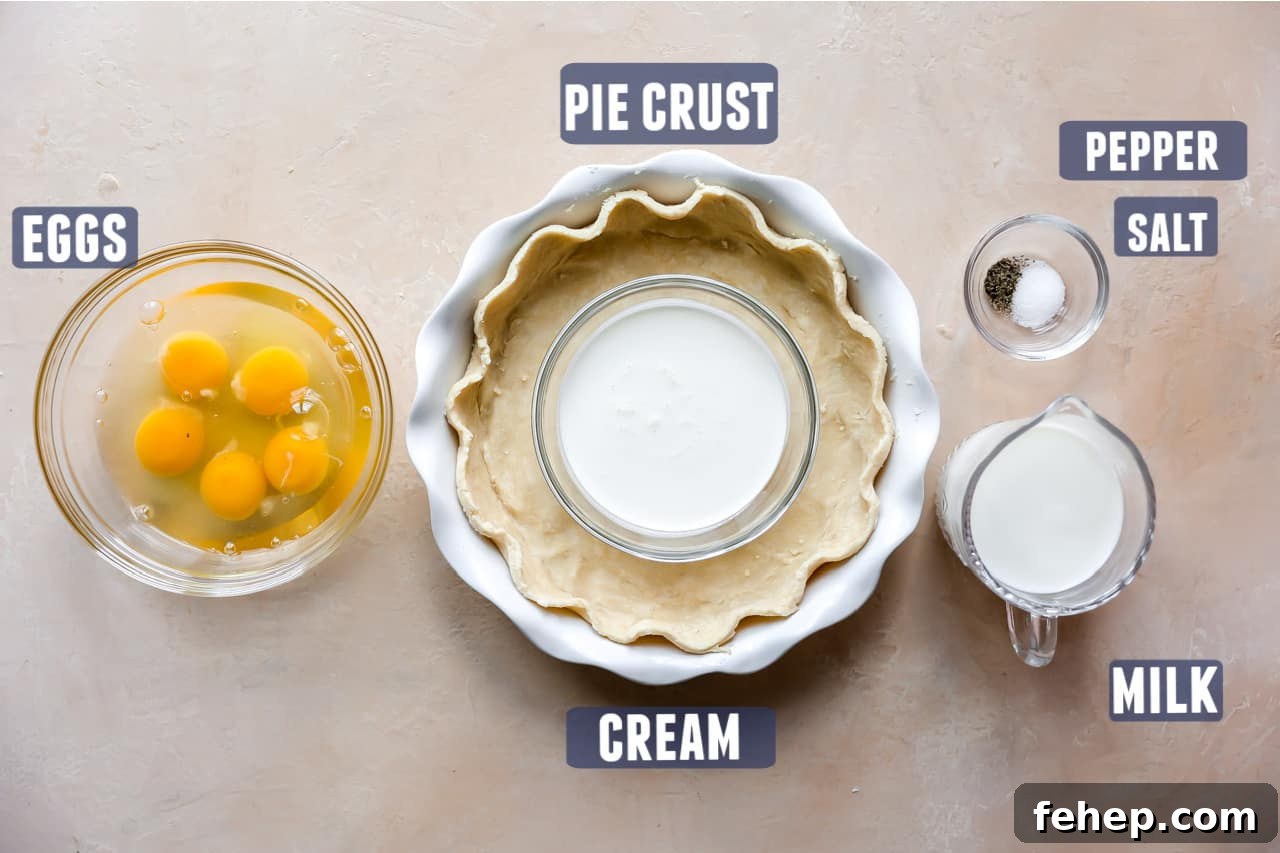
- Pie crust: Use one 9-inch pie crust. A homemade all-butter crust gives the best texture, but store-bought or frozen crusts work fine. For a crustless quiche, omit the crust and bake the filling in a greased dish.
- Eggs: The recipe uses large eggs. The method relies on volume ratios, so if you use a different size, measure liquid volume to keep the correct ratio.
- Milk & cream: A mix of milk and heavy cream yields the creamiest custard. You can use only milk to reduce fat, but expect a lighter texture.
How to Make Quiche
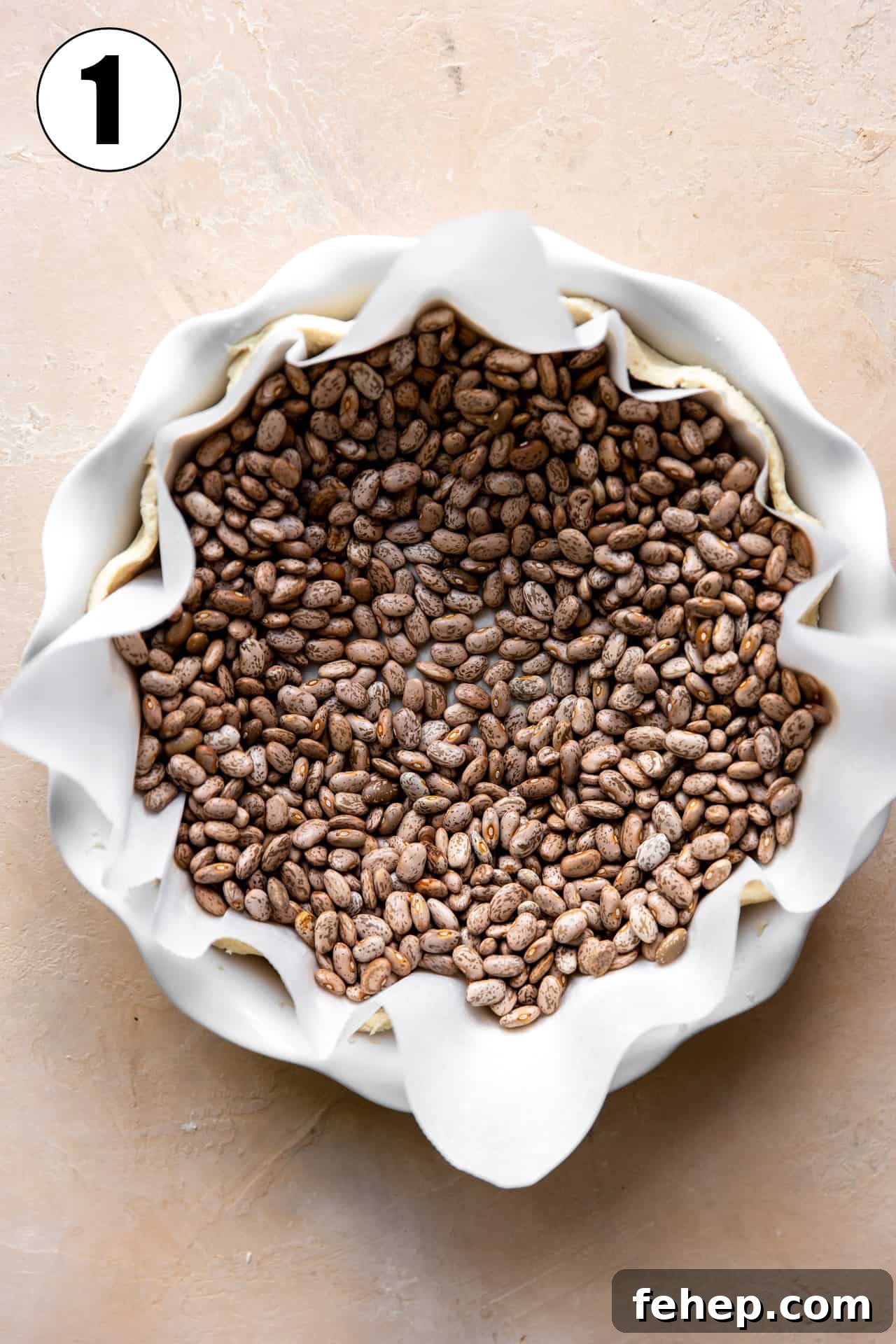
Blind-bake the pie crust. To avoid a soggy bottom, line the fitted crust with parchment and fill with pie weights or dry beans. Bake until the crust is set, remove weights, then bake a few more minutes until golden. Let cool.
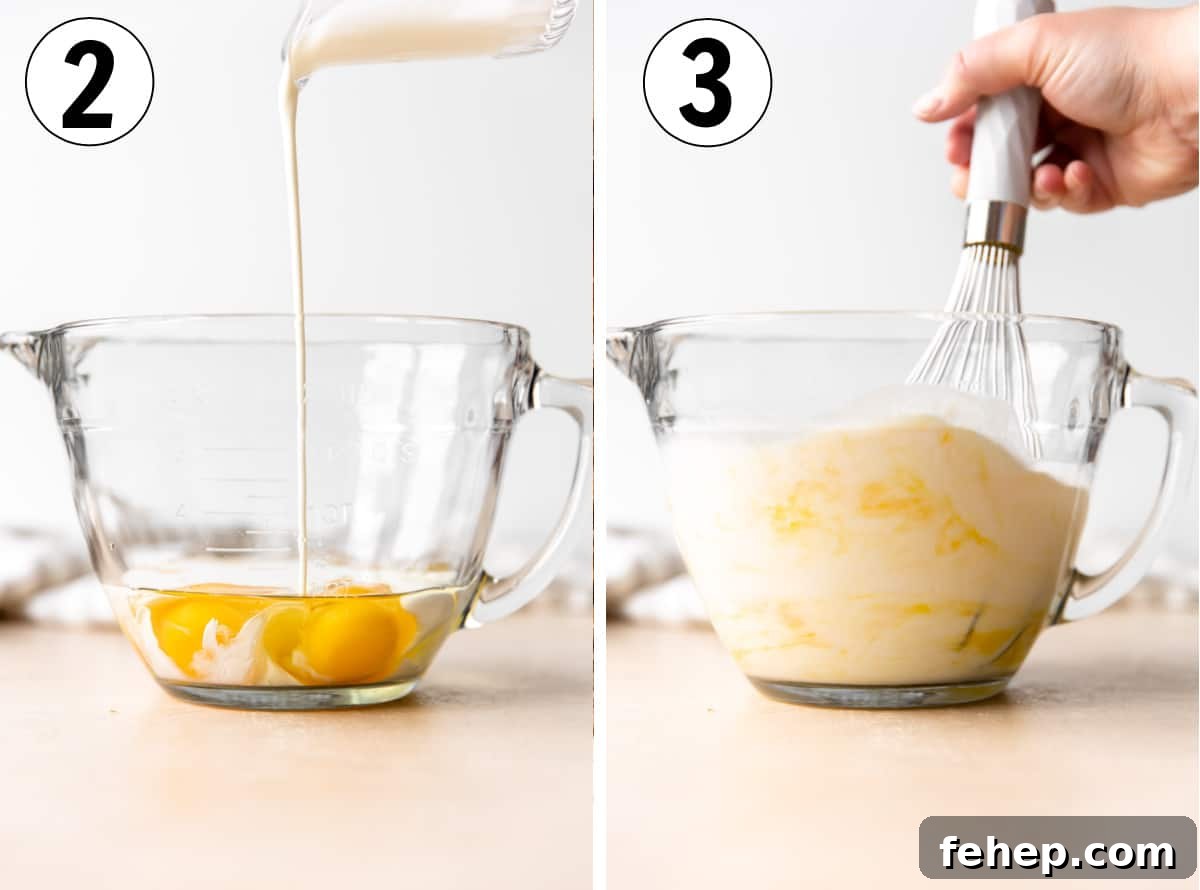
Measure eggs and liquids. For a consistent custard, use the ratio: for every 1 egg, use 1/2 cup total liquid (egg + milk/cream). The easiest method is to crack eggs into a large measuring cup, then add milk and cream until the total volume equals the target.
Mix gently. Whisk or use a hand mixer briefly to combine eggs, milk, and cream into a smooth, lump-free mixture. Avoid whipping too much air—large bubbles will bake into the top of the quiche.
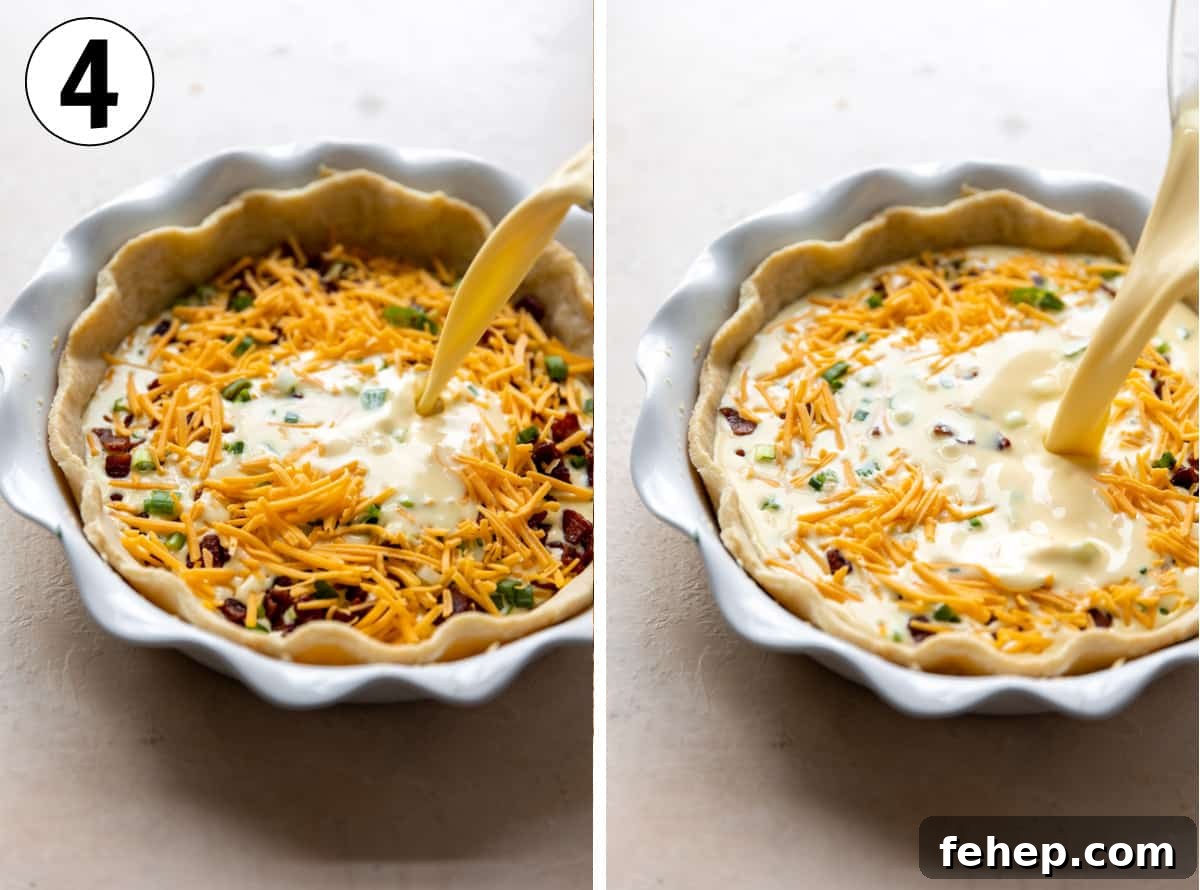
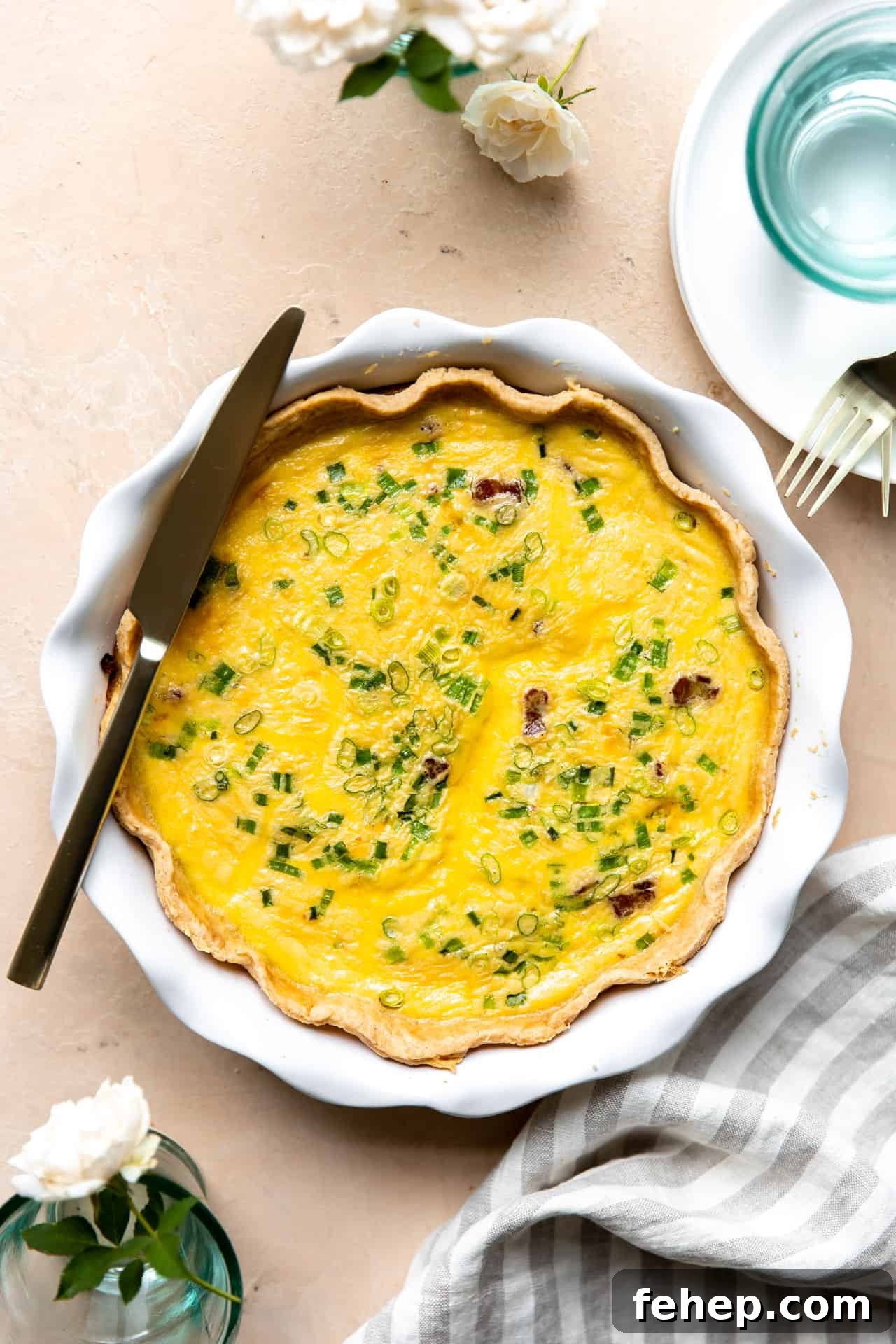
Assemble and bake. Fill the prebaked crust with up to 2 cups of prepared fillings, then pour the smooth egg mixture over the top. Bake at 350°F (175°C) for 45–50 minutes; the center should be slightly wobbly when done. Cool to room temperature before slicing for best texture.
Expert Tips
- Blind baking: Don’t poke holes in the crust—this can let custard leak. Use pie weights or dry beans if you don’t have weights.
- Follow the ratio: For each egg, aim for a total of 1/2 cup of liquid (egg + milk/cream). For example, 5 eggs = 2 1/2 cups total liquid.
- Mixing: Use a hand mixer or vigorous whisking to combine ingredients until smooth, but avoid creating foam or excess air.
Fillings
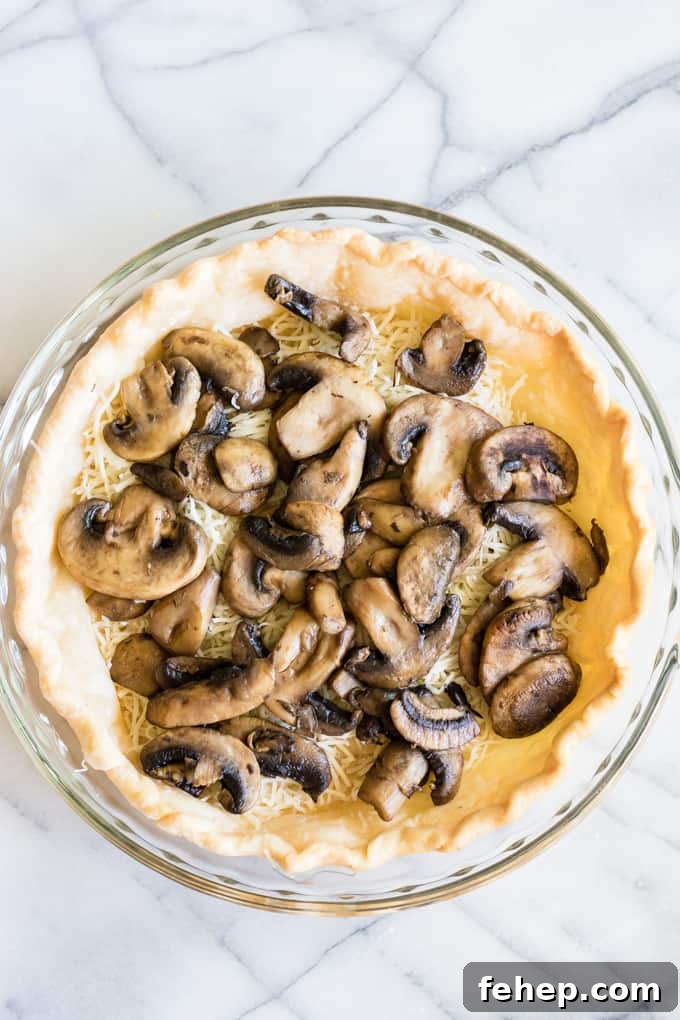
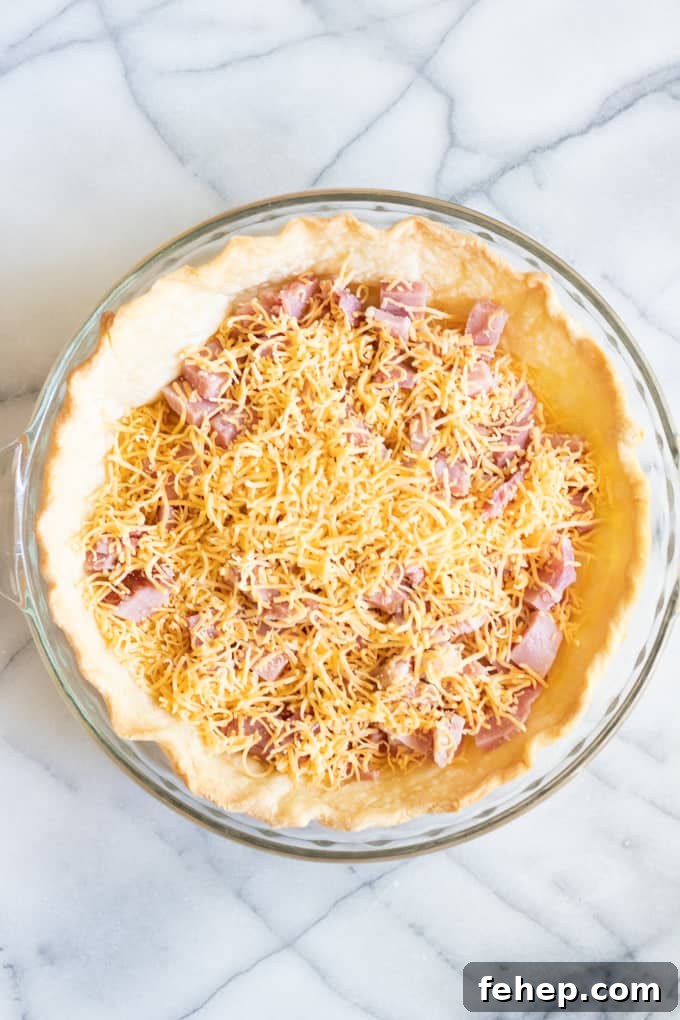
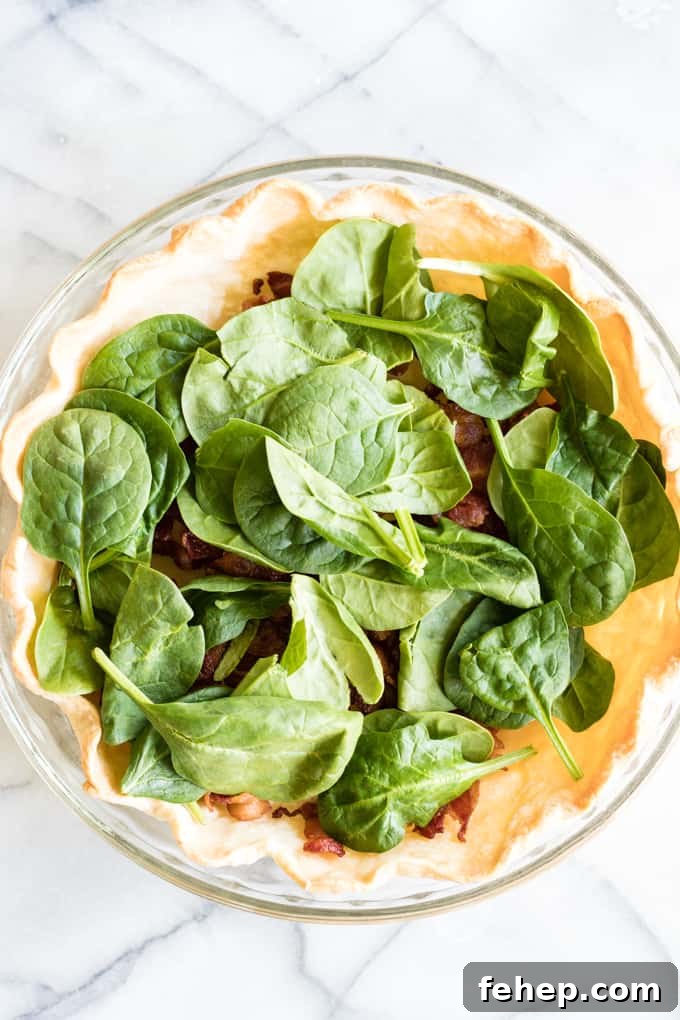
- Meats: Pre-cook and pat dry (bacon, sausage, ham, ground beef) to avoid excess grease in the custard.
- Vegetables: Sauté and drain most vegetables to remove moisture. Tomatoes and fresh spinach can be added raw if desired.
- Seafood: Use fully cooked, drained seafood like crab or shrimp.
- Cheeses: Good options include cheddar, Swiss, Gruyère, feta, and goat cheese. Limit cheese to about 1 cup for balance.
Favorite Filling Combinations
- Ham and cheddar
- Spinach, sun-dried tomatoes, and goat cheese
- Crab and sautéed mushrooms
Quiche FAQs
Yes. Blind-bake the crust up to 2 days ahead and store covered at room temperature. You can bake and cool a finished quiche up to 3 days ahead and keep it refrigerated.
Cover with foil and reheat in a 325°F (160°C) oven for about 15 minutes, until warmed through.
Yes. Cool completely, wrap tightly in plastic and foil or place in a freezer bag, and freeze up to 3 months. Thaw, then reheat covered at 350°F (175°C) until warmed.
Yes. Keep the egg-to-liquid ratio the same and pour the mixture over fillings in a greased dish. Bake 45–50 minutes until set with a slightly wobbly center.
Whole milk yields a lighter custard; combining milk with heavy cream produces a richer, silkier texture.
Recipe Details
Basic Quiche Recipe (Using Any Filling of Your Choice!)
Prep: 10 mins • Cook: 1 hr 15 mins • Total: 1 hr 25 mins • Servings: 8
Ingredients
- 1 pie crust
- 5 large eggs
- ½ cup heavy cream
- ¾ cup milk (adjust with notes on ratios)
- ¼ tsp salt
- ¼ tsp ground black pepper
- Fillings of choice (up to 2 cups)
Instructions
- Prepare crust: Preheat oven to 350°F. Fit pie crust into a 9-inch pie dish, trim and flute the edges.
- Blind bake: Line crust with parchment and fill with weights or dry beans. Bake about 20 minutes, remove weights, then bake 10 more minutes until golden. Cool.
- Prepare custard: Crack eggs into a large measuring cup. Add heavy cream and milk so total volume of eggs + cream + milk equals 2 1/2 cups (600 ml). Season with salt and pepper.
- Mix: Combine gently with a hand mixer or whisk until smooth—avoid foam.
- Assemble: Scatter fillings in the prebaked crust, then pour the egg mixture over the top.
- Bake: Bake at 350°F for 45–50 minutes. The center should remain slightly wobbly.
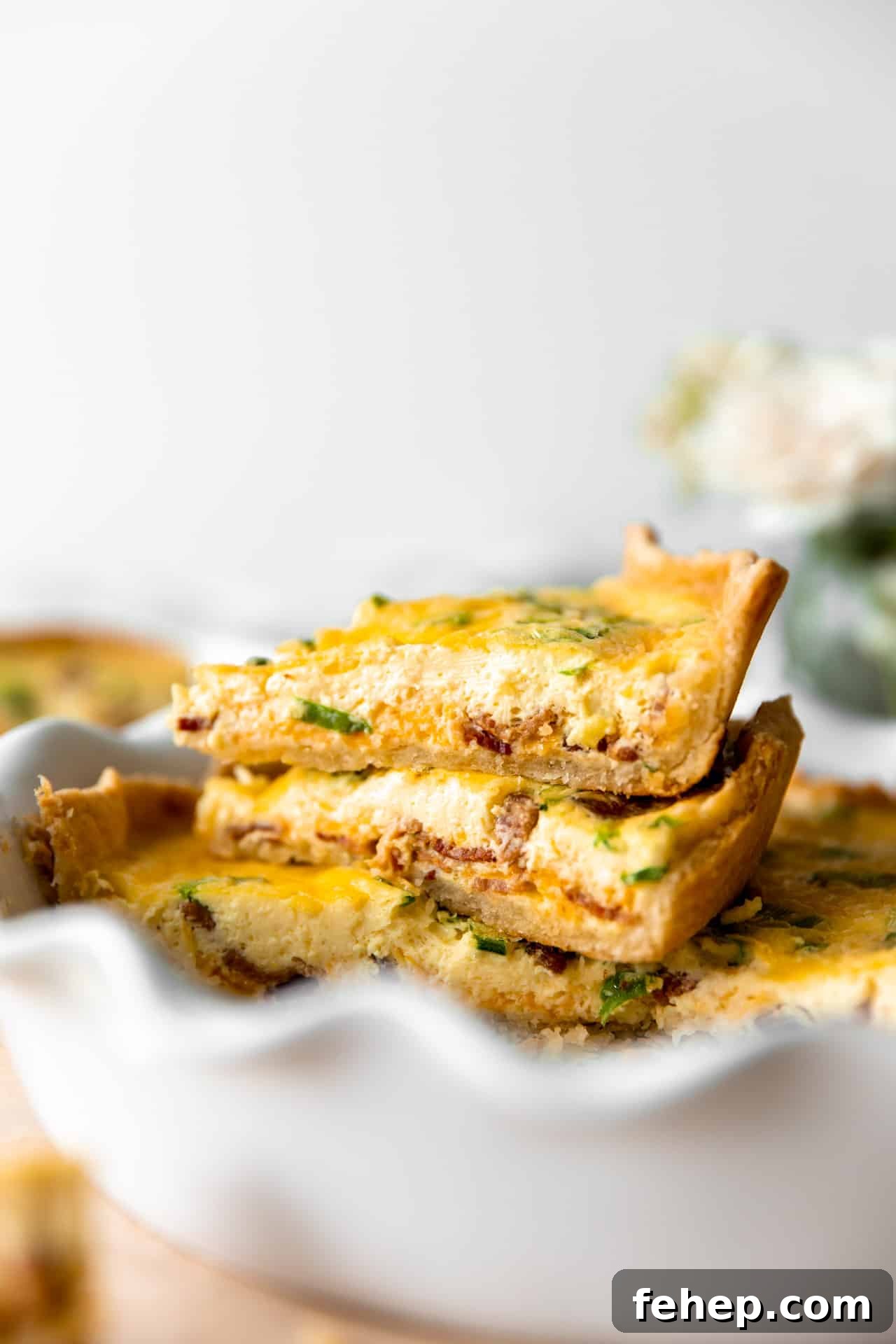
- Cool: Let the quiche rest about 20 minutes before slicing. Serve warm, room temperature, or chilled.
Notes
- Ratio: Aim for 1/2 cup (120 ml) of liquid per egg, counting both eggs and milk/cream. For 5 eggs, total volume should be 2 1/2 cups (600 ml).
- Milk & cream: The combination yields the best texture; milk-only is acceptable if preferred.
- Fillings: Use up to 2 cups total. Pre-cook and drain meats; sauté and drain most vegetables. Tomatoes and fresh spinach can be added raw.
- Cheese: Up to 1 cup. Try cheddar, feta, goat cheese, Swiss, or Gruyère.
- Make-ahead: Blind-bake the crust up to 2 days ahead. Fully baked quiche keeps 3 days refrigerated.
- Freezing: Freeze wrapped for up to 3 months. Reheat covered at 350°F until warmed through.
- Reheating: Reheat covered at 325°F for about 15 minutes.
- Crustless: Use the same ratios and bake in a greased dish 45–50 minutes until just set.
Nutrition
Serving: 1 • Calories: 202 kcal • Carbohydrates: 12 g • Protein: 6 g • Fat: 14 g • Saturated fat: 6 g • Cholesterol: 125 mg • Sodium: 214 mg (approximate; varies with fillings)
Nutrition information is an approximation.
This recipe was first published May 16, 2018 and updated July 2, 2021 with new photos and information; the method remains the same.
Photography by @KJandCompany.co