Bright summery colours always catch my eye—marketers know exactly what they’re doing. In truth, I’m drawn to cool tones like blues and greens as well. The common thread is simple: I love colour. Lots of it. Admittedly, that tendency doesn’t help keep our home minimal, as I’m occasionally reminded, but I’m working on balance.
Once I asked my talented artist friend Lena which colours she preferred. She answered, “I don’t know Béa, I’m an artist, so I just love all colours.” Looking at her vibrant paintings, her response was obvious. Colour has been a constant companion for both of us—right down to something as small as peppercorns.
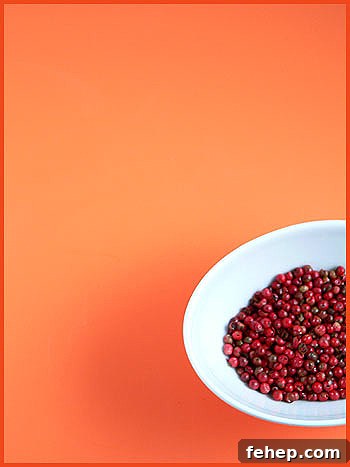
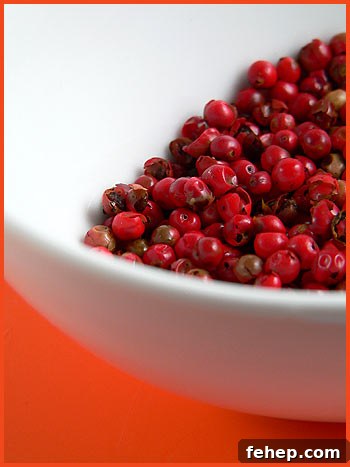
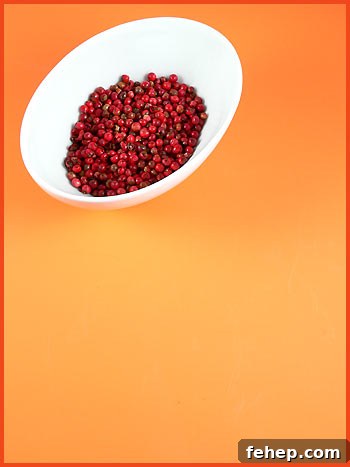
The story of pink peppercorns (la baie rose de Bourbon — Schinus terebinthifolia)
- Imagine a black peppercorn sitting on a grocery shelf. I could pass it by for hours and barely notice.
- Now imagine a pink peppercorn on that same shelf. I spot it the moment I walk in.
Its colour—pink or reddish—makes all the difference. A hint of colour directs my attention like a compass needle pulled toward a magnet. That’s how I fell for pink peppercorns.
Pink peppercorns are the dried berries of a tree commonly referred to as the pink pepper or Peruvian pepper tree. They’re often grown in Madagascar and frequently pass through France during distribution, which helps explain why they can be pricier than everyday spices. Beyond their striking hue, they’re prized in cooking for a distinctive flavor profile that blends peppery heat with anise-like and sweet notes. They pair beautifully with sauces, meat and fish dishes, and even fruits such as melon or other tropical varieties.
Finding them wasn’t always easy. After calling several local suppliers, I felt like I’d hit the jackpot when one sales clerk finally said, “Pink peppercorns? Hold on… yes, we have some!” I practically jumped into my car and drove the two miles to collect them. The real challenge had been terminology—there are at least five names floating around for this spice. Some vendors call them red peppercorns, others pink peppercorns, and you may also see names like pepper rosé or Peruvian pepper tree. My attempts to ask for “baies roses” or “red pepper” sometimes led to blank looks, which made the search longer than it needed to be.
From now on, I’ll simply call them my pink peppercorns.
What will I do with them? I’ll show you soon.