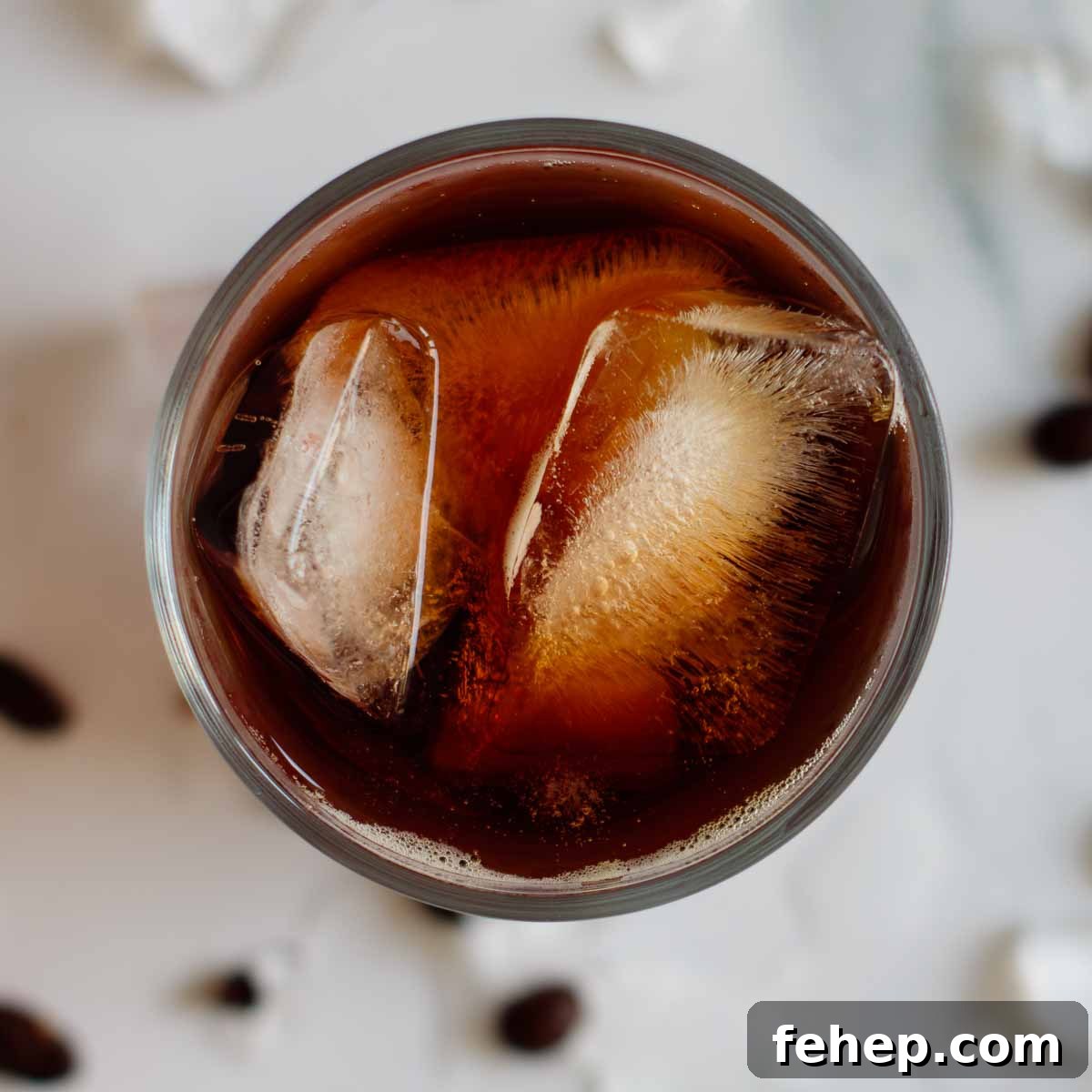
Stop buying and start making cold brew coffee concentrate at home. Follow these tips and ground-to-water ratios to avoid bitter or watery results and enjoy smooth, refreshing cold brew all week.
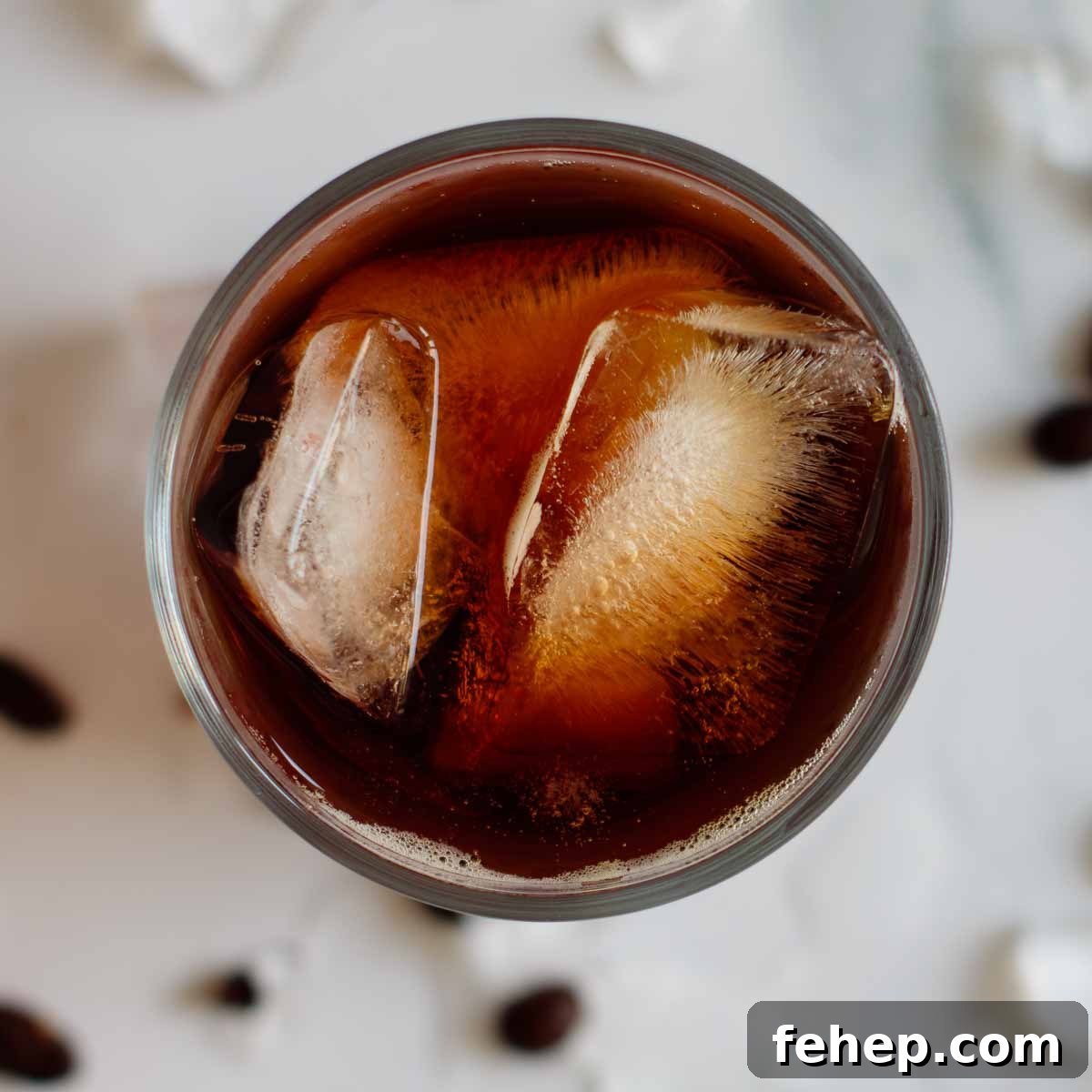
Why you should make cold brew
- Perfect for hot summer mornings;
- Saves money compared to buying ready-made cold brew;
- Make a batch on Sunday and enjoy it all week;
- Convenient for busy mornings;
- Gentler on the stomach than many hot-brewed coffees;
- Smoother, less acidic and less bitter than hot-brewed coffee.
Cold brew concentrate is simple to make. With the right grind, ratio and timing, you can match or exceed the quality of store-bought versions.
Cold brew versus iced coffee
Iced coffee is brewed with hot water and then chilled, often diluted by ice. Cold brew is made by steeping coffee in cold or room-temperature water for an extended time—typically 12 to 20 hours—so it must be prepared in advance. The result is a smoother, less acidic and less bitter cup than iced coffee, which tastes like regular coffee served cold.
Is it stronger than regular coffee?
Cold brew concentrate often feels stronger because it’s brewed at a higher coffee-to-water ratio. Drinking the concentrate straight will deliver more caffeine than a typical cup of hot-brewed coffee. Once diluted—commonly 1:1 with water or milk—a serving may contain equal or even less caffeine than regular coffee, depending on how you dilute it.
Steps for making it
This is an easy recipe once you know the right ratios and steep time. You don’t need special skills or equipment.
- Grind your coffee. Use coarse or medium-coarse grounds for best results.
- Combine grounds and cold water. Use filtered water if your tap water has strong chlorine or off-flavors.
- Store in the fridge. Steep for 12–18 hours; I prefer 14–16 hours.
- Strain the concentrate. Use a coffee filter, fine mesh sieve, cheesecloth, nut milk bag, or brew in a French press and plunge when done.
That’s it—then enjoy. Below are tips to improve the final cup and common ratios and timings.

How to strain your cold brew
Common methods I use:
- Paper coffee filter placed in a dripper or over a fine-mesh sieve;
- French press: steep directly and plunge at the end (this can yield a slightly cloudier brew);
- Cheesecloth or a nut milk bag if filters clog or tear.
If a paper filter tears or the flow becomes very slow, replace it. When using a dripper or sieve, place it over a clean jar or measuring cup and pour the concentrate through slowly.
Ground-to-water ratio
Adjust the ratio to your taste. For a concentrated cold brew, a 1:4 coffee-to-water ratio (1 part coffee to 4 parts water) produces a strong concentrate ideal for ice or milk-based drinks. If you prefer to drink it undiluted, try a weaker ratio—around 1:7 (coffee to water).
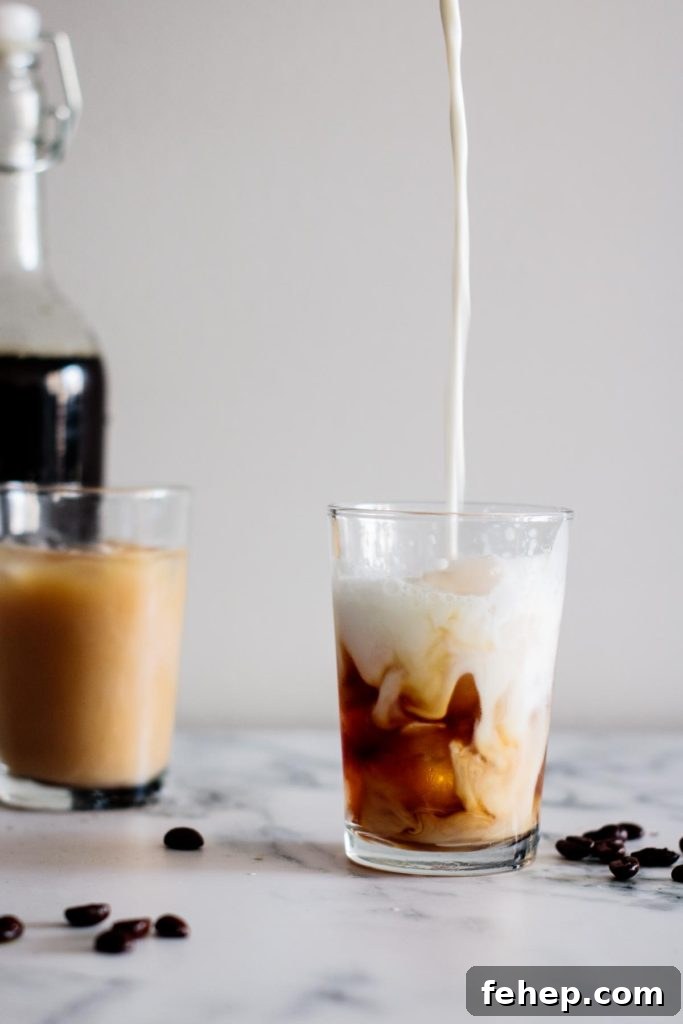
To serve, a common dilution is 1:1 (one part concentrate to one part water or milk). For a bolder drink, pour concentrate over ice without additional water.
How long you should brew it
For home brewing, 14–16 hours in the refrigerator gives excellent results. Avoid brewing longer than 18–20 hours, which can cause over-extraction and produce off-flavors described as harsh or “whiskey-like.” If you steep at room temperature, reduce the time—about 7–8 hours—since extraction happens faster outside the fridge.
If this is your first batch, aim for 14–16 hours for a balanced cup.
Recipes where you can use cold brew
-
Coffee Lemonade (Sweet and Refreshing)
-
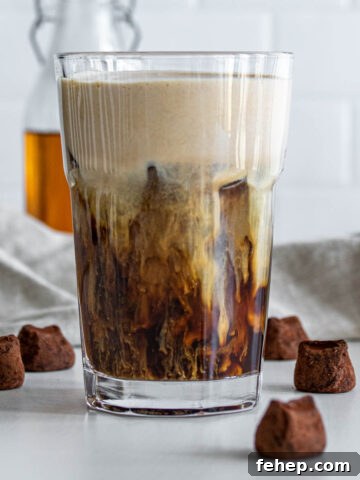
Chocolate Cream Cold Brew (Copycat)
-
Vanilla Sweet Cream Cold Brew
-
Dirty Matcha Coffee Latte



Tips for achieving the best result
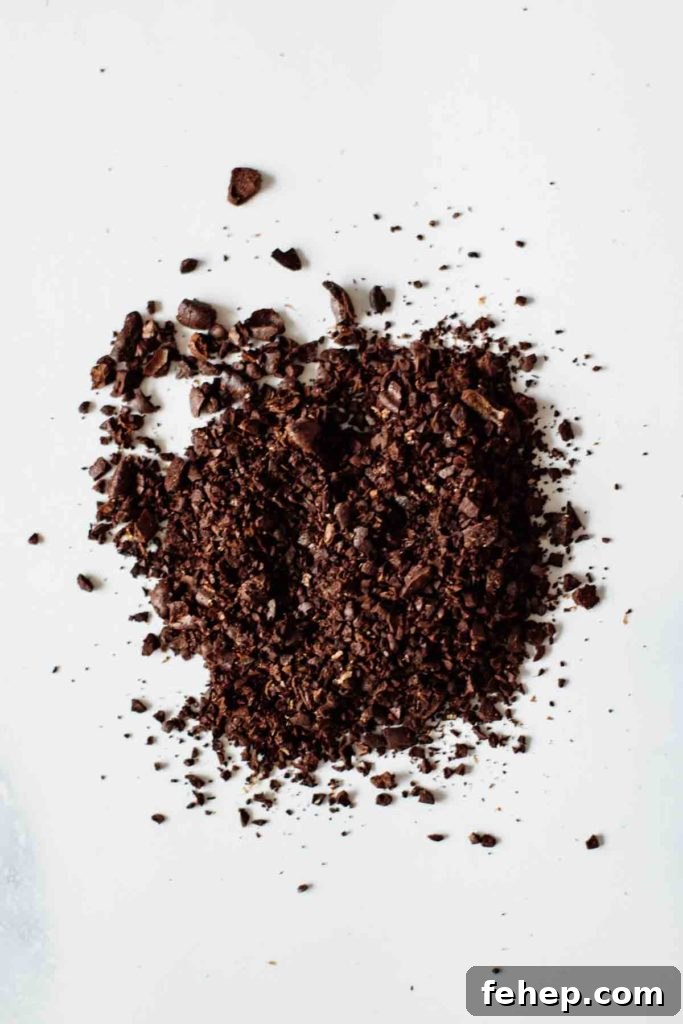
Grind matters. Use coarse or medium-coarse grounds. Fine grinds over-extract and create bitterness. Coarse resembles sea salt; medium-coarse is like rough sand.
Grind fresh when possible. Coffee loses aroma quickly after grinding, so grinding just before brewing improves flavor. If you plan to invest in equipment, choose a burr grinder for consistent particle size; blade grinders are less consistent.
Choose the right roast. Light and medium roasts yield fruitier, brighter cold brews; dark roasts produce fuller, more chocolatey and slightly more bitter flavors.
Brew in the fridge for a cleaner flavor. Brewing cold in the refrigerator typically tastes better and reduces the risk of unwanted flavors. If you brew at room temperature, shorten steep time.
Use drinkable water. If your tap water is heavily chlorinated or tastes off, filter it before brewing. Water quality greatly affects the final cup.
Store airtight. Keep concentrate in a sealed glass jar in the fridge to prevent it absorbing odors from other foods.
Questions you’ve asked
Can cold brew go bad?
Properly stored in the fridge, cold brew concentrate stays good for about 7–10 days.
Can cold brew be left out of the fridge?
Yes, but it will spoil faster. Expect flavor degradation after 3–4 days at room temperature.
My cold brew tastes bitter!
Likely causes: too long a brew time (over-extraction), grind too fine, or using a dark roast. Shorten steep time, use coarser grounds, or switch roasts.
My cold brew is sour!
Sourness often indicates under-extraction—steep longer.
My cold brew tastes like whiskey!
This can result from brewing too long (over 18–20 hours) and over-extracting. Stick to 14–16 hours for best results.
My cold brew is cloudy!
Cloudiness can happen with fine grounds or if strained only through a French press. Use a paper filter or finer straining method for a clearer concentrate.
Can I make it with instant coffee?
No. Instant coffee won’t produce cold brew concentrate. You can make iced coffee with instant coffee, but not cold brew.
Can I drink it hot?
Yes. Heat it gently to your preferred temperature; reheating a cup in the microwave for about 1 minute usually works.
Is it worth the wait?
Definitely. The flavor and convenience make it worthwhile.


Recipe: Cold Brew Coffee Concentrate

Servings: about 10 | Prep: 1 min | Steep: 14 hrs
Ingredients
- 4 cups water
- 1 cup coarse or medium-coarse ground coffee
Instructions
- Grind coffee to a coarse or medium-coarse texture. Freshly ground beans yield the best flavor.
- Use water with no strong chlorine taste. Filter if necessary.
- In a mason jar or other lidded glass container, combine coffee and water. Stir gently or close and shake to combine.
- Place in the fridge and steep for 12–18 hours. For home batches, 14–16 hours is ideal. Avoid brewing beyond 18–20 hours to prevent over-extraction.
- Strain the concentrate through a paper filter in a dripper, a fine-mesh sieve lined with a filter, cheesecloth, nut milk bag, or by plunging a French press. If clarity matters, use a paper filter to remove fine particulates.
- Store the strained concentrate in a sealed glass container in the fridge.
- To serve, fill a glass half with ice and water (or milk) if you prefer diluted coffee, then top with an equal part of concentrate (1:1). For a stronger drink, use less water or pour concentrate over ice undiluted.
Notes
I get the best results at 14 hours. If you brew at room temperature, halve the steep time to about 7–8 hours. When serving, substitute water with milk or creamer and add sweetener if desired.