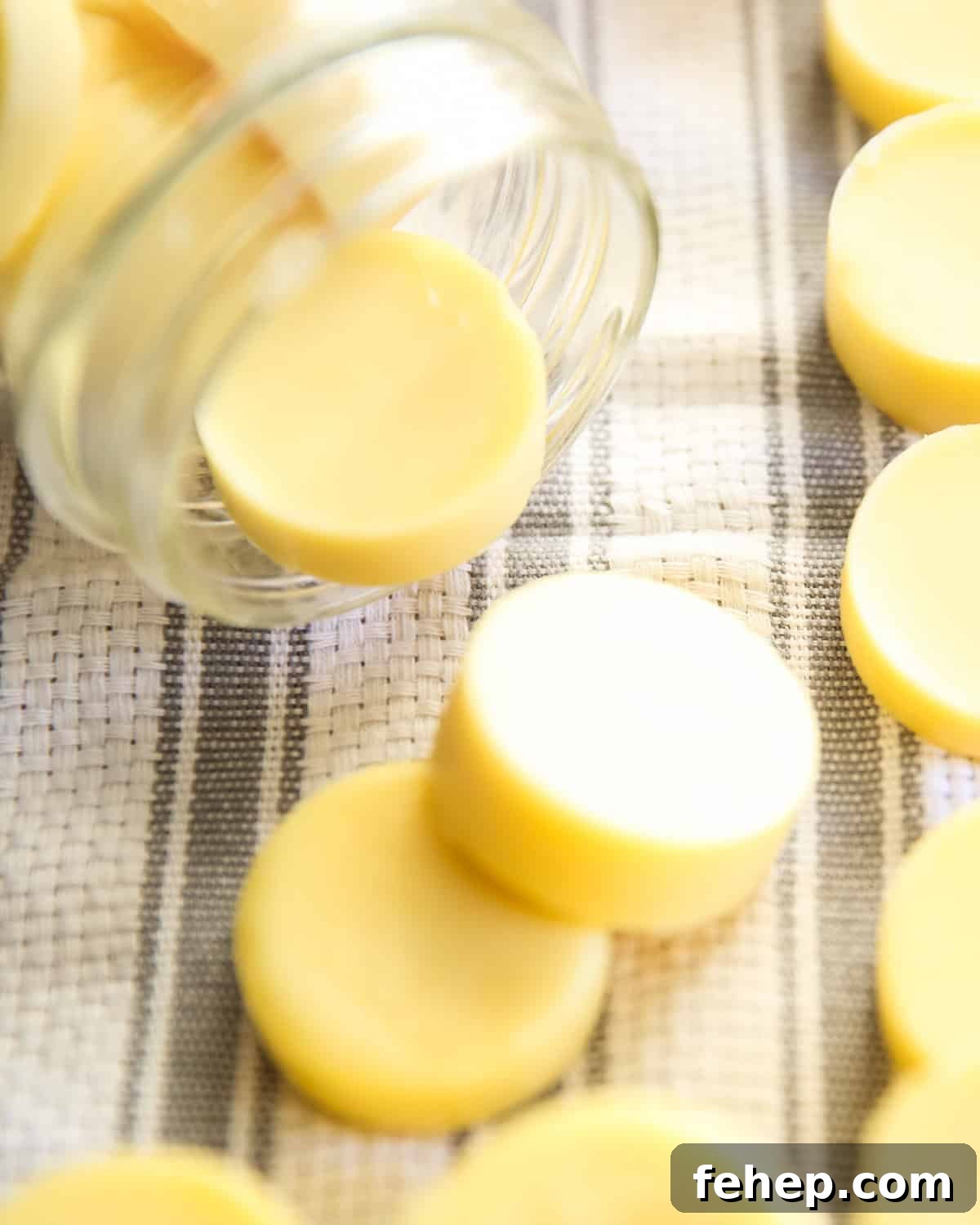
Learn how to make simple, effective homemade lotion bars scented with essential oils. These nourishing, moisturizing bars are made from natural ingredients and come together in under 30 minutes. They hold their shape, melt slightly against warm skin, and are ideal for dry areas like knees, elbows, feet, and hands. Compact and spill-free, they’re great for travel and make thoughtful handmade gifts.
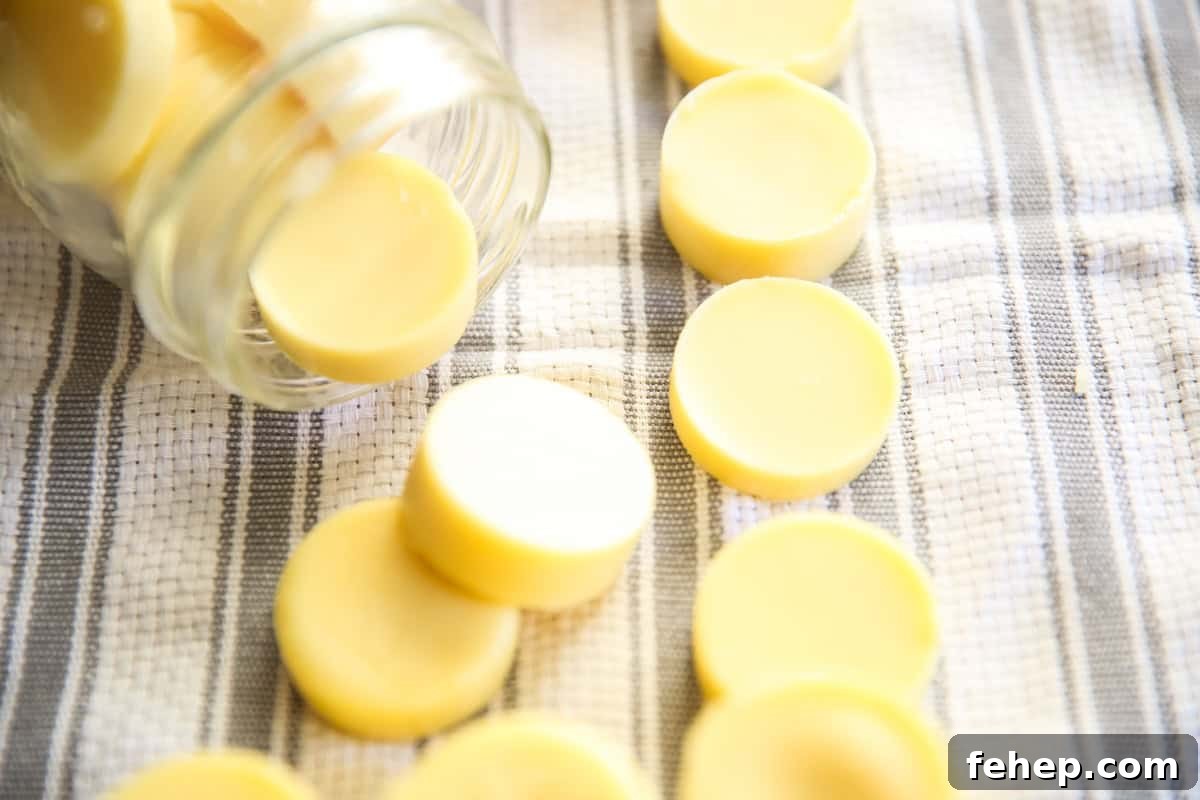
Many readers asked for an easy lotion bar recipe, so I adapted ingredients I already use in my whipped body butter to create these bars. They use simple, familiar ingredients—coconut oil, cocoa or shea butter, and beeswax—that provide soothing hydration and a silky finish. With a little beeswax the bars stay solid, but they soften enough when applied to warm skin to spread easily.
These lotion bars are especially useful in colder months to combat chapped skin, but they also work well after sun exposure in summer. They’re gentle enough for most of the family and can be customized with your favorite essential oil blends for scent.
Why You’ll Love This Recipe
- Quick and easy: melt, stir, and pour. You’ll have a batch of bars in minutes.
- Customizable: choose different essential oil combinations and fun molds to create unique bars for yourself or as gifts.
- Practical gift: homemade lotion bars are attractive, useful, and easy to wrap or package.
- Natural ingredients: simple ingredients deliver soft, silky skin without unnecessary additives.
- Travel-friendly: solid bars won’t leak in your bag, making them ideal for packing alongside other solid toiletries.
What goes into this Recipe
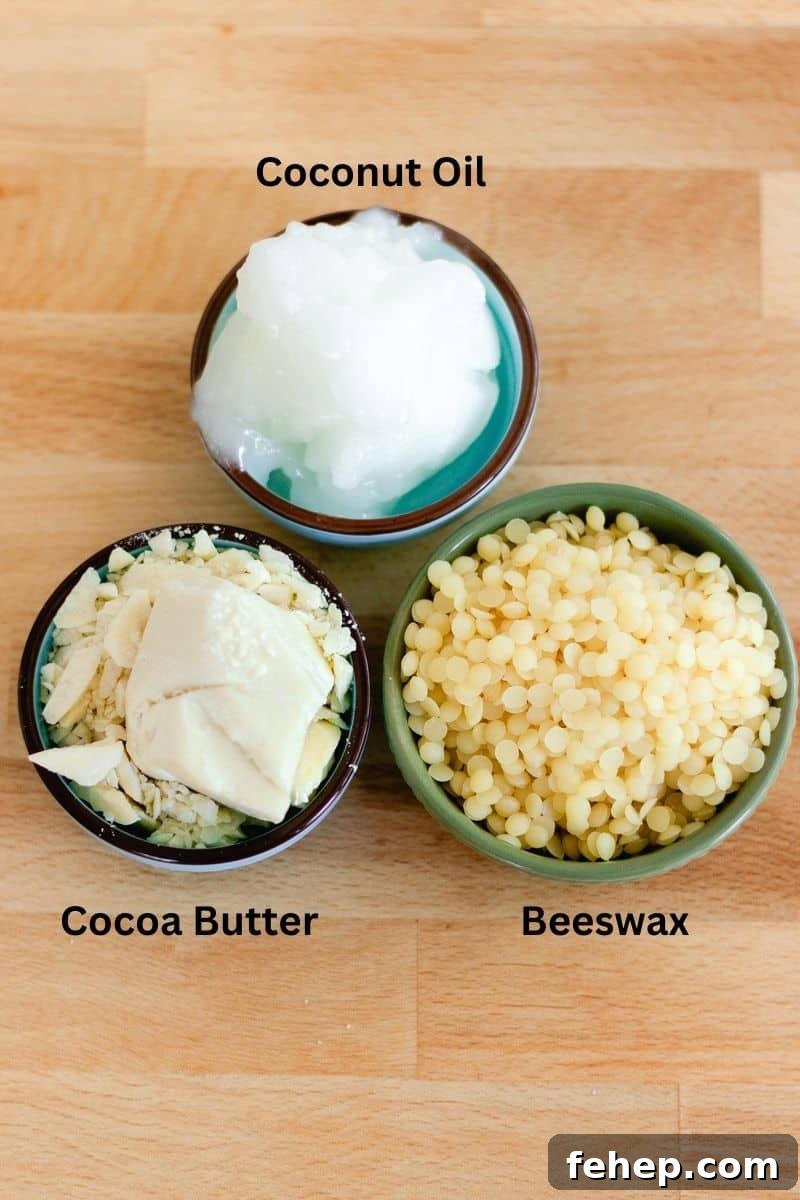
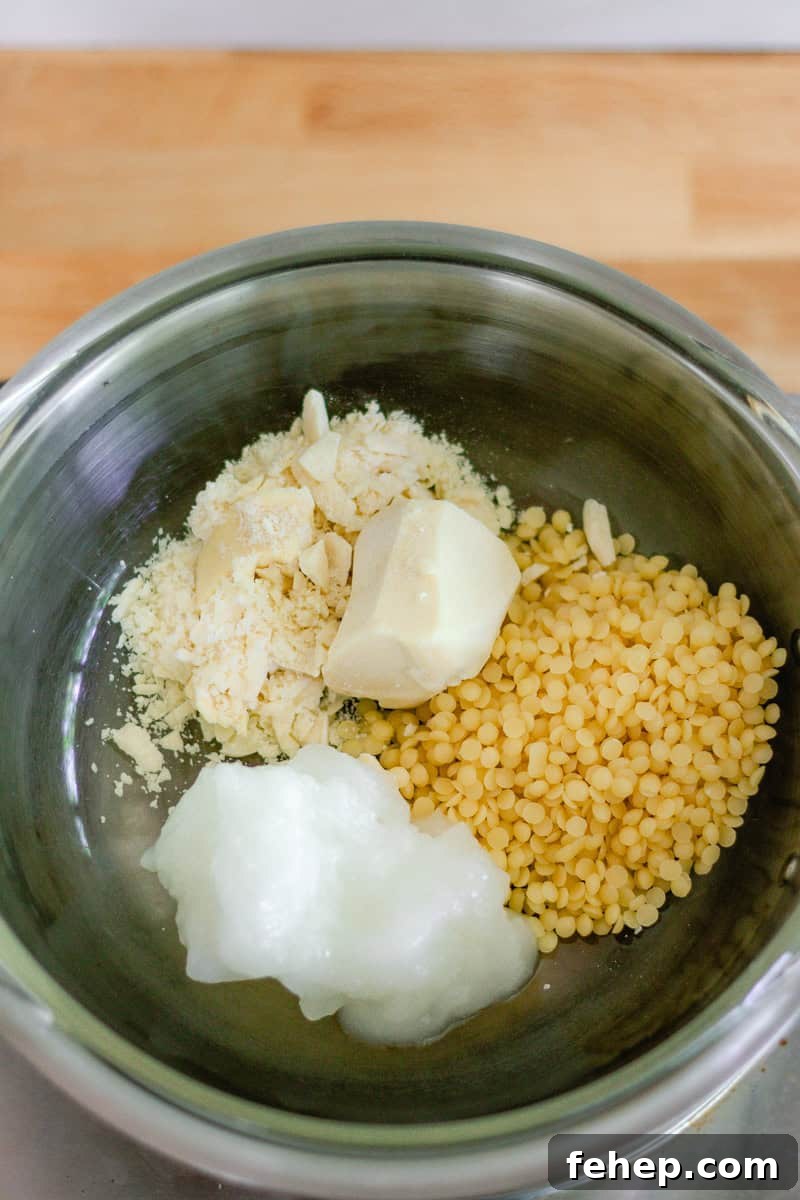
- Coconut oil: nourishing and highly moisturizing. Use regular coconut oil (not fractionated).
- Cocoa butter or shea butter: cocoa butter creates firmer bars; shea makes them slightly softer. You can blend them if you like.
- Beeswax: helps the bars hold their shape. Pellets melt more easily than a block.
- Essential oils (optional): add scent and aromatherapeutic benefits. Choose blends that suit your preference.
- Silicone molds or metal tins for shaping the bars.
How to Make These Homemade Lotion Bars
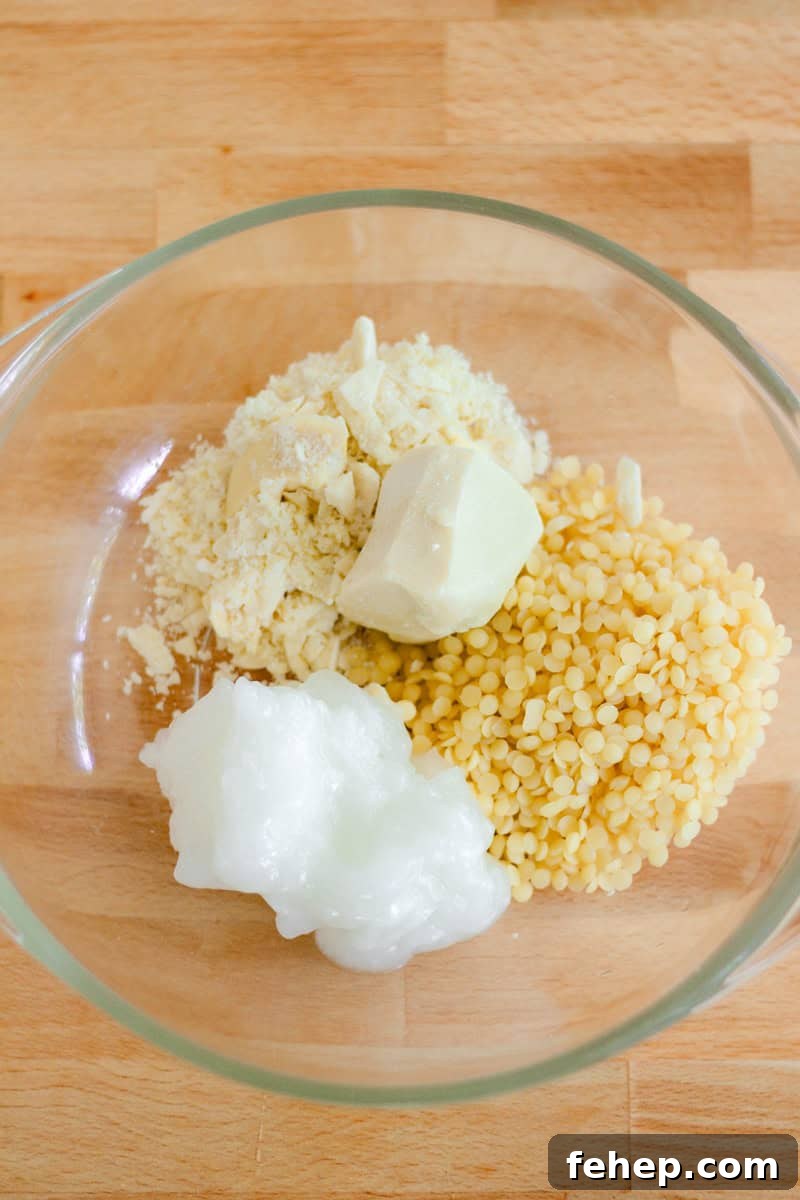
Step 1. Combine the coconut oil, cocoa or shea butter, and beeswax in a double boiler or place a heatproof glass bowl over a pot of simmering water.
Step 2. Heat gently until everything is fully melted. Remove the bowl from the heat.
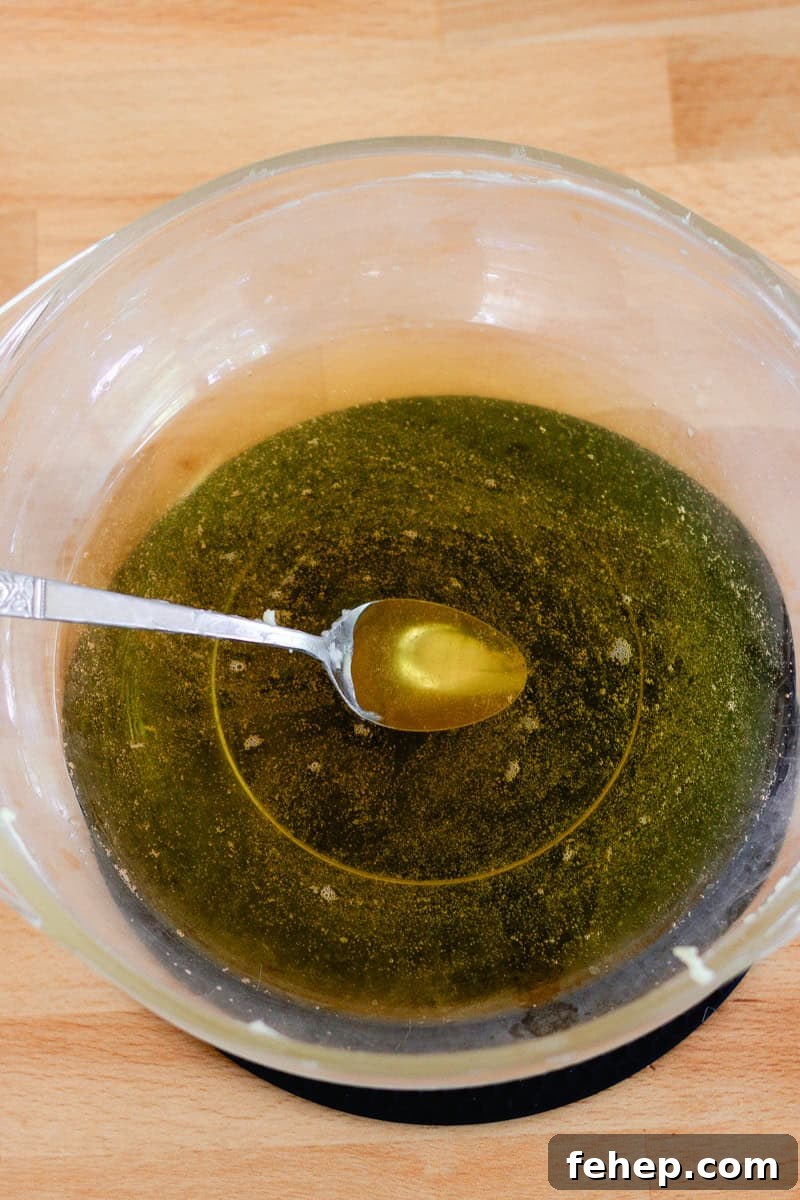
Step 3. Let the mixture cool for a minute, then stir in essential oils if using.
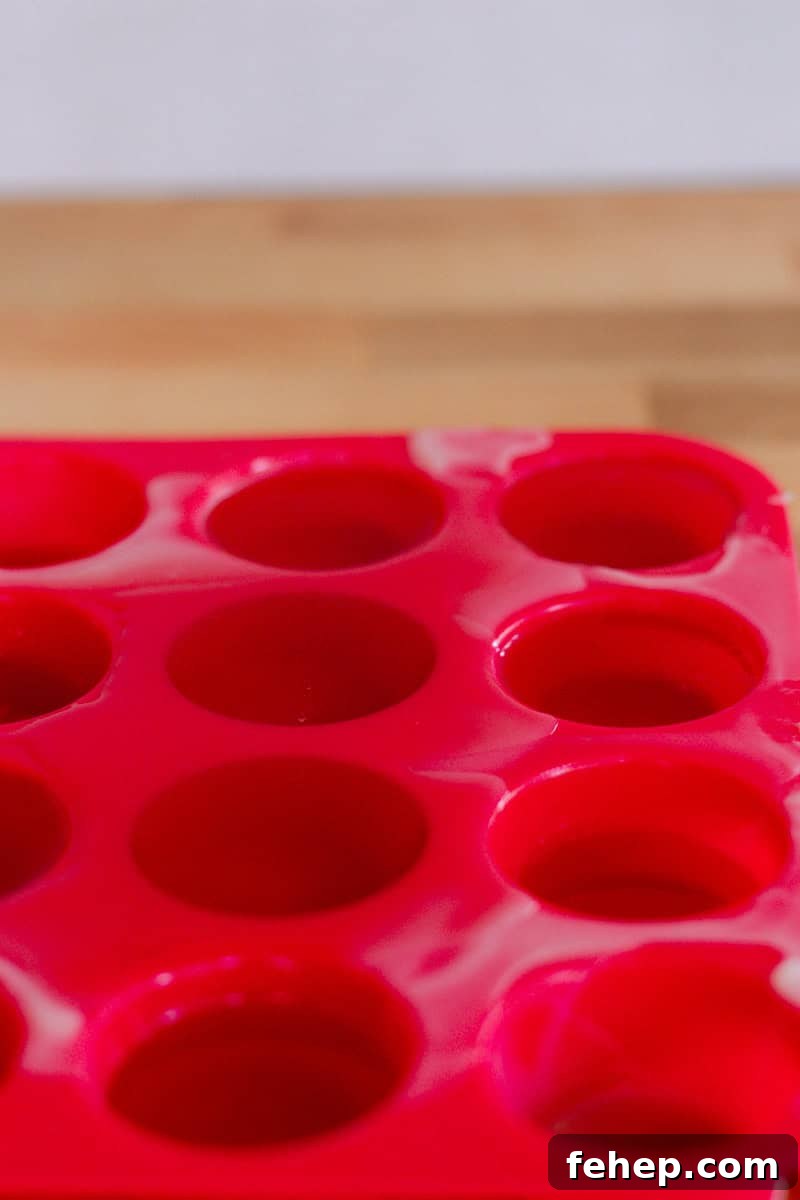
Step 4. Pour the mixture into silicone molds or metal tins while still liquid.
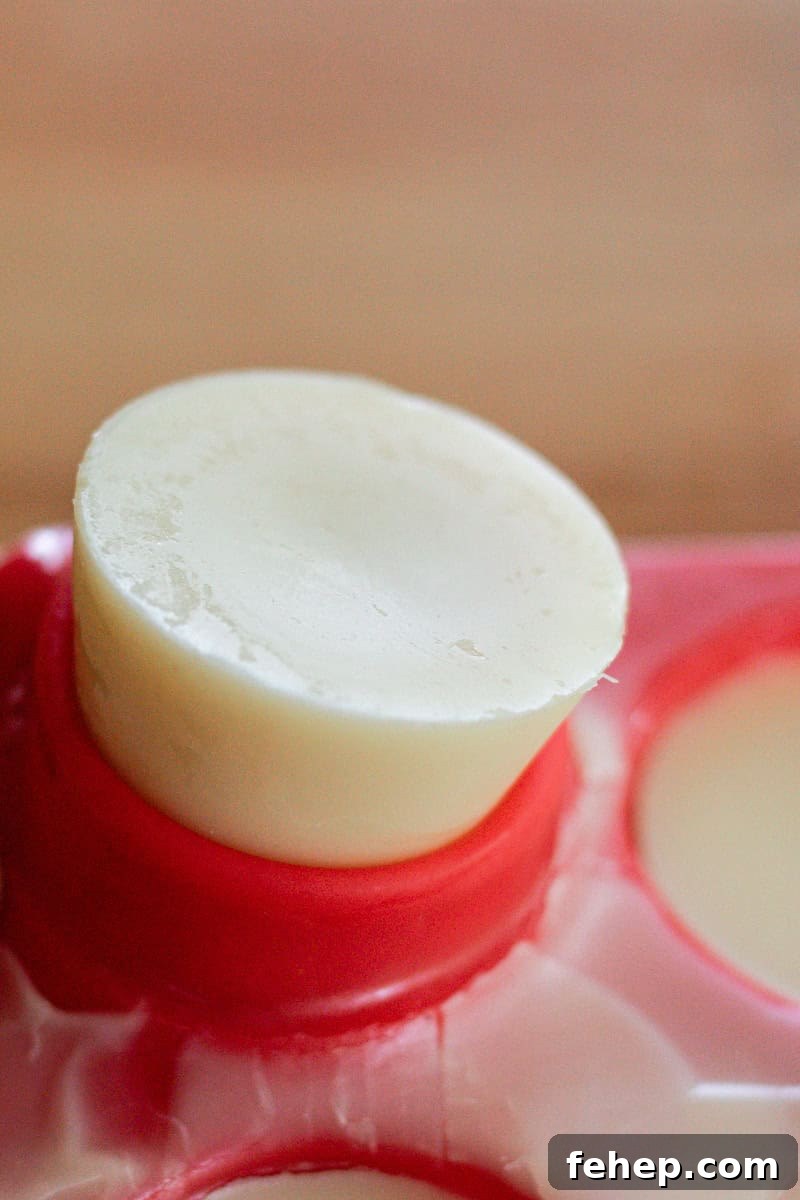
Step 5. Allow the bars to cool and harden completely, then pop them from the molds.
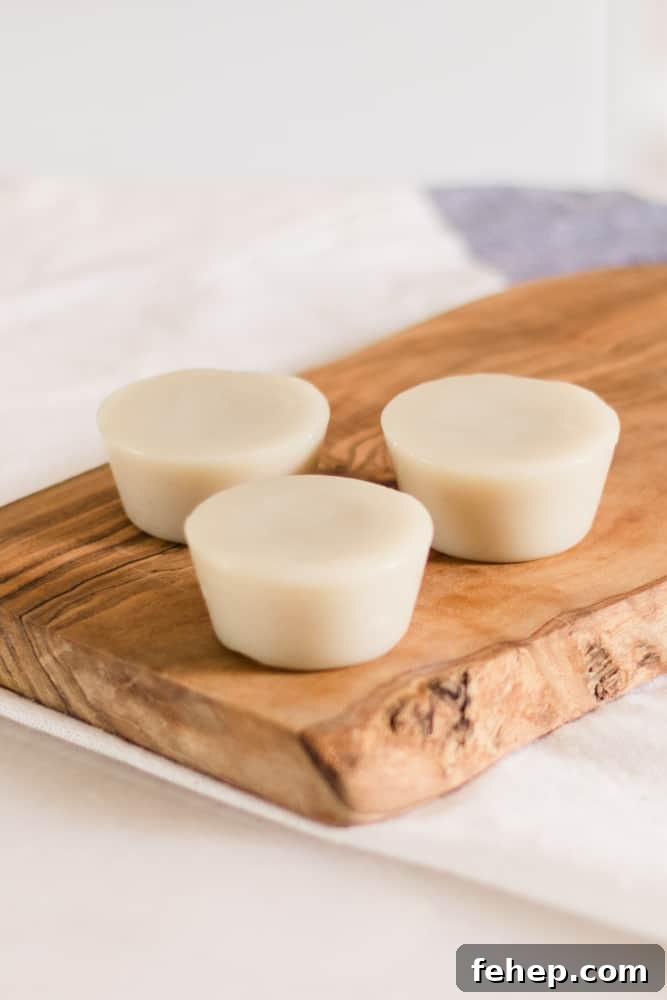
Store the finished bars in an airtight container. Properly stored, they can last up to a year.
Expert Tips
- For best consistency, measure ingredients by weight. If you don’t have a scale, measuring by volume works—adjust as needed based on firmness.
- Choose molds to match the occasion: seasonal shapes for holidays or simple circles for everyday use.
- Keep bars in an airtight container and away from direct sunlight. If indoor temperatures exceed about 78°F (25°C), store them in the refrigerator to prevent softening.
- Swap beeswax for a plant-based wax like candelilla if you prefer a vegan option. Expect a slightly different texture.
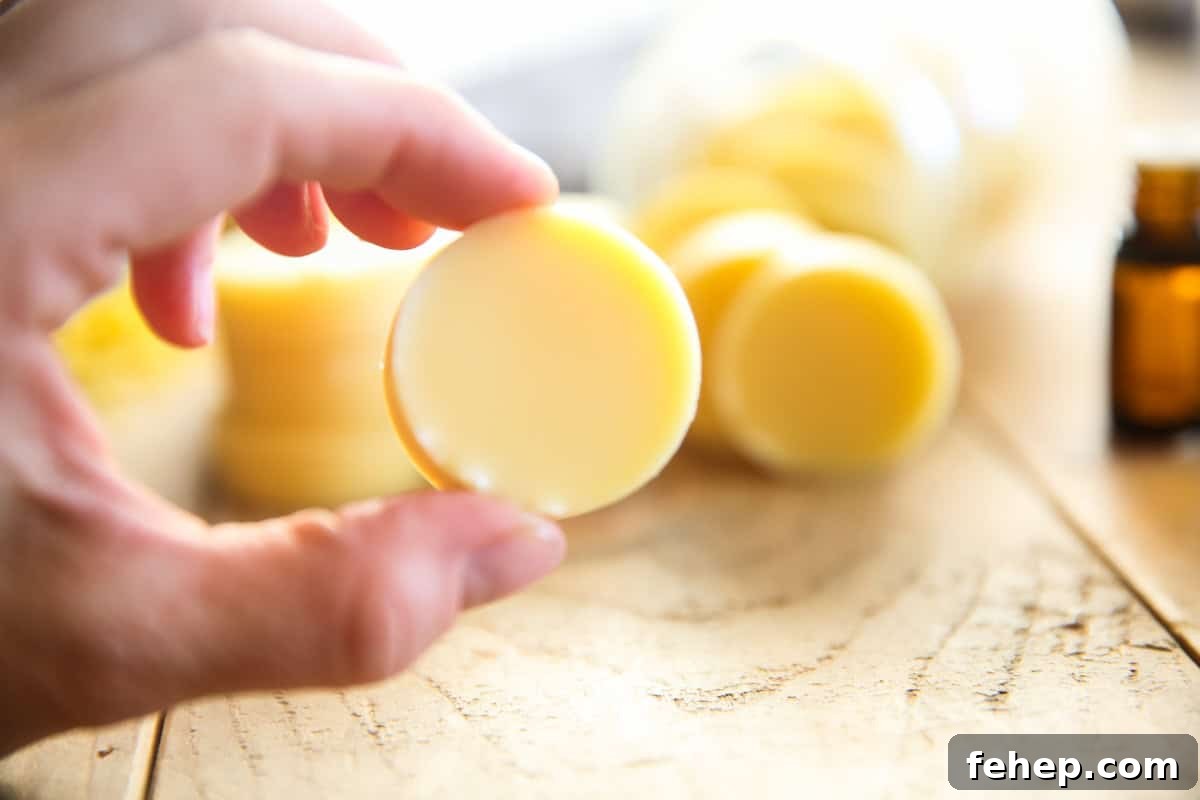
Best Essential Oil Blends for Lotion Bars
Below are a few favorite blends to scent your bars. Tailor amounts to your preference, and always follow dilution and safety guidelines for topical use.
- Frankincense + Yarrow Pom + Rose
- Lavender + Roman Chamomile
- Frankincense + Melaleuca + Lavender
- Lemongrass + Cedarwood
Recipe FAQs
Rub the bar directly onto warm skin. The heat from your skin will soften the bar so the oils spread smoothly.
Yes. Replace beeswax with a plant-based wax such as candelilla. The texture will be slightly different but still effective.
Wrap bars in cellophane or paper, place them in decorative boxes, metal tins, or small drawstring bags for gifting.
Silicone circle molds are popular, but bar-shaped or novelty-shaped molds (flowers, hearts, seasonal shapes) work equally well.
Related Recipes
- Homemade Muscle Rub
- DIY Bug Repellent Lotion Bars
- Homemade Sunscreen Lotion Bars
- Homemade After Sun Lotion
- Homemade Body Butter Stick
If you try these Homemade Lotion Bars, please leave a star rating and share your experience in the comments. Thank you for reading!
Homemade Lotion Bars
Equipment
-
Double Boiler
-
Small silicone molds
Ingredients
- 3.8 oz coconut oil, approximately ½ cup
- 2.75 oz cocoa butter, approximately ½ cup
- 2 oz beeswax pellets, approximately ½ cup
- 15 drops essential oil, optional
Instructions
-
Melt the coconut oil, butter, and beeswax in a double boiler or in a heatproof bowl over simmering water.
-
Heat until fully melted, then remove from the heat.
-
Allow to cool slightly, then stir in essential oils if desired.
-
Pour into silicone molds or metal tins while liquid.
-
Let cool completely, then remove the bars from the molds.
-
Store in an airtight container for up to one year.
Notes
Store out of direct sunlight in a cool place. If home temperature is above 78°F, refrigerate to prevent softening.
If you don’t have cocoa butter, shea butter is an acceptable substitute; bars will be slightly softer.
Step-by-step photos and a video are provided above for visual reference.
Tried this recipe?
Share your results and tag the maker if you like.