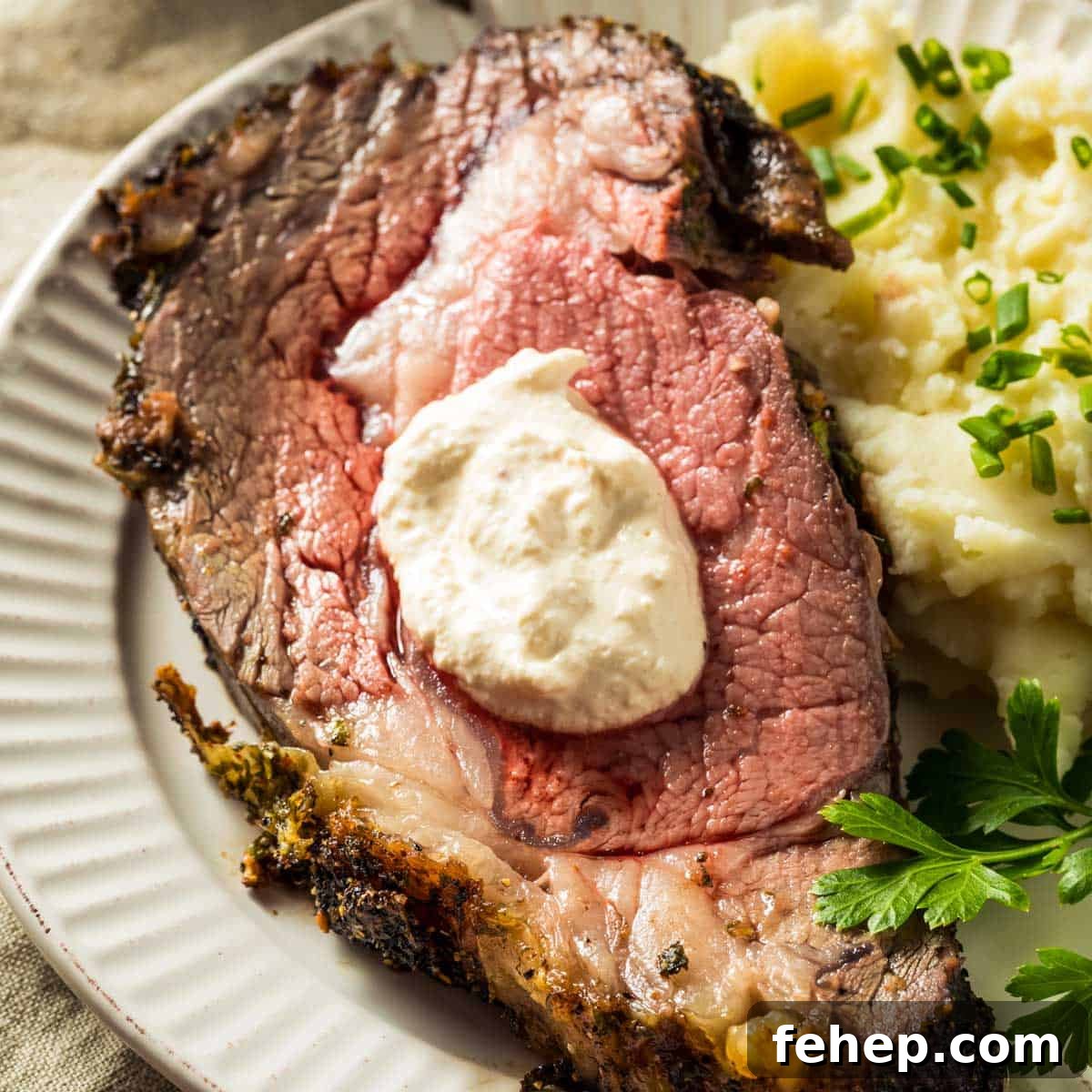
A perfectly roasted boneless prime rib makes a memorable centerpiece for holiday dinners and special occasions. With tender meat, rich marbling, and a fragrant garlic-herb crust, this straightforward recipe delivers restaurant-quality results without the fuss.
Preparing prime rib at home is easier than you might think. With a few pantry staples and a reliable meat thermometer, you can achieve a juicy interior and a deeply browned crust. This boneless prime rib recipe is ideal for Christmas, celebratory meals, or any time you want to impress guests with minimal stress.
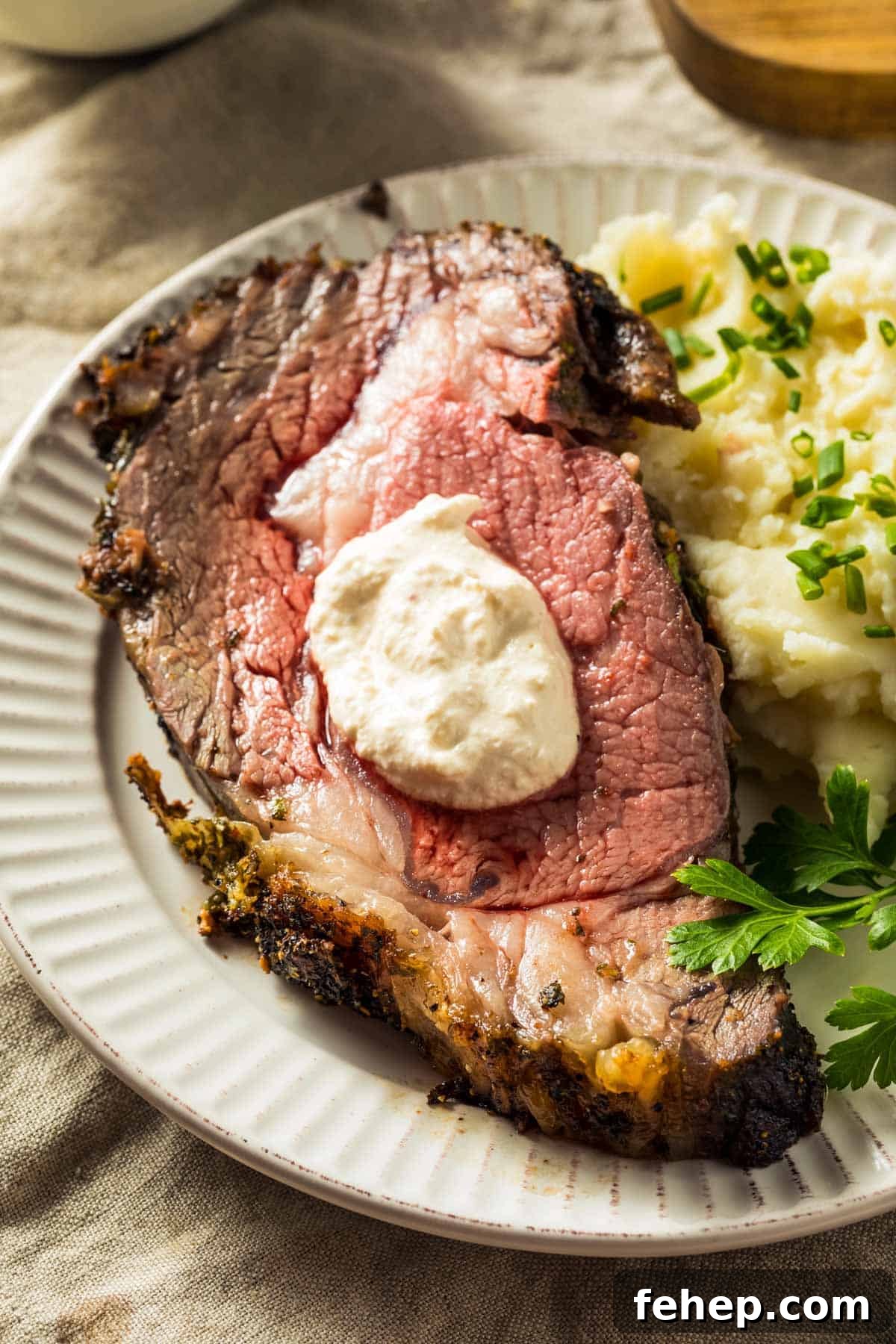
This boneless prime rib seasoning—an herb-and-garlic butter—produces a flavorful crust that enhances the beef without overpowering it. If you have a bone-in roast, you can use a similar method and a different rub if you prefer; both approaches pair beautifully with classic sides like green beans almondine or homemade creamed corn.
Ingredients
This herb-garlic butter blend creates a savory crust that complements the roast.
- 1 boneless rib roast (about 8 pounds)
- 4 garlic cloves, minced
- ¼ cup fresh tarragon, chopped
- ¼ cup fresh parsley, chopped
- 3 tablespoons fresh thyme, chopped
- ⅓ cup fresh rosemary, chopped
- 1 tablespoon coarse salt
- 2 teaspoons freshly ground black pepper
- ½ cup unsalted butter, softened
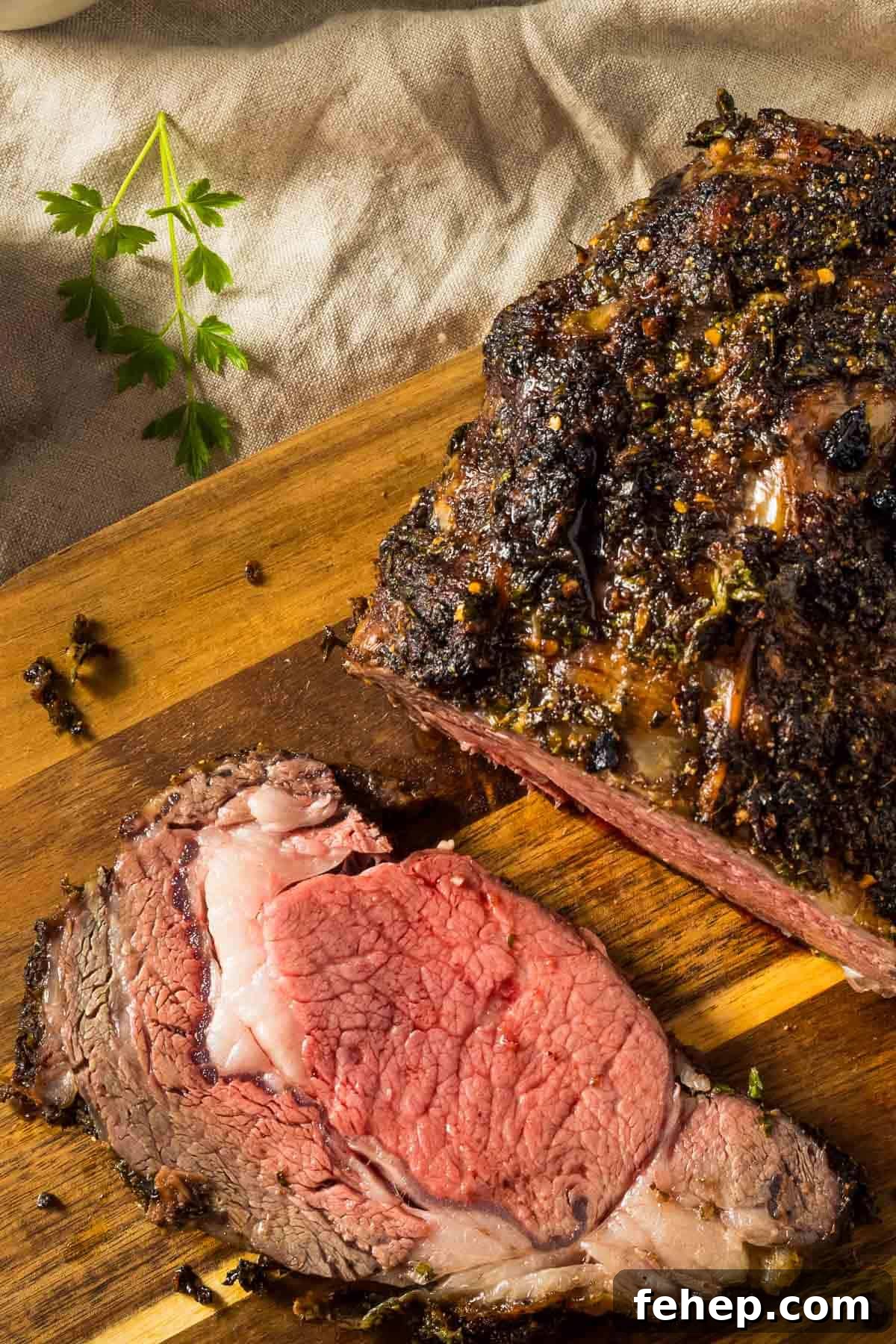
How to Make This Boneless Prime Rib Recipe
- Bring the roast to room temperature: Remove the roast from the refrigerator and let it sit, uncovered, for at least 1 hour and up to 2 hours so it cooks evenly.
- Preheat the oven: Set the oven to 450°F and position a rack inside a roasting pan to hold the roast above the drippings.
- Prepare the garlic-herb crust: In a small bowl, combine the minced garlic, chopped herbs, salt, pepper, and softened butter until well blended.
- Season the roast: Pat the roast dry with paper towels, then rub the garlic-herb butter all over the top and sides.
- Sear with high heat: Place the roast on the rack in the roasting pan. If using a leave-in thermometer, insert it now. Roast at 450°F for 20 minutes to develop a browned crust.
- Reduce the heat and finish cooking: Lower the oven to 325°F and continue roasting until the roast reaches your desired internal temperature (use a meat thermometer for accuracy).
- Rest the roast: Transfer the roast to a carving board, tent loosely with foil, and let it rest 20–30 minutes so the juices redistribute.
- Carve and serve: Slice against the grain into thick slices and serve warm with your preferred sides.
Cooking Time Chart
Cooking times vary with roast size and oven differences. Always use a meat thermometer rather than relying solely on time. These estimates assume an initial 20-minute sear at 450°F, followed by roasting at 325°F.
| Roast Weight | Rare (120–125°F) | Medium-Rare (130–135°F) | Medium (140–145°F) |
|---|---|---|---|
| 4 lbs | 1 hr 15 min – 1 hr 30 min | 1 hr 30 min – 1 hr 45 min | 1 hr 45 min – 2 hrs |
| 6 lbs | 1 hr 45 min – 2 hrs | 2 hrs – 2 hrs 15 min | 2 hrs 15 min – 2 hrs 30 min |
| 8 lbs | 2 hrs 15 min – 2 hrs 30 min | 2 hrs 30 min – 2 hrs 45 min | 2 hrs 45 min – 3 hrs |
| 10 lbs | 2 hrs 45 min – 3 hrs | 3 hrs – 3 hrs 15 min | 3 hrs 15 min – 3 hrs 30 min |
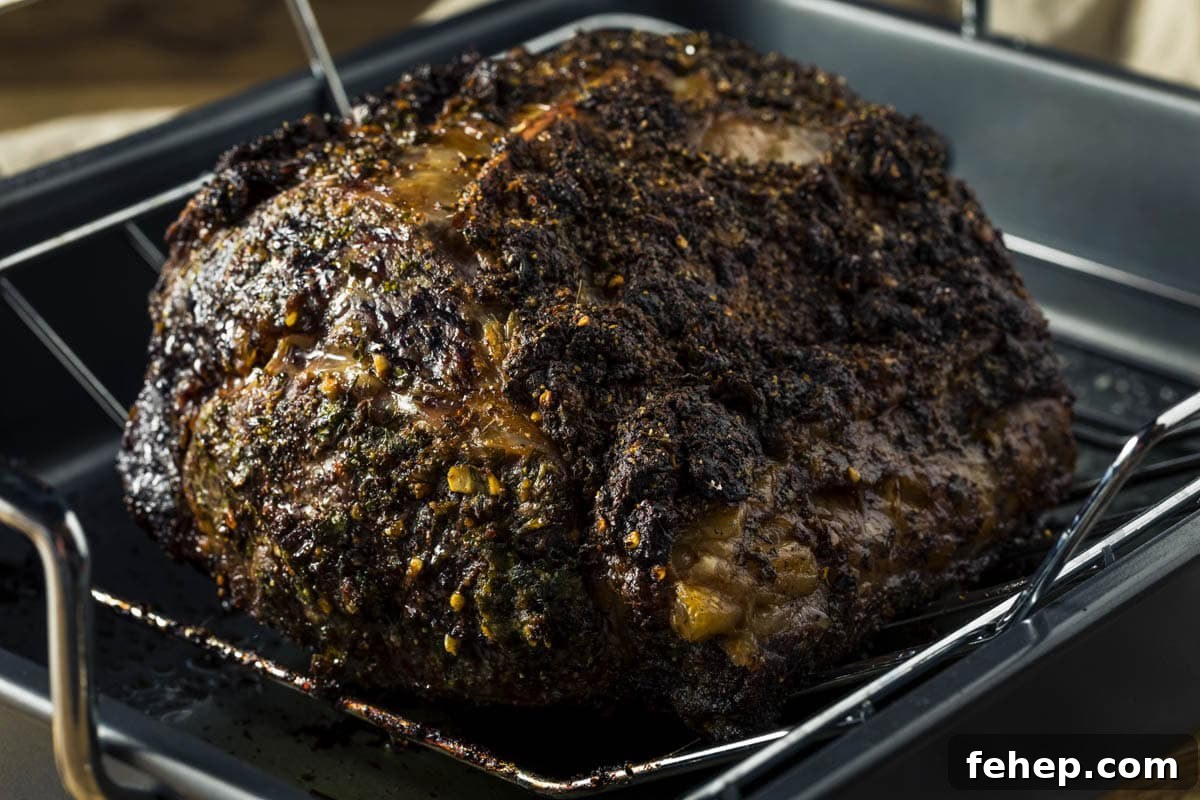
Equipment Needed
- Roasting pan with rack to allow even air circulation and collect drippings.
- Leave-in meat thermometer for accurate monitoring and perfect doneness.
- Mixing bowl for the garlic-herb butter.
- Basting brush or spatula to spread the butter mixture evenly.
- Sharp carving knife for clean, even slices.
- Cutting board with a juice groove to rest and carve the roast neatly.
- Aluminum foil to tent the roast while it rests.
- Paper towels to pat the roast dry before seasoning to help the crust form.
Tips for Buying a Boneless Prime Rib
- Know the names – It can be labeled boneless rib roast, ribeye roast, or beef rib roast. If the bones are left in, it may be called a standing rib roast. Ask your butcher if unsure.
- Understand USDA grades:
- Prime: Top grade with heavy marbling and exceptional tenderness. Often available from specialty butchers.
- Choice: Widely available with good marbling and excellent flavor; a common pick for home cooks.
- Select: Leaner with less marbling and not recommended for prime rib if you want a juicy, tender result.
- Portion size: Plan roughly ½ pound per person with many sides, ¾ pound per person for a balanced meal, or 1 pound per person for generous portions or leftovers.
- Fresh vs. frozen: Fresh is preferred; frozen roasts are fine if thawed slowly in the refrigerator several days before cooking.
- Look for marbling: Choose a roast with even marbling—fat that melts during cooking contributes to juiciness and flavor.
- Time your purchase: Watch for holiday sales; buy close to cooking time or freeze early if you find a good deal.
- Ask your butcher: A butcher can trim excess fat, tie the roast for even cooking, and recommend an appropriate size for your guest list.
Storage & Reheating
Storage
- Refrigerator: Keep leftovers in an airtight container or tightly wrapped in foil for up to 4 days. Slice only what you plan to eat to preserve juiciness.
- Freezer: Wrap cooled slices tightly in plastic wrap and foil or use a freezer-safe container; freeze up to 2 months. Thaw overnight in the refrigerator before reheating.
Reheating
Reheat gently to avoid overcooking and drying the meat.
- Oven: Preheat to 250°F, place slices in a baking dish with a splash of beef broth or au jus, cover with foil, and warm until heated through (about 15–20 minutes depending on thickness).
- Stovetop: Warm slices in a skillet over low heat with a bit of broth, covered, to retain moisture.
- Sous vide: Seal slices and warm in a 135°F water bath for about 1 hour to maintain medium-rare texture.
- Microwave: Use low power in short intervals (20–30 seconds), add a splash of broth, and cover to prevent drying.
Frequently Asked Questions
What is boneless prime rib called at the grocery store?
Labels may include boneless rib roast, ribeye roast, or beef rib roast. If bones remain, it may be labeled standing rib roast. Ask your butcher for clarification.
How much boneless prime rib should I buy per person?
About ½ pound per person with many sides, ¾ pound per person for a balanced meal, and 1 pound per person for generous portions or leftovers.
What USDA grade should I buy?
USDA Choice is common and offers good marbling and flavor. Prime grade has more marbling and is typically available from specialty suppliers or butchers.
Do I need to tie a boneless prime rib before cooking?
Tying with butcher’s twine helps maintain shape and promote even cooking, but it’s not strictly necessary. Your butcher can tie it for you if preferred.
What temperature should boneless prime rib be cooked to?
Rare: 120–125°F
Medium-rare: 130–135°F
Medium: 140–145°F
Always verify doneness with a meat thermometer.
Why is prime rib served rare to medium-rare?
Keeping prime rib rare to medium-rare preserves marbling and tenderness. The outer slices will cook a bit more, which suits guests who prefer a firmer doneness.
How long do you cook a boneless prime rib?
As a guideline, plan on about 15–20 minutes per pound after the initial 20-minute sear at 450°F. Always rely on a meat thermometer rather than time alone.
Can I make boneless prime rib ahead of time?
Prime rib is best served fresh after resting 20–30 minutes, but leftovers reheat well if stored properly (see Storage & Reheating).
Herb-Crusted Boneless Prime Rib Roast
10-12 servings
15 minutes
2 hours 30 minutes
30 minutes
3 hours 15 minutes
Making prime rib is straightforward when you use a leave-in meat thermometer. Follow the steps here for consistent, delicious results.
Ingredients
- 1 8-pound boneless rib roast
- 4 garlic cloves, minced
- ¼ cup chopped fresh tarragon
- ¼ cup chopped fresh parsley
- 3 tablespoons chopped fresh thyme
- ⅓ cup chopped fresh rosemary
- 1 tablespoon coarse salt
- 2 teaspoons freshly ground black pepper
- ½ cup butter, softened
Instructions
- Bring the roast to room temperature (let it sit out for at least an hour or longer).
- Preheat your oven to 450°F.
- Mix together the garlic, chopped herbs, salt, pepper and softened butter. Rub the mixture all over the top and sides of the roast.
- Place the roast on a rack inside a roasting pan. Cook at 450°F for 20 minutes.
- Reduce the heat to 325°F and continue cooking until the roast reaches your target internal temperature.
- Transfer the roast to a carving board, tent with foil, and rest for 20–30 minutes before carving and serving.
Notes
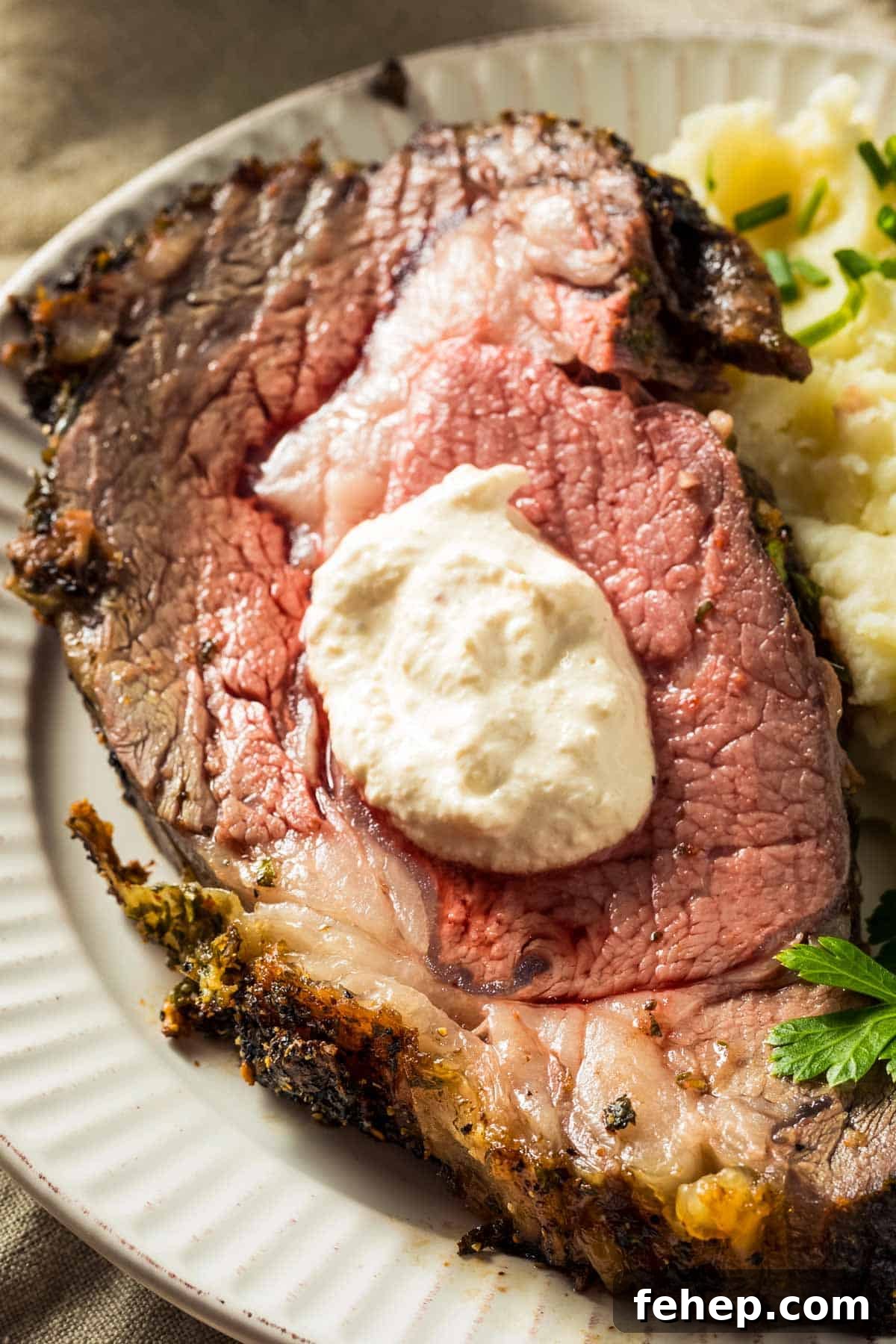
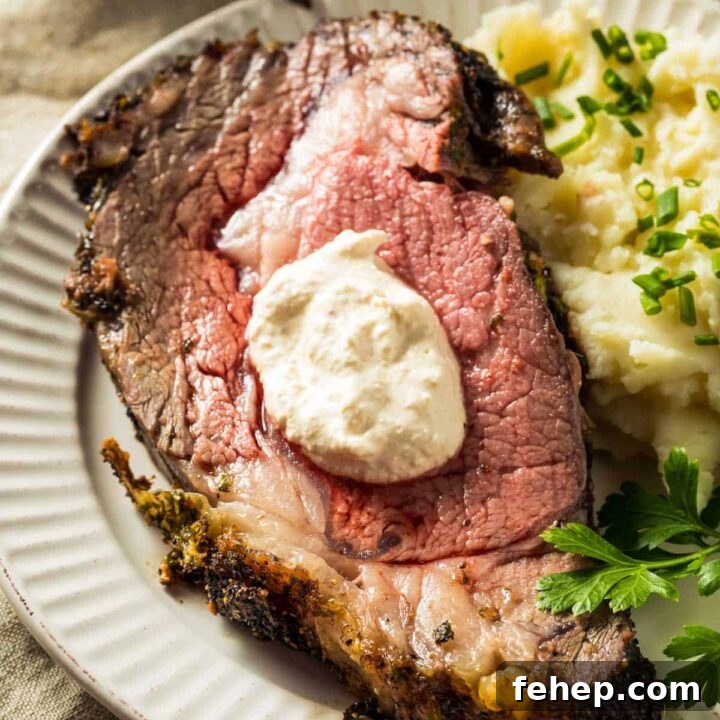
Serve with a horseradish cream sauce or your favorite au jus for added flavor.
Nutrition Information:
Yield: 12
Serving Size: 1
Amount Per Serving:
Calories: 1105Total Fat: 90gSaturated Fat: 38gTrans Fat: 0gUnsaturated Fat: 41gCholesterol: 271mgSodium: 834mgCarbohydrates: 1gFiber: 0gSugar: 0gProtein: 68g
This data was provided and calculated by Nutritionix.