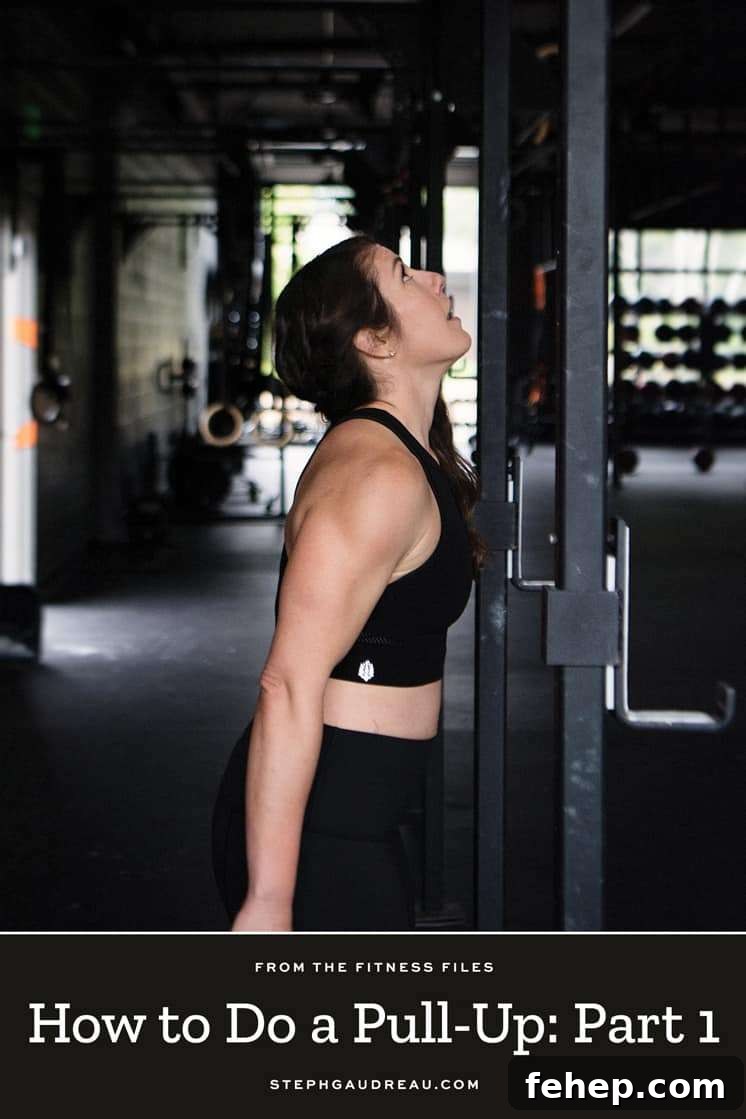
If you want to learn how to do a pull-up, this is the place to begin.
Pull-ups are an outstanding full-body exercise and, for many people, a milestone in their strength journey.
Achieving your first pull-up can feel like leveling up — stronger, more capable, and more confident.
For a lot of women, a first pull-up is a meaningful goal. Beyond the number itself, being able to move your body well is empowering.
Yes — if you’re a woman, you can do a pull-up. Any comment suggesting otherwise is simply wrong.
The Best and Toughest Parts of Pull-Ups for Women
Getting your first pull-up is exhilarating. It boosts confidence and changes your outlook: “If I can do a pull-up, what else could I do?”
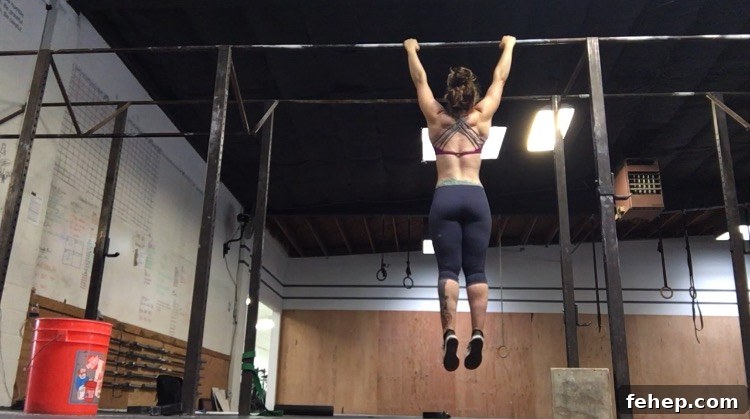
Here’s a personal example from one of my early attempts back in October 2010; I was only a couple months into consistent strength training.
Since then I’ve added weight and gotten stronger, and I can do even more pull-ups now than I could then.
Focusing solely on bodyweight to “make” a pull-up easier by losing weight is a narrow way to think about it. Prioritize strength first.
On the flip side, repeatedly failing to get your first pull-up after long effort can be incredibly frustrating. If you’ve trained for years and still don’t have a strict pull-up, it’s time to identify the real barriers.
In this series I’ll guide you through how to do a pull-up with videos, accessory movements, and practical progressions.
Part 1 covers body position, Part 2 will outline movement fundamentals, and Part 3 will focus on drills and assistance work.
I can’t fully assess why you might be struggling without seeing your movement, so you’ll need to pay attention, be diligent, and take responsibility for how you progress. If anything causes pain, stop and seek appropriate care.
Okay Steph, Teach Me Now
I understand the eagerness, but we’ll take this step by step. Surprisingly, Part 1 doesn’t focus on the pull-up itself; it focuses on foundational body position.
Modern life changes how we move. Many people sit for long stretches — at desks, in cars, on couches — and rarely use full ranges of motion. Tasks that once required squatting, hinging, or bracing are now often avoided by conveniences like chairs, escalators, and carts.
That environment weakens hip and posterior chain function and diminishes kinesthetic awareness: people forget how to use hamstrings and glutes effectively, or how to maintain whole-body tension.
Because of this, even motivated gym-goers can struggle to access basic movement shapes. Coaches and trainers sometimes miss the root issues and prescribe surface-level fixes that don’t address the real limitations.
You’re not at fault for the way the modern world is built, but getting stronger and more functional requires conscious effort: ask questions, move with intention, and be patient with the process.
Pull-Ups Start with Body Position
Begin by focusing on positioning. You can complete a pull-up with poor form, but it will be inefficient, harder, and increase the risk of overuse or injury. Practicing correct shapes makes the movement cleaner and easier.
Imagine carrying a 25-pound bag of dog food: is it easier to hold it out away from your body, or to hug it close? Holding tension and keeping your body tight makes the load feel lighter and movement more efficient.
Practice Solid Shapes.
For a strict pull-up you must keep your body tight: squeeze your glutes, press your legs together, point your toes, seat your shoulder blades down and back, keep a neutral neck, and brace your core. Finding and holding this position often feels like discovering muscles you didn’t know you had.
Think of gymnasts: they maintain long, taut, rigid shapes that translate directly to efficient pulling and hanging strength.
Start with a hollow body position on the floor.
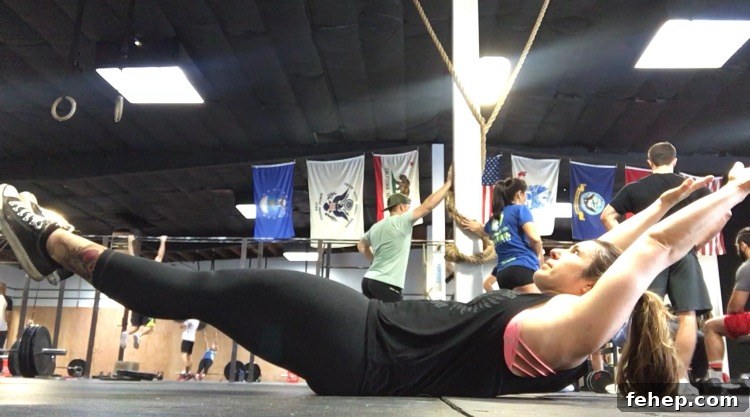
Everything is tight and squeezed in this shape. Building that tension is foundational.
From there, work on hollow rocks.
Hollow rocks add motion while maintaining the shape. This translates directly to hanging from a bar and moving through a pull-up efficiently.
Then, progress to hanging from the bar.
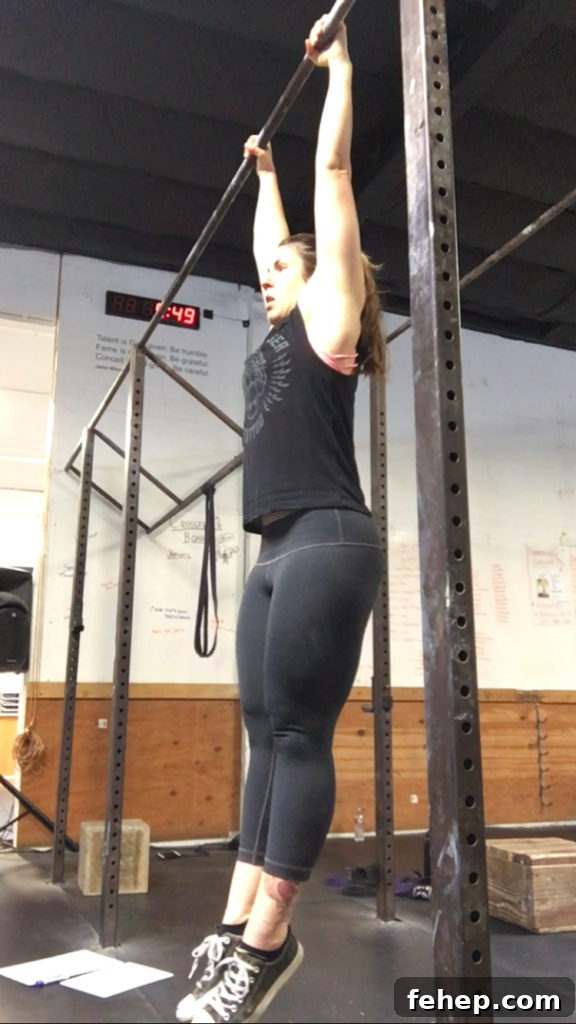
Keep squeezing. Tension is a core principle across movements: from bodyweight drills to maximal lifts.
Practice tension with push-ups.
Poor push-up mechanics are common. Start with a solid plank: neutral spine, no sagging hips, no flaring elbows. Build that tension before progressing to push-ups.
Start with a simple plank position.
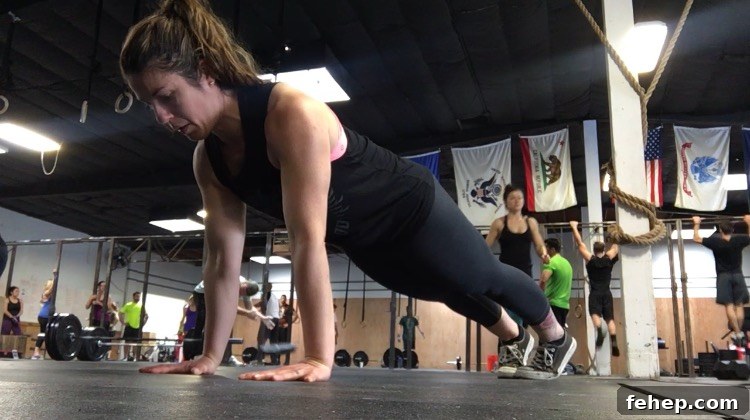
Once you can hold a rigid plank, perform push-ups while maintaining the same tight shape. If a standard push-up is too difficult, elevate your hands on a bench, box, or wall and lower the angle as you get stronger. Keep elbows close to the body — this cue will help your pulling mechanics as well.
Bodyweight exercises are challenging and valuable when performed correctly.
To Summarize
Getting your first pull-up starts with body position and the ability to maintain tension. Modern lifestyles work against natural movement, so you must intentionally practice functional positions.
Begin by holding and moving within tight shapes such as hollow holds, hollow rocks, planks, and controlled push-ups. Those patterns will carry over to efficient, safe pull-ups.
Stay tuned for Part 2 where we’ll break down pull-up mechanics and the specific cues you need to master.
Pin How to Do a Pull-Up: Part 1 for later