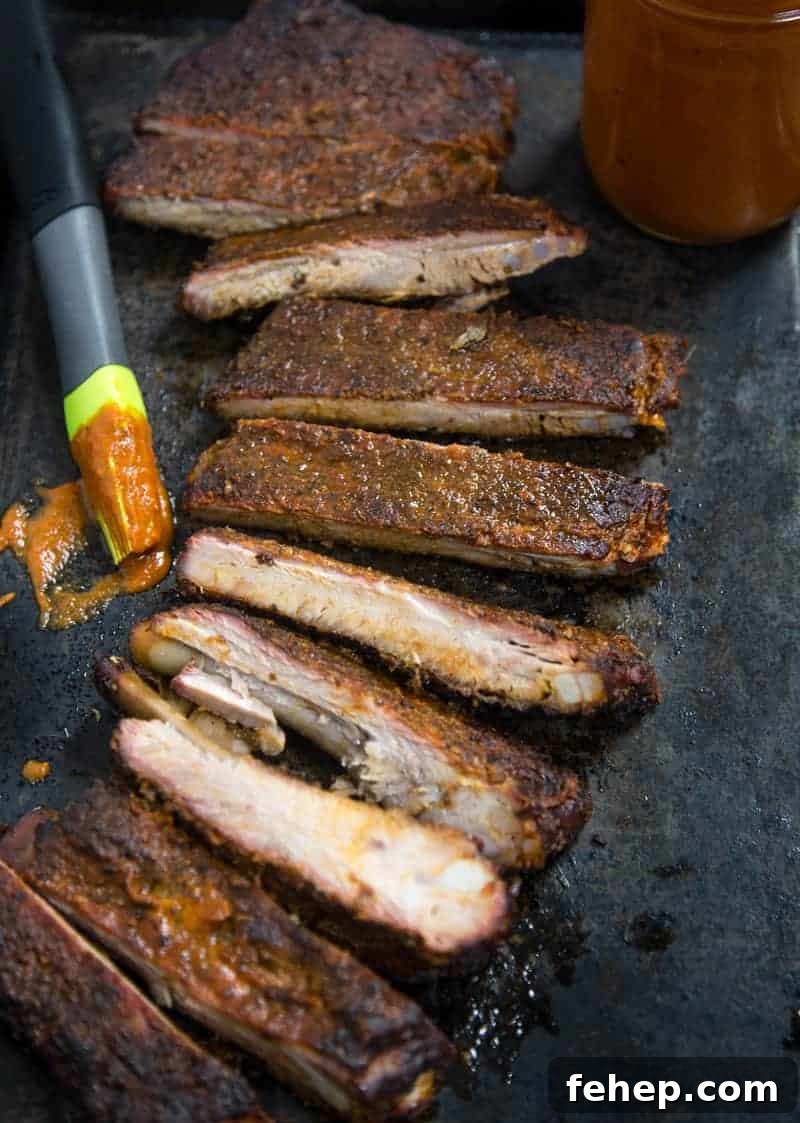
Smoked Pork Ribs with a sugar-free BBQ sauce — keto friendly? Yes, absolutely. These keto ribs use a savory, slightly sweet dry rub with no added sugar and a naturally sweetened, sugar-free BBQ sauce that delivers the classic sweet-and-smoky barbecue flavor without the sugar.
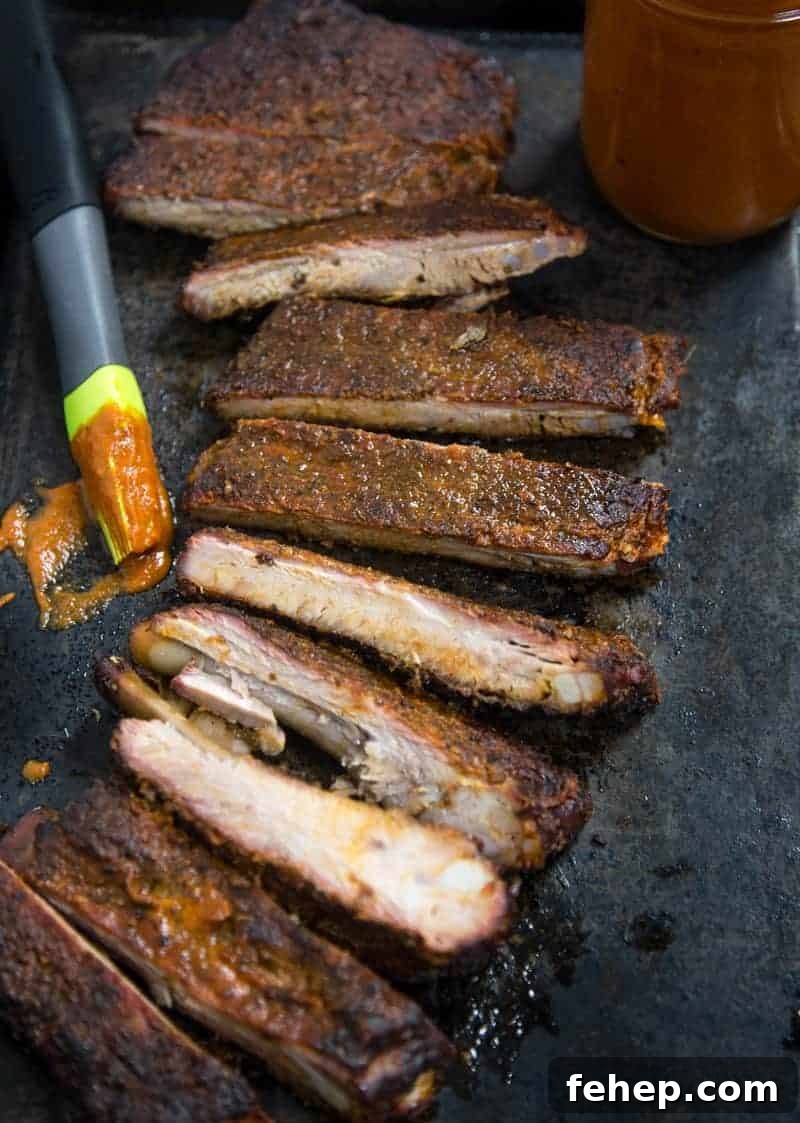
We love rich, sweet sauces and rubs, but many readers asked for reliable sugar-free BBQ recipes. Whether you follow Keto or Paleo, or simply watch your sugar intake, these smoked ribs let you enjoy full barbecue flavor without added sugar. The key is building layers of natural sweetness during each stage of the cook so the final result still tastes balanced and satisfying.
Table of Contents
- Keto Ribs Overview
- Keto-Friendly Sweeteners and Flavor
- Choosing the Cut
- Preparing the Ribs
- Dry Rub
- How to Smoke
- Adding Natural Sweetness
- How Many Ribs Per Person
- Recipe
Keto Ribs Overview
Creating full-flavored smoked ribs without conventional added sugars meant focusing on savory seasonings and natural sweet elements. The approach is simple: use a no-sugar dry rub, smoke low and slow, baste or spritz for moisture, wrap to tenderize, then finish with a sugar-free BBQ sauce made with caramelized onions and tomato base for natural sweetness.
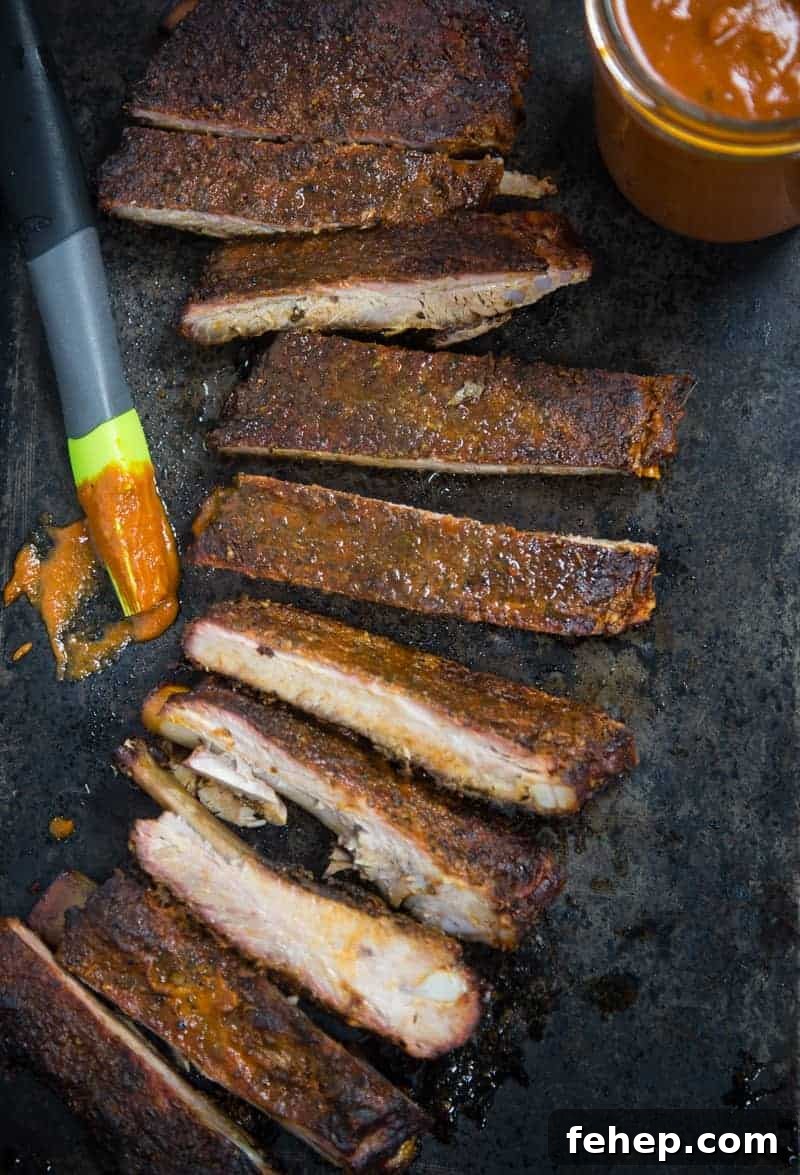
Keto-Friendly Sweeteners and Flavor
Some diets allow certain natural sweeteners while avoiding added sugars and artificial sweeteners. For this recipe we emphasize ingredients that contribute sweetness naturally:
- Apple Cider Vinegar (ACV) — ACV adds brightness and a faint sweet-acid balance. We use it in the spritz and in the sauce for tang and depth.
- Caramelized Onions — Slowly caramelized onions provide significant natural sweetness and body for the BBQ sauce, replacing brown sugar or other added sweeteners.
If you tolerate fruit on your plan, adding a small amount of mango, pineapple, peach, or cherries to the sauce will introduce another natural layer of sweetness. Choose one fruit and cook it down into the sauce for best results.
Choosing the Cut
This recipe uses pork spare ribs trimmed into the St. Louis style for convenience, but you can swap for baby back ribs or a full spare rack. Keep in mind cook times and milestones differ between cuts, so monitor tenderness rather than relying strictly on clock time.
Preparing the Ribs
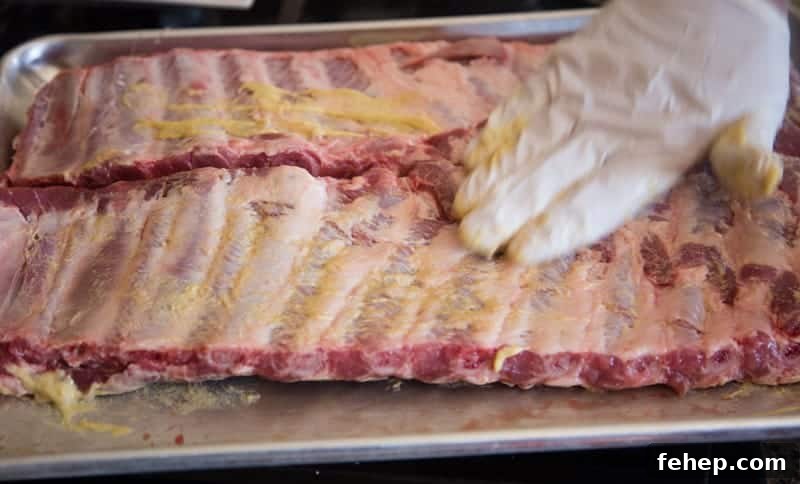
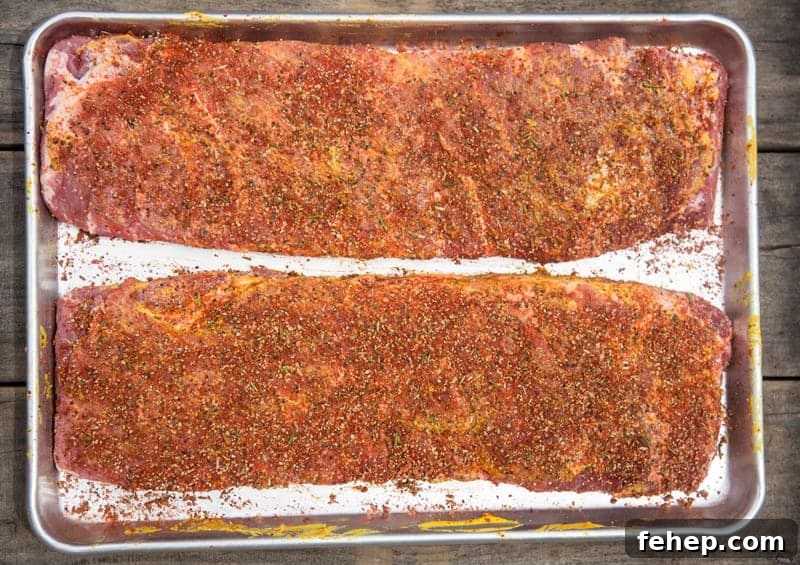
Inspect the bone side and remove the silver skin membrane if present. Leaving it on yields a chewy strip; removing it improves texture. To help the dry rub adhere, coat the ribs with yellow mustard — note that Dijon often contains sugar, so plain yellow mustard is the safe choice for a sugar-free approach.
Dry Rub
The sugar-free dry rub is a savory blend that complements pork. Mix the ingredients well and apply liberally — the listed amount covers two racks.
- Kosher salt
- Coarse ground black pepper
- Fresh rosemary, finely diced
- Sweet paprika
- Garlic powder
- Oregano
- Cayenne pepper
How to Smoke: The 3-2-1 Approach
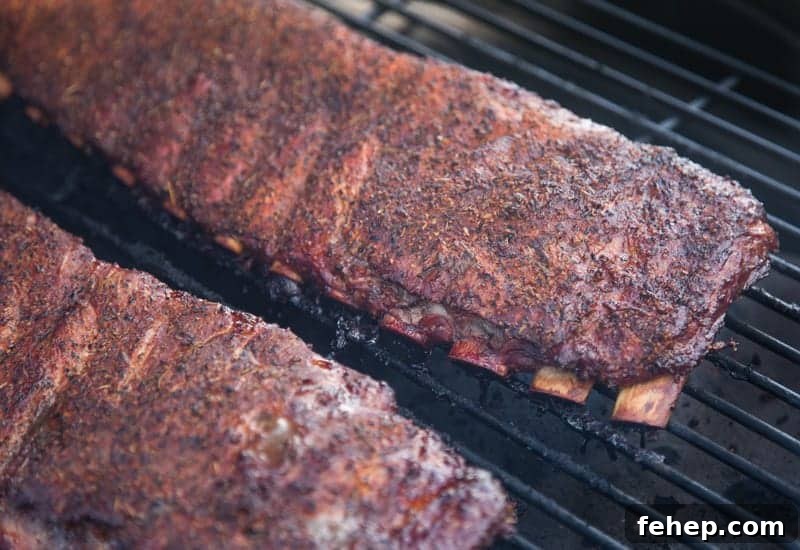
This recipe follows a 3-2-1 style timeline: 3 hours unwrapped in the smoke for bark and smoke flavor, 2 hours wrapped with added fat/liquid to tenderize, then 1 hour unwrapped with sauce to set the glaze. Use these milestones and probe for tenderness rather than relying only on temperature.
- 3 (Smoke phase) — Smoke at about 250°F. Spritz with apple cider vinegar every 20–30 minutes after the first 90 minutes to keep ribs moist and encourage smoke adhesion. When the bones begin to show about 1/4–1/2 inch, it’s time to wrap.
- 2 (Wrap phase) — Place each rack on foil, add butter or a small amount of sauce or ACV, then wrap tightly. Return to the smoker to soften the meat. Check after an hour; you want the meat to be tender but not disintegrating.
- 1 (Finish) — Unwrap, apply the sugar-free BBQ sauce, and return to the smoker to set the glaze for 30–60 minutes. The sauce will tack up and give a pleasant bite without added sugar.
Pro tip: If you prefer fall-off-the-bone ribs, continue cooking in the wrapped phase until the bones pull out easily. In competition BBQ circles this may be considered overcooked, but ultimately cook to the texture you and your guests enjoy.
Temperature and Doneness
Ribs are best judged by time and texture. Use a thin probe or thermometer to check between bones for a soft, buttery feel rather than aiming for a fixed internal temperature.
Adding Natural Sweetness
Layering natural sweetness across the rub, spritz, and sauce gives the sensation of sweetness without added sugar:
- Rub: Sweet paprika and, if acceptable on your plan, a powdered honey product can add subtle sweetness without liquid sugars.
- Spritz: Use 100% apple cider vinegar in a food-safe spray bottle. Spritzing encourages smoke to cling and adds a mild sweet-acid balance.
- Sauce: Make the sauce with caramelized onions, tomato sauce with no sugar added, tomato paste, ACV, and seasonings. Simmer and blend until smooth. If your diet allows fruit, add up to 1/2 cup of chopped mango, pineapple, peach, or cherries and cook them into the sauce to increase natural sweetness.
How Many Ribs Per Person?
As a main course, plan for roughly 1/2 rack per person. For a buffet or mixed spread, 1/4 rack per person is usually sufficient.
Keto Ribs Recipe Summary
Servings: 4. Prep time: about 30 minutes. Cook time: approximately 6 hours total including smoke, wrap, and finish. The recipe produces tender, smoky ribs with a sugar-free BBQ sauce sweetened naturally by caramelized onions and optional fruit additions.
Ingredients
For the Ribs
- 2 racks spare ribs, St. Louis cut (or baby backs)
- 4 tablespoons yellow mustard
- 2/3 cup sugar-free dry rub
- 4 tablespoons butter (2 tablespoons per rack)
For the Spritz
- 2 cups apple cider vinegar (in a food-safe spray bottle)
Sugar-Free Dry Rub
- 2 tablespoons kosher salt
- 2 tablespoons coarse ground black pepper
- 2 tablespoons fresh rosemary, finely diced
- 2 tablespoons sweet paprika
- 1 tablespoon garlic powder
- 1 tablespoon oregano
- 1/4 teaspoon cayenne pepper
Sugar-Free BBQ Sauce
- 1 small white onion, chopped (about 1 cup)
- 1 tablespoon butter or extra virgin olive oil
- 2 cloves garlic, diced
- 1 cup apple cider vinegar
- 1 can (15 oz) tomato sauce (no sugar added)
- 3 tablespoons tomato paste
- 1/2 teaspoon cayenne pepper
- 1/2 tablespoon sweet paprika
- 1/2 tablespoon dry mustard
- 1/2 teaspoon kosher salt
- 1/4 teaspoon fresh ground black pepper
- 1 tablespoon Worcestershire sauce
- Optional: up to 1/2 cup fruit (cherries, mango, pineapple), or a small amount of honey/maple if your plan allows
Instructions (Overview)
- Trim excess flap meat and remove the silver skin membrane from the bone side. Coat ribs with yellow mustard and apply the dry rub liberally. Refrigerate overnight if possible to develop flavor.
- Preheat your smoker to about 250°F using a fruit wood like apple if available.
- Place ribs in the smoker. After 90 minutes begin spritzing with apple cider vinegar every 20–30 minutes. Smoke for roughly 3 hours total or until bones begin to show about 1/4–1/2 inch.
- Wrap each rack tightly in foil with butter pieces and a splash of sauce or apple cider vinegar. Return to the smoker for about 2 hours, checking for tenderness after the first hour.
- Unwrap the ribs, brush with the sugar-free BBQ sauce, and return to the smoker for 30–60 minutes to set the glaze and concentrate flavor.
- Remove when the sauce has tacked up and the ribs reach your preferred tenderness. Slice between bones and serve.
For the Sauce
- Sauté the chopped onion in butter or olive oil over medium heat until soft and beginning to caramelize (about 20 minutes). Reduce heat if browning too quickly.
- Add garlic and cook 1 minute. Stir in apple cider vinegar, tomato sauce, tomato paste, spices, Worcestershire, and any optional fruit or sweetener. Simmer 15–20 minutes.
- Blend with an immersion blender or countertop blender until smooth. Adjust seasoning; thin with water or ACV if too thick. If allowed, add honey or maple to taste.
This recipe was originally published in June 2018 and updated with additional keto-friendly details. Enjoy building smoky, tender ribs without added sugar — feel free to adapt spices and optional fruit to match your dietary preferences and flavor profile.