When I was a young mom with one baby who soon became a toddler, I was determined to do things thoughtfully and intentionally. I had attended a Montessori preschool and kindergarten, and those principles stayed with me.
I wanted my child to learn practical life skills early on, including beginning to cook in the kitchen at a young age.
With my background as an educator, I felt comfortable diving in: giving him appropriate tools, demonstrating techniques, and then letting him try. This photo was taken when he was just over 18 months old, cutting cooked potatoes for potato salad.
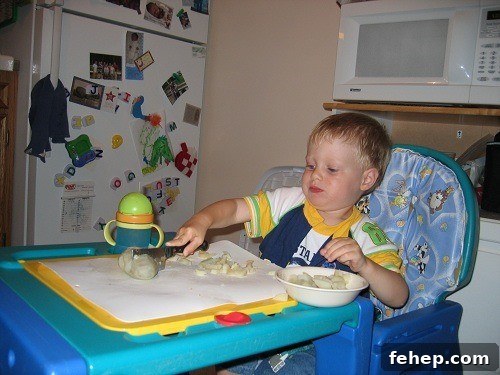
It looks like a tiny cleaver, but it’s actually a dull cheese knife — shorter and easier to handle than many kitchen knives, and safer for little hands while still being effective because of its shape.
I have another memory from when one of my 18-month-olds was in the kitchen, though there’s no photo for that moment. You’ll see why in a moment.
Two Young Children in the Kitchen
Becoming a mother of two brought new challenges. I still wanted both children to learn to cook, but I wasn’t sure how to teach two different developmental stages at once.
When my daughter Leah was about 18 months, she climbed onto the chair where my now four-and-a-half-year-old son Paul was standing. She always wanted to be part of whatever was happening.
I tried the same approach I used with Paul and gave Leah a cheese knife to “play” with. Unfortunately, she cut her finger quickly because that knife wasn’t the same as the one I’d used before, and I hadn’t shown her the steps while my attention was on the older child.
That moment felt like a crisis. For a few years I struggled to balance teaching both kids in the kitchen. It felt easier to keep them out of the way, but eventually I learned that I had been mistaken.
After years teaching children’s cooking classes and working with families worldwide, I now know cooking truly has no age limit.
What Age Should a Child Start Cooking?
Children can start learning to cook as early as 18 months to 2 years old. Real cooking skills can be taught to toddlers, depending on their maturity and on careful supervision.
At Kids Cook Real Food™, we begin with very simple tools like bananas and butter knives and officially start lessons around age 2, though many families involve even younger children, especially if they watch older siblings in the kitchen.
Demonstration videos and consistent routines help parents manage multiple ages and developmental levels without feeling overwhelmed.
I encourage parents to begin giving babies positive kitchen experiences from the earliest days so the kitchen becomes a familiar, welcoming place.
How to Get Babies Involved in the Kitchen
One of my favorite strategies is babywearing. Keeping babies close in a sling or carrier while you work in the kitchen exposes them to the sounds, smells, and motion of cooking and creates calm, positive associations with food.
When babies become mobile, consider leaving one or two low drawers or cupboards unlocked for safe exploration. Yes, it can be a little chaotic, but letting them spend time in the kitchen helps them learn that food and cooking are normal, positive activities.
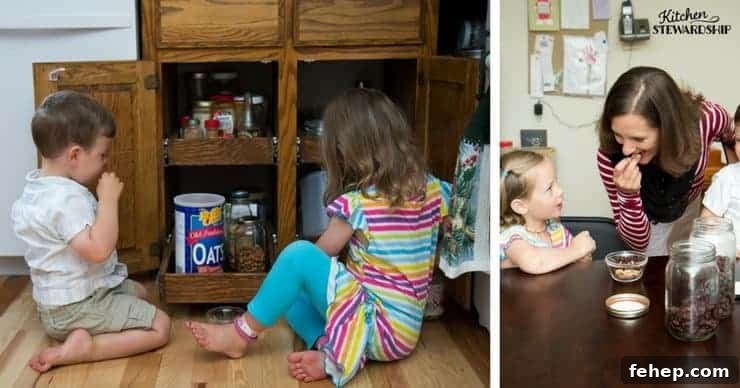
During toddlerhood, continue wearing your child when possible and narrate what you do: “Mommy is cutting a cucumber. We add broth to the pot. Look at the steam—hot! No touch.” Use a calm, positive tone so they learn safety without fear.
You can teach respect for the stove, curiosity about different foods, and a sense of belonging in the kitchen even before a child’s first birthday.
How to Get One- and Two-year-old Toddlers to Feel Involved in the Kitchen
If you worry a one- or two-year-old can’t contribute meaningfully, remember that feeling involved is a powerful first step. A child who feels included is more likely to engage at mealtimes and develop positive habits.
Simple ways to include little ones without letting them handle risky items:
- Let them smell herbs and spices.
- Place their hand on yours while you crack eggs or stir.
- Ask a harmless choice question—“Which bowl should we use?”—to create a sense of agency.
Toddlers are tactile and want hands-on experiences. Here’s a short list of safe, constructive tasks:
- Discard peels into a bowl or compost container.
- Peel garlic over a low bowl on the floor.
- Give them a bowl and spoon for supervised pretend play.
- Ask them to fetch a spoon or measuring cup placed low for their reach.
- Let them carry non-breakable utensils to the table when setting it.
- Give simple transfer jobs like moving frozen peas from a bag to a cold pot; offer tongs when their grip improves.
Keep the kitchen experience positive—this trains neural pathways that associate food and cooking with belonging rather than exclusion.
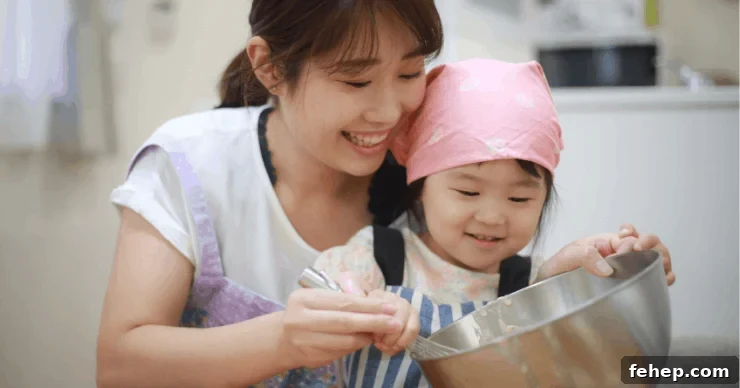
Repeatedly removing children from the kitchen teaches them they don’t belong there, which can lead to older kids resisting involvement. Whatever you can do within your limits to maintain inclusion will pay off long term.
How to Get Children Ages 1 to 3 Learning to Cook (Real Involvement)
Depending on maturity and supervision, children can begin contributing by 18 months and certainly by age 3. Early involvement builds the mental and motor foundations for more advanced skills later.
As Donald Hebb described, “neurons that fire together wire together.” Positive, repeated kitchen experiences shape the brain to perform and enjoy these tasks as children grow.
Small-motor development is a major preschool milestone. In the kitchen this translates to using tongs, measuring with teaspoons, spreading with a butter knife, and simple assembly tasks that build coordination and confidence.
Safe, supervised exposure to small risks—like using a dull butter or cheese knife under guidance—teaches children appropriate caution and skill. Those early risks, handled well, build competence and reduce anxiety around tools and food.
Practical beginner activities for ages 1–3 include:
- Using a butter knife on bananas, soft fruits, or cooked vegetables.
- Spreading nut butter, cream cheese, or softened butter.
- Early measuring with teaspoons using a spill bowl.
- Sorting dry beans to remove small stones.
- Refilling from bulk containers to smaller jars on a rimmed tray.
- Pouring with a one-cup measure or small pitcher.
- Working with dough—kneading, pressing, or shaping.
- Assembling a simple salad or plate of cut fruit and vegetables.
Even placing a child’s hand on yours during a risky step helps them feel part of the process and teaches safety through supervised participation.
As skills grow, raise expectations for older children while continuing to provide meaningful roles for the younger ones so everyone contributes and learns.
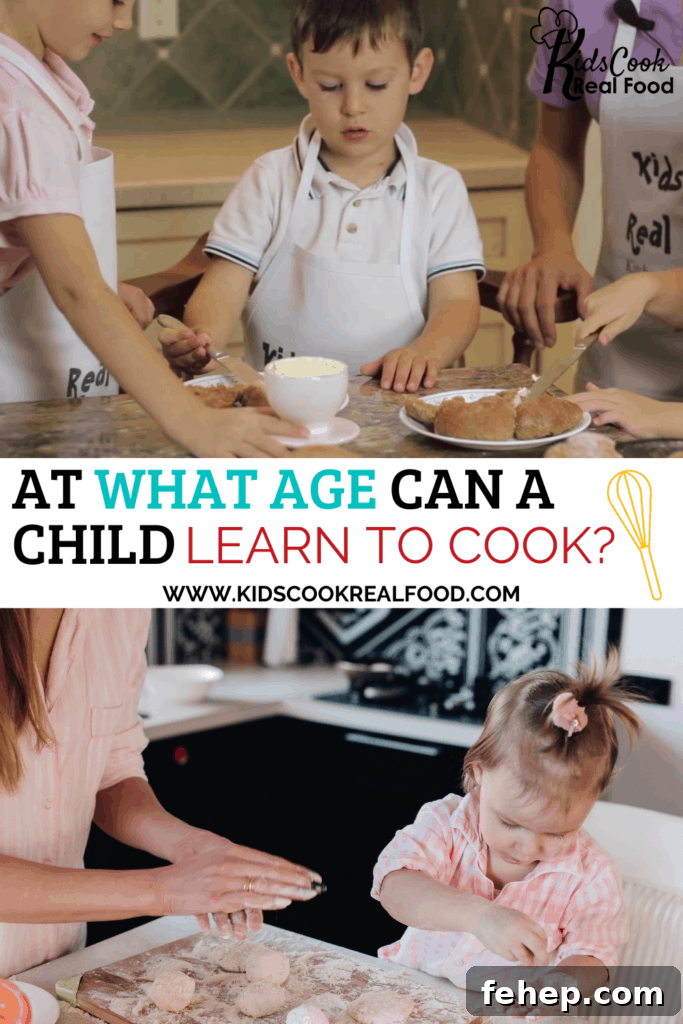
In short: children are never too young to start learning about food and cooking. With thoughtful supervision, age-appropriate tasks, and a focus on positive experiences, toddlers and preschoolers can develop real skills and a lasting sense of belonging in the kitchen.