
Sourdough pizza dough yields some of the best pizza you’ll ever taste. The complex sourdough flavor combined with a base that’s both crispy and tender is irresistible. This version is mixed in a stand mixer or Thermomix to speed up the kneading stage, making the process quicker and easier without sacrificing texture or taste.
To make this dough you’ll need an active, bubbly sourdough starter. If you prefer a faster option, a discard-based pizza dough can also work well.
What if you need sourdough pizza quickly?
This recipe is designed as a pure sourdough dough, but if you need pizzas ready in just a few hours you can add a pinch of commercial yeast. That small addition speeds up the rise while still preserving much of the sourdough character. If I mix the dough at lunchtime and keep it somewhere warm, it will often be ready by late afternoon without added yeast. For a faster turnaround, a teaspoon or less of instant yeast will help when time is short.
Don’t use a rolling pin
One of the best tips for shaping sourdough pizza is to avoid a rolling pin. Rolling compresses the dough and removes the lovely air pockets that develop during fermentation.
When you turn the dough out of the bowl, let the smooth side rest against the work surface. Use a dough scraper to divide the bulk into individual portions (around 290 g per pizza is a good target) and form each piece into a tight ball. Press and stretch the dough with your fingers to form the base. It should feel elastic and slightly springy rather than sticky if the gluten has been well developed in your mixer or Thermomix.
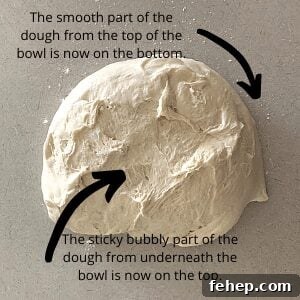
You can also hold the dough and gently rotate it while supporting the edges with your fingers, allowing gravity to help stretch the center. This preserves the airy crumb and produces a crust with soft bubbles wrapped in a crisp base that supports toppings without collapsing.
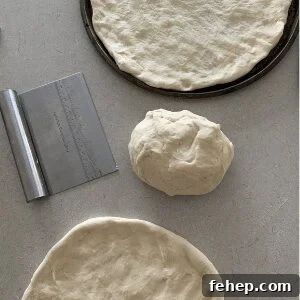
Shaping by hand makes a noticeable difference in the finished texture, giving you a light, open crumb and a satisfyingly crisp exterior.
Cooking your sourdough pizza
These doughs bake well in a conventional oven. Two reliable methods are using a cast-iron skillet for deeper, pan-style pizzas or baking on perforated pizza trays for a crisper bottom. Perforated trays allow hot air to circulate under the base and give excellent results in a home oven.
You can also use a pizza stone or a wood-fired oven if you have one. The key is a very hot oven to quickly set and crisp the base. Once the base is established you can lower the temperature slightly to ensure toppings cook through without burning.
Can you freeze sourdough pizza dough?
Yes. This dough freezes extremely well, which makes it ideal for batch cooking. I often double or triple the recipe, shape the bases, and freeze them separated by baking paper. Lay the stacked bases on a tray to freeze solid, then transfer them to a wrapped bundle or airtight container. You can bake them straight from frozen without thawing—top and bake as usual, adding a minute or two if needed. This method gives you a quick, fresh-tasting pizza any night of the week.
Equipment for sourdough pizza dough
You don’t need specialized gear to make great pizza dough, but a few helpful tools will make the process easier and improve results:
- Stand mixer or Thermomix — for efficient kneading and consistent dough development.
- Digital scales — to measure ingredients accurately and portion dough evenly.
- Mixing bowl — a clear glass bowl is useful so you can see how the dough is proving.
- Dough scraper — for dividing and handling sticky dough cleanly.
- Perforated pizza trays or pizza stone — for a crisp base in a home oven.
- Cast-iron skillet — excellent for deep-dish or pan-style pizzas.
Further reading
If you enjoy this sourdough pizza dough, consider exploring articles about the best flours for sourdough pizza, Thermomix sourdough recipes, or alternative sourdough flatbreads and naans that can be adapted into mini pizzas.

Sourdough Pizza Dough (Stand Mixer or Thermomix)
Equipment
- Stand Mixer
- Digital Scales
- Mixing Bowl
- Pizza Trays or Stone
Ingredients
- 500 g bread flour
- 20 g salt
- 30 g olive oil
- 20 g honey
- 280 g water
- 200 g active, fed sourdough starter
Instructions
- Weigh all ingredients into the bowl of your stand mixer or Thermomix. There’s no need to pre-mix; add them on top of each other. This dough is forgiving.
- Use the knead function or dough hook and knead for about 4–5 minutes. For Thermomix, use the dough function for 4 minutes. The dough should be smooth, silky, and pull away from the sides of the bowl. If sticky, add a little extra flour and knead another minute or two.
- Transfer the dough to a warm, lightly oiled bowl. Cover with cling film or a damp towel and leave to rise until doubled. Timing depends on kitchen temperature; watch the dough rather than the clock. Using 200 g of starter speeds the process compared to smaller amounts.
- When doubled, divide the dough into portions. About 290 g per ball yields a nicely sized pizza. Let the balls rest on the counter, covered, for about 30 minutes to relax the gluten.
- Shape each ball by pressing and stretching with your fingers. If you need extra stretch, lift the dough and let its weight help form the round. Avoid using a rolling pin to preserve the sourdough texture and open crumb.
- Place dough on pizza trays or into a lightly oiled skillet, add toppings, and bake in a very hot oven (about 230°C / 450°F) for roughly 15 minutes, or until toppings are cooked and bases are crisp underneath.
Notes
Using a mixer: A stand mixer or Thermomix makes kneading quick and consistent, especially when time is limited.
Kneading by hand: You can knead by hand for 10–12 minutes until the dough is silky and elastic, but it requires effort.
Pre-baking: If you load pizzas with heavy toppings, consider blind-baking the bases for 4–5 minutes to avoid soggy bottoms. Prick the base lightly before pre-baking.
Freezing: Dough freezes well at the ball stage or rolled out between sheets of baking paper. You can also freeze pre-baked bases. Bake from frozen or thaw before topping and baking.
Nutrition
Nutrition values are estimates and should be used as a guide only.
Enjoyed this recipe? Leave a comment or rating below.