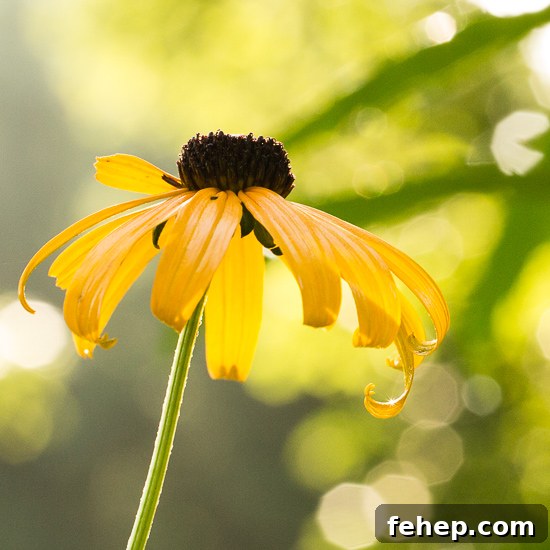
Plant a single black-eyed Susan and you will be rewarded. If you don’t mind it spreading across your garden in just a few years, that is. I don’t mind — I welcome it. These cheerful flowers begin blooming for me from late July into early August, and they always bring a sense of autumn’s approach. Their sunny yellow petals paired with deep chocolate-brown centers feel like little previews of fall colors.
I especially appreciate the way black-eyed Susans form large, attractive clumps. They’re hardy, low-maintenance, and remarkably photogenic — perfect for beds, borders, and naturalized areas. They also attract pollinators like bees and butterflies, adding life and movement to the garden throughout the late summer and early autumn months.
While my favorite flowers are daisies, black-eyed Susans rank a close second. I’m drawn to simple, classic blossoms with petals radiating from a central disk — the same kind of flower many of us sketched as children. Their uncomplicated shape and bold contrast make them ideal for both casual cottage gardens and more structured plantings.
Whether planted in mass for a sunny display or used as accents among taller perennials, black-eyed Susans bring reliable color and cheerful presence to the landscape. They tolerate a range of soil types and full sun, and they return year after year with minimal care. If you’re looking for a dependable, eye-catching flower that signals the change of seasons, consider adding a few black-eyed Susans to your garden.
What about you — what is your favorite flower?