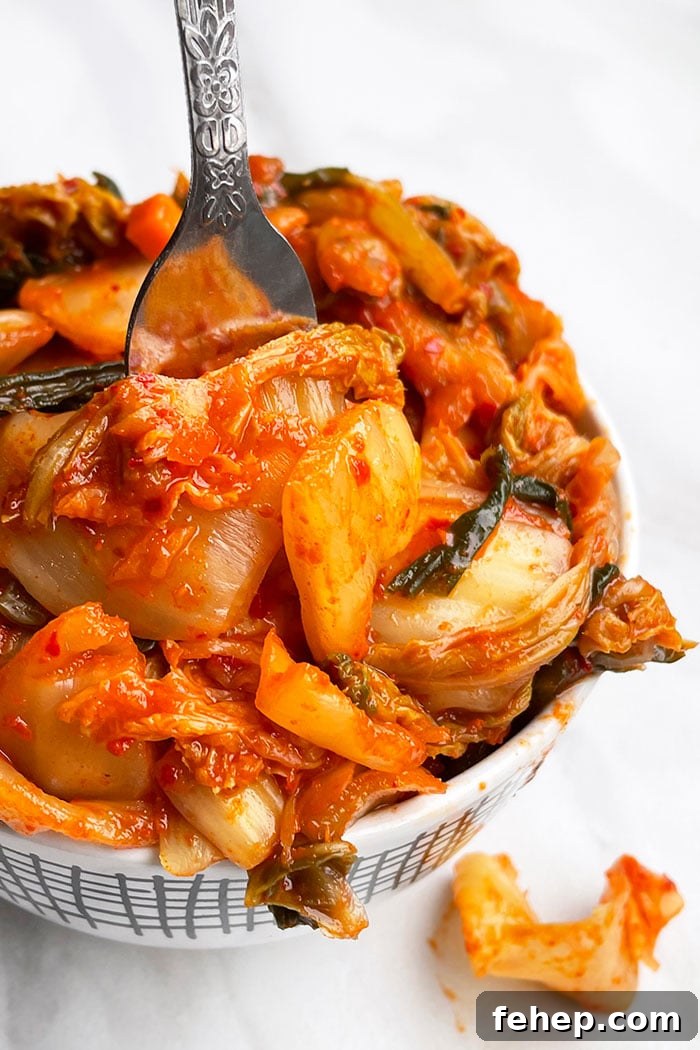
Easy Korean kimchi made at home with simple ingredients. Napa cabbage and green onions are fermented in a tangy, spicy red sauce.
If you haven’t tried kimchi, you’re missing a bold, flavor-packed traditional Korean staple. This version keeps cleanup minimal: one large bowl and a blender or food processor are all you need. The process is straightforward and the result is worth the slight extra effort. Kimchi is versatile — try it with rice, soups, grilled meats, or as a vibrant condiment with many dishes.
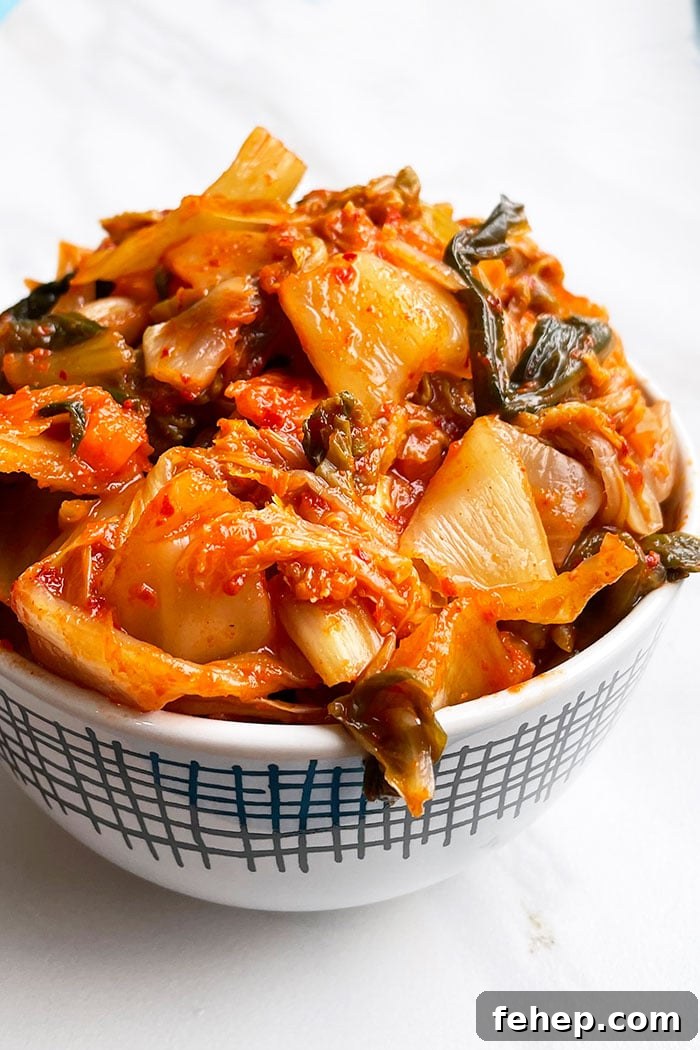
What is kimchi? What does it taste like? Is it spicy?
Kimchi is a traditional Korean fermented vegetable dish, most commonly made with Napa cabbage. The cabbage is salted, seasoned, packed into a jar and allowed to ferment. Recipes and fermentation times vary by household — from a day to several years. The flavor is tangy and sour from fermentation and usually has a spicy, savory kick.
Making kimchi is simple and rewarding
- Cost-effective
- Uses basic, fresh ingredients
- Easy to adjust to taste
- Great as a homemade gift
How to make homemade kimchi from scratch
- Mix salt and water — dissolve the salt in a large bowl of water.
- Soak the cabbage — add the cabbage and let it sit until wilted.
- Make the red pepper paste — blend onion, garlic, ginger, fish sauce (or shrimp paste), sugar, Korean red pepper powder and a bit of water until smooth.
- Drain and rinse the cabbage — rinse in cold water to remove excess salt.
- Coat the cabbage — mix the cabbage with the red pepper paste and green onions so everything is well coated.
- Pack into jars — press the kimchi firmly into a jar, removing air pockets and filling it completely. Use multiple jars if needed.
- Ferment at room temperature — tighten the lid and leave the jar out for 24–72 hours or longer depending on your taste.
- Refrigerate — move the kimchi to the fridge when it’s as sour and ripe as you like.
Kimchi base ingredients
- Sea salt or kosher salt — iodine-free salt is recommended for fermentation.
- Water — for wilting the cabbage.
- Napa cabbage — 4–5 pounds, cut into 1–2 inch pieces.
Spicy kimchi paste (blend until smooth)
- ½ cup onion, sliced
- 2 cloves garlic, peeled
- 1 tsp fresh ginger, grated
- 1 tbsp fish sauce or shrimp paste (optional for vegetarian version)
- 1 tsp granulated sugar
- ½ cup Korean red pepper powder (gochugaru)
- ¼ cup water
Fermentation time
Kimchi needs at least 24 hours to begin fermenting. Taste it with a clean spoon after a day. For a tangier, more mature flavor, leave it at room temperature for another 2–4 days, checking daily. Bubbles and some brine seeping from the jar are normal signs of active fermentation. Two days at room temperature is a common sweet spot for many.
What to serve with kimchi
Kimchi pairs beautifully with Korean barbecue, soups, bibimbap, dumplings, or simply as a side with rice.
Rice is a classic pairing — use kimchi as a topping or side for white rice, fried rice, or garlic rice. It also complements many Asian-inspired mains and soups as a bright, spicy contrast.
Variations
Cucumber kimchi — thinly slice cucumbers or stuff them with paste for a crunchy ferment.
Radish kimchi — add thinly sliced radish for texture and sweetness.
Vegan kimchi — omit fish sauce or use a vegetarian umami alternative.
Add carrots — julienne or thinly slice carrots before mixing.
Bok choy — use instead of Napa cabbage for a different texture and flavor.
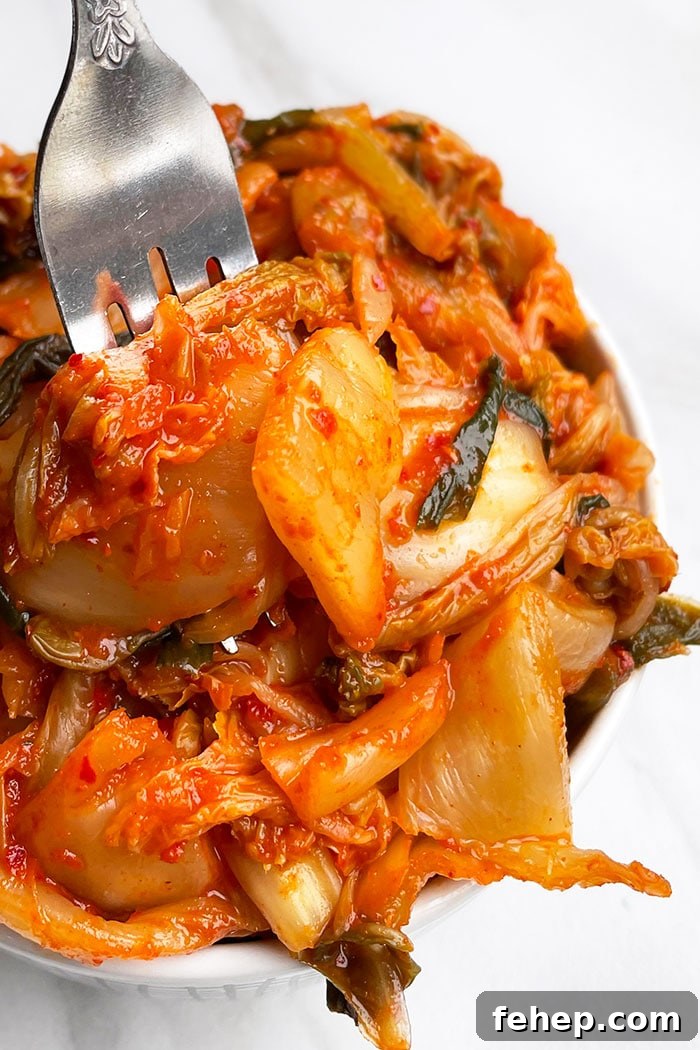
Tips and techniques
Use Napa cabbage — American (green) cabbage does not give the same texture or flavor.
Seal jars well — close lids tightly to create an environment for fermentation.
Avoid iodized table salt — it can inhibit fermentation and alter texture.
Adjust sourness — longer room-temperature fermentation yields a tangier kimchi; shorter time keeps it milder.
Don’t substitute gochujang for red pepper powder — gochugaru (Korean red pepper powder) provides the right balance of heat and texture for traditional kimchi.
Control spice — reduce or increase the red pepper powder to make mild or spicy kimchi.
Fish sauce alternatives — shrimp paste or omitting the ingredient will still produce tasty kimchi.
Soak the cabbage — don’t skip salting and soaking; it softens the cabbage and helps a healthy ferment.
Storage
Refrigerate — store kimchi in a sealed jar in the fridge. Use clean utensils to avoid contamination. Properly handled kimchi keeps well for weeks to months depending on salt and fermentation level.
Freezing — not recommended, as the high water content alters texture on thawing.
More cabbage recipes
- Fried Sausage and Cabbage
- Classic Cabbage Soup
- Fried Cabbage with Bacon
- Thai Chicken Salad
- Oil and Vinegar Coleslaw
Recipe
Homemade Kimchi
Abeer Rizvi
Ingredients
Cabbage
- ½ cup sea salt (or kosher salt, iodine-free)
- 1 cup water
- 4–5 lb Napa cabbage, cut into 1–2 inch pieces
Spice paste
- ½ cup onion, sliced
- 2 cloves garlic, peeled
- 1 tsp fresh ginger, grated
- 1 tbsp fish sauce or shrimp paste (optional)
- 1 tsp granulated sugar
- ½ cup Korean red pepper powder (gochugaru)
- ¼ cup water
- 4 green onions, cut into 2-inch pieces
Instructions
- Mix sea salt and water in a large bowl until the salt dissolves.
- Add cabbage and let it sit in the salted water for 1–2 hours, or until significantly wilted.
- In a blender, combine onion, garlic, ginger, fish sauce, sugar, red pepper powder and water. Blend to a smooth paste and set aside.
- Drain and rinse the cabbage in cold water to remove excess salt.
- Return the cabbage to the bowl, add the red pepper paste and green onions, and mix thoroughly so the cabbage is well coated.
- Pack the seasoned cabbage tightly into a large mason jar, pressing down to remove air pockets. Repeat with additional jars if needed.
- Close the lid and leave the jar at room temperature to ferment.
- Taste after 24 hours. If you prefer a stronger sour flavor, leave it out for another 2–4 days, checking daily. Bubbles and a little brine on the lid are normal.
- When the kimchi reaches your desired flavor, transfer the jar to the refrigerator. Enjoy!
Notes
- Follow the tips above for best results.
- Store in the refrigerator; properly handled kimchi can keep for weeks to months depending on salt and fermentation level.
Nutrition
Carbohydrates: 10 g
Protein: 3 g
Fat: 1 g
Sodium: 7274 mg
Nutritional information is estimated by an automated tool and may not be exact.
Tried this recipe?
Leave a comment below or rate the recipe.