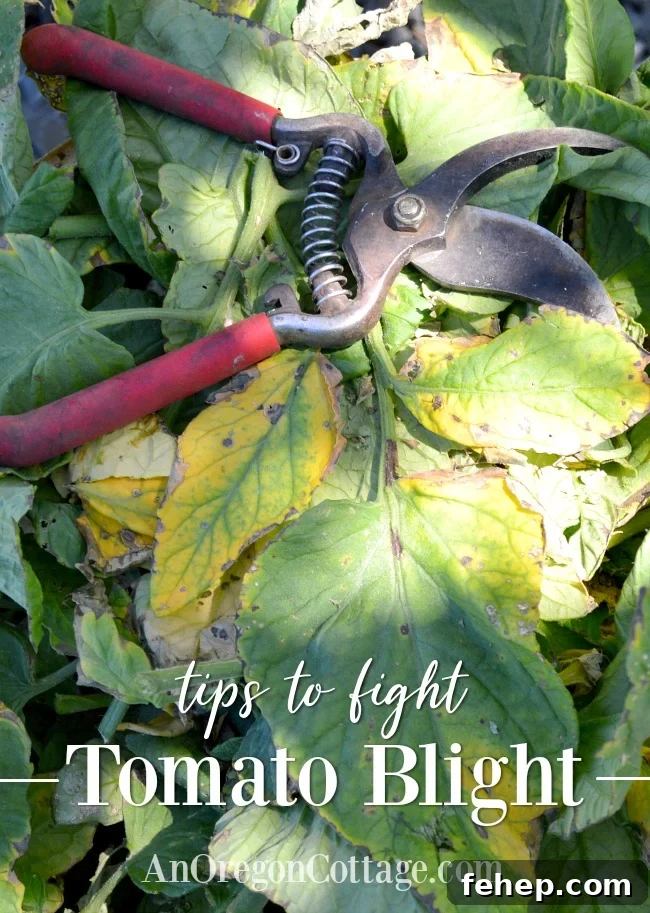
If your tomato leaves turn yellow and then brown on the lower and inner foliage in June or July, it’s likely early tomato blight. Don’t panic — with a few straightforward steps you can keep plants productive until frost.
How was your July 4th weekend? I hope it included food and a few fireworks. Mine had family and food, but I skipped the fireworks. Gardening, though, was front and center — I spent time tackling an outbreak of early tomato blight that raced through many of my plants.
Tomato blight isn’t new; most gardeners meet it every season to some extent. Fortunately, a few practical measures can keep plants healthy enough to produce through to the first frost. Using these tactics I’ve never lost plants before October, which is when frost usually arrives here.
Healthy Tomato Plants
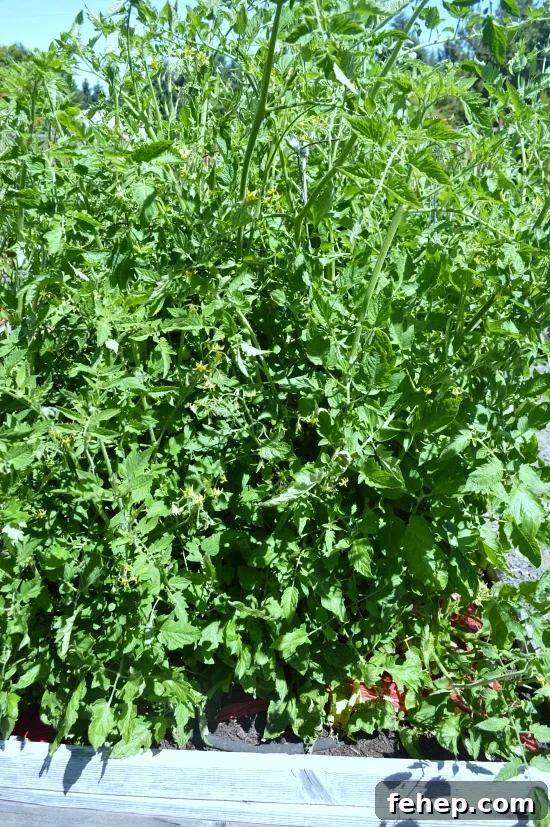
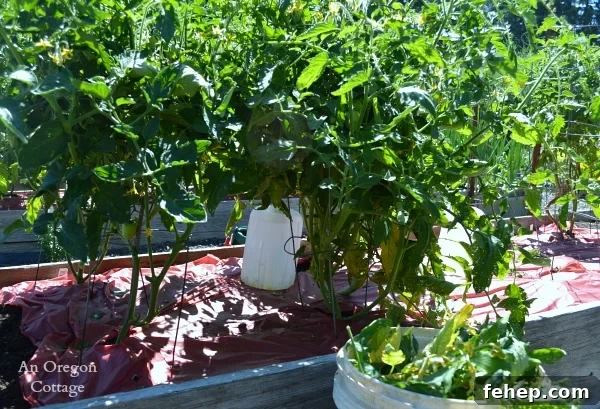
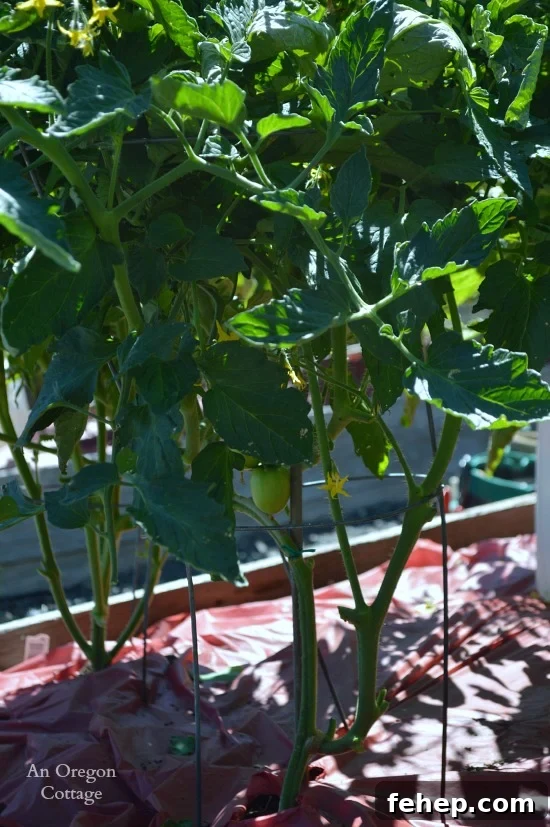
Even when many plants are affected, not all will show blight. The photo above shows two healthy varieties — a Black Cherry and a Honey Bunch Grape — planted together because they’re vigorous and compact. I did trim the lower foliage a bit after taking the picture to improve airflow and discourage fungal growth.
There’s not always an obvious pattern to which plants get blight. Air flow helps, but some densely planted specimens remain untouched while others nearby succumb. This year I was delayed pruning because of graduations and other events, and by the time I got around to it many of my 16 plants had already started to lose the fight with early blight.
Note: You may also notice flea beetle damage on leaves. That cosmetic injury rarely affects fruit production, so I usually ignore it.
What is Early Tomato Blight?
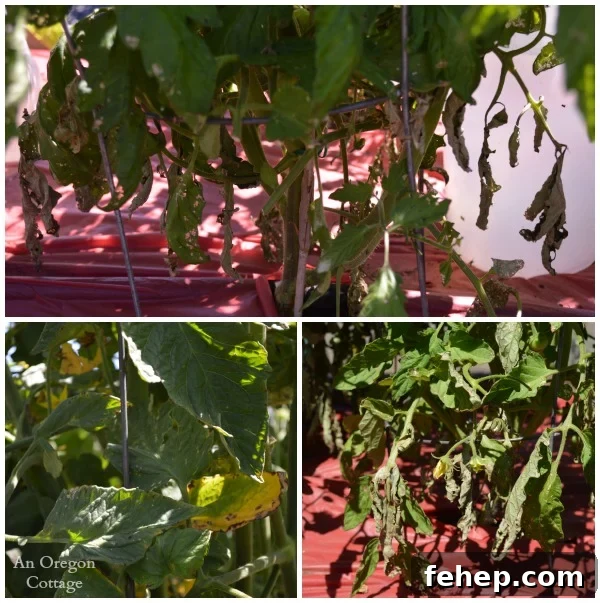
Early tomato blight is a fungal disease that commonly affects tomato leaves, stems, and sometimes fruit. Key points:
- It weakens plants and reduces yields but doesn’t usually kill them outright.
- It tends to attack plants that are stressed or in poor health.
- The fungus can survive in soil, be introduced on purchased seedlings, or overwinter in plant debris.
- It thrives in damp conditions — overhead watering, persistent dew, or rainy stretches encourage its spread.
- Early blight typically appears earlier in the season than late blight.
Early Blight vs. Late Blight
Early and late blight are caused by different pathogens and show distinct symptoms. Early blight produces brownish spots and yellowing leaves that become brown and dry. Late blight creates pale green spots on top with purplish-black discoloration underneath, and may form a white ring before turning black-brown. Early blight is generally manageable; late blight is often far more destructive and can kill plants quickly.
Identifying Early Tomato Blight
Leaves and stems affected by early blight develop dark spots (brown to black). Leaves yellow, then brown and dry out. It commonly starts on the lowest leaves and moves upward if not addressed. Stems can also show lesions, and fruit may become affected in severe cases.
What Makes Blight Worse?
Early blight is common in wet springs and cool, damp summers. My outbreak this season was driven by two main factors:
- I purchased a couple of paste tomato seedlings from a big-box store to replace ones my dog had destroyed. Those new plants arrived with many yellowing leaves and looked weaker than my home-grown seedlings.
- My delayed pruning, combined with two weeks of rain and warm, damp weather in late June, allowed the fungus to spread rapidly from those weaker seedlings to neighboring plants.
The store-bought seedlings were heavily infected, so I removed them entirely to protect the rest. I had to prune several other plants hard and hope the remaining foliage is sufficient for fruiting.
How to Fight Early Tomato Blight
Practical steps to manage early blight:
- Remove affected leaves and stems promptly. Avoid touching healthy foliage until you’ve washed your hands or tools.
- Prune lower and, if necessary, inner foliage to improve air circulation through the plant.
- Monitor plants closely and remove any diseased tissue as soon as symptoms appear.
- If the infection persists, consider an organic fungicide as a last resort, following label directions carefully.
Preventing or Minimizing Tomato Blight
I prefer saying “minimize” because even when I follow best practices I still see early blight most seasons, just less severely. Good organic practices that reduce risk include:
- Clean up and remove all tomato debris at the end of each season so the fungus can’t overwinter in plant material.
- Practice crop rotation so the same soil isn’t repeatedly hosting susceptible plants.
- Water at the soil level with soaker hoses or drip irrigation, avoiding overhead watering that wets foliage.
- Use plastic mulch to reduce soil splash onto lower leaves.
- Provide sturdy supports so plants stay upright and airflow improves.
- Keep lower leaves pruned to promote circulation and reduce humidity around foliage.
- Maintain plant health with consistent watering and good soil amendments so plants resist infection better.
Some tomato varieties are reported to be more resistant to early blight. I don’t limit myself strictly to resistant types because I like trying many varieties, but you might plant a mix of resistant and other favorites to compare performance in your garden.
After a round of pruning and removing severely affected plants, my remaining tomatoes look improved and should produce enough fruit for our salsa, roasted tomato sauce, chutney, and fresh eating until frost.
Do you battle early blight in your garden? What strategies have worked for you?