Colorful fruity smoothie bowls were a major trend for a while. But when you look at what goes into them—acai, banana, strawberries, dates, sweetened almond milk and extra fruit and granola on top—the sugar content adds up fast. All those carbohydrates can cause a sharp blood sugar spike, leaving you bloated and likely to experience an energy crash soon after. These one-note, fruit-forward smoothies often don’t keep you full for long.
Lately I’ve been enjoying low-sugar, fruit-free smoothies and I invite you to try them with me.
Below are practical tips to transform your smoothies into filling, balanced meals or meal supplements so you can enjoy them regularly without the downsides of excess sugar.
To be clear: I’m not saying fruit is bad. Fruit provides antioxidants, vitamins and minerals, and it belongs in a balanced diet. The key is being mindful of portions because fruit sugars can add up quickly and may contribute to inflammation, cravings and energy crashes. I used to have fruit-heavy smoothie bowls nearly every day. Since reducing sugar and shifting toward more healthy fats, my taste preferences changed and I now feel better with low-sugar options. This year I focused on cutting added sugar and have completed multiple short sugar detoxes, which helped me feel more energized, sleep better and notice improved performance in the gym.
Nutrition can be confusing, but it gets simpler if you aim to balance each meal with protein, healthy fats, fiber and greens. The same principle applies to smoothies: keep fruit to a minimum (about 1/2 cup or less), add quality protein, healthy fats and fiber to stabilize blood sugar and keep you full for hours.
Tips:
- Use about 1 to 1.5 cups of liquid base—unsweetened nut milk, canned coconut milk, coconut water or plain water. The volume of the smoothie increases once you add solids.
- If you like acai packets, choose the unsweetened variety (some stores like Trader Joe’s carry them frozen).
- Add a serving of protein powder—collagen, egg white, hemp, pea or organic whey—to slow digestion, stabilize blood sugar and support muscle maintenance.
- Make smoothies at home so you control ingredients and avoid hidden sugars.
- Steam and freeze vegetables (zucchini, cauliflower, spinach) to use instead of frozen fruit. Vegetables thicken and chill the smoothie while adding vitamins and minerals. Start with small amounts and increase gradually.
- If you buy smoothies out, request modifications: ask for less fruit, no dates, add flax or avocado, or swap in almond butter.
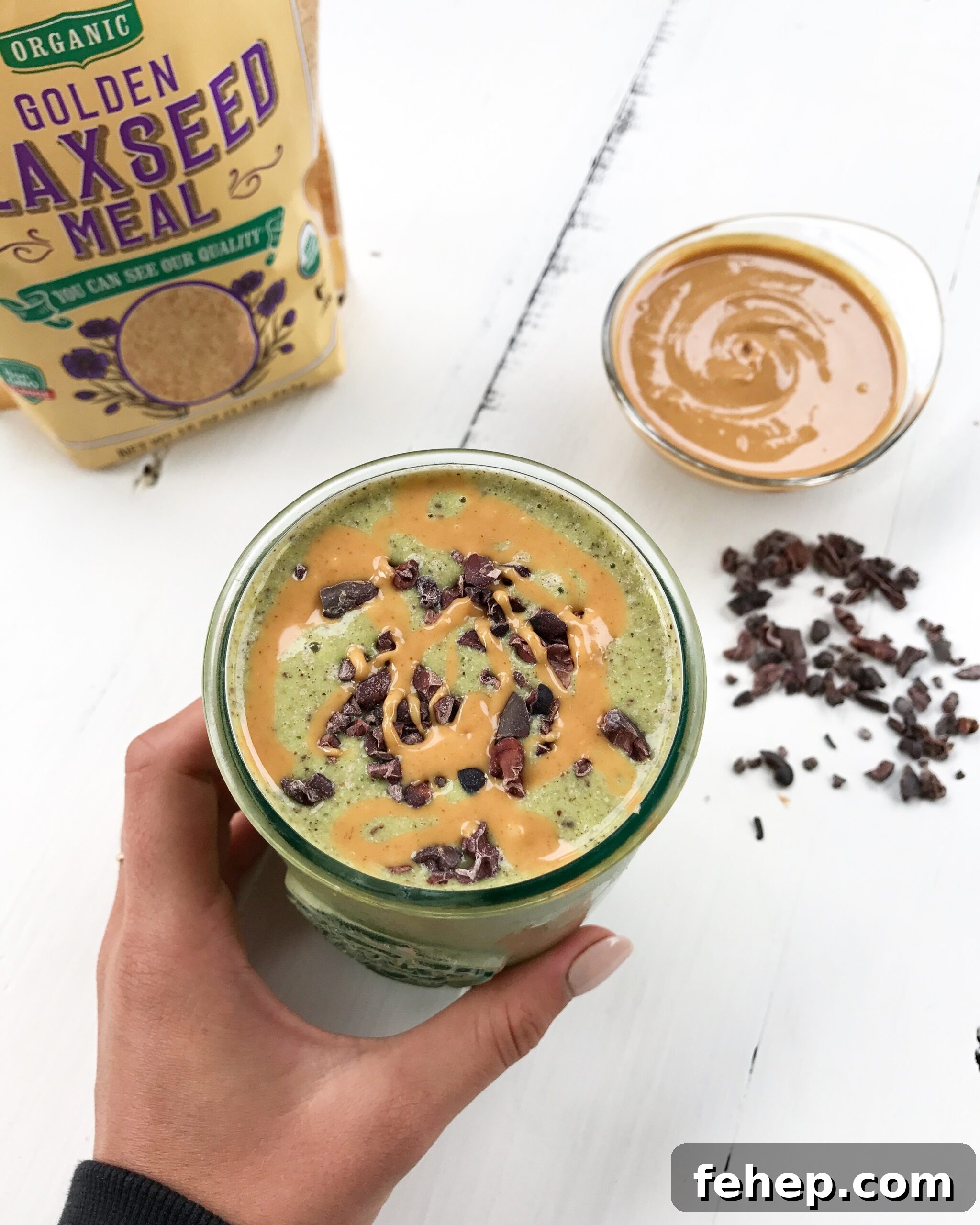
- Top smoothies at home with calorie-dense, whole-food options such as a drizzle of nut butter (choose brands with two ingredients or fewer), coconut butter, cacao nibs or unsweetened coconut flakes.
I hope those suggestions help. Now, onto my current favorite: the Peanut Butter Chip Smoothie.
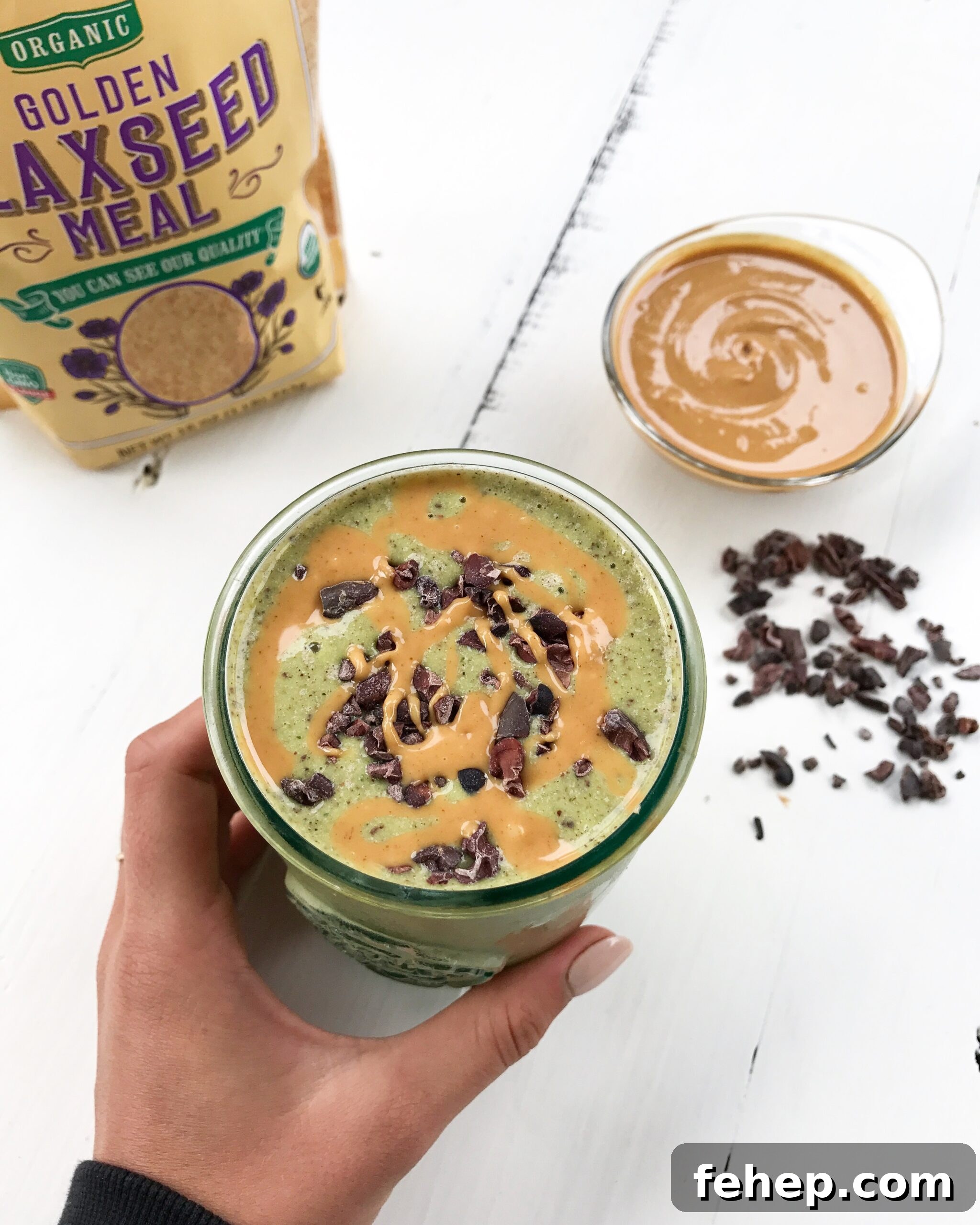
I love peanut butter, so I developed a fruit-free Peanut Butter Chip Smoothie that’s rich, satisfying and low in sugar. The recipe uses simple ingredients: unsweetened nut milk, frozen vegetables (zucchini and cauliflower to add volume), powdered peanut butter, spinach, cacao nibs and golden flaxseed meal. I often add flaxseed meal for omega-3s, fiber and plant-based protein. I prefer powdered peanut butter in smoothies because it disperses easily and delivers concentrated peanut flavor without as much oil.
If you try the recipe, let me know what you think in the comments.
Peanut Butter Chip Smoothie (Fruit-free!)
Ingredients
- 1.5 cup unsweetened almond milk
- 1/2 cup frozen raw zucchini
- 1/2 cup steamed then frozen cauliflower
- 2 tbsp Bob’s Red Mill Golden Flaxseed Meal
- 3 tbsp powdered peanut butter
- 1 Handful spinach
- 2 tbsp cacao nibs
Instructions
-
Blend all ingredients in a high-powered blender until smooth. Serve topped with a drizzle of peanut butter and a sprinkle of cacao nibs.