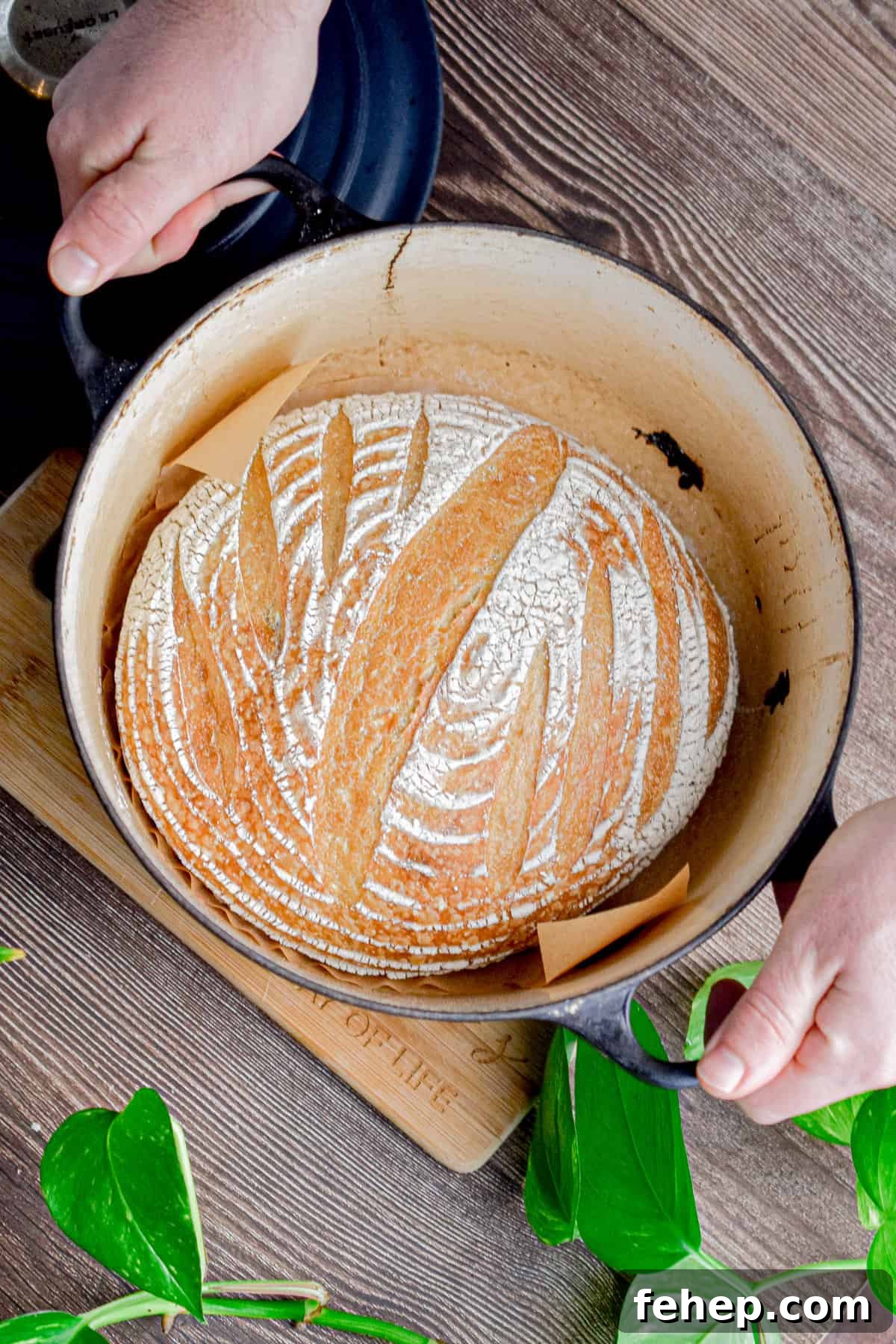
Break out your Dutch oven to make a crusty, easy sourdough loaf — a perfect recipe for beginners!
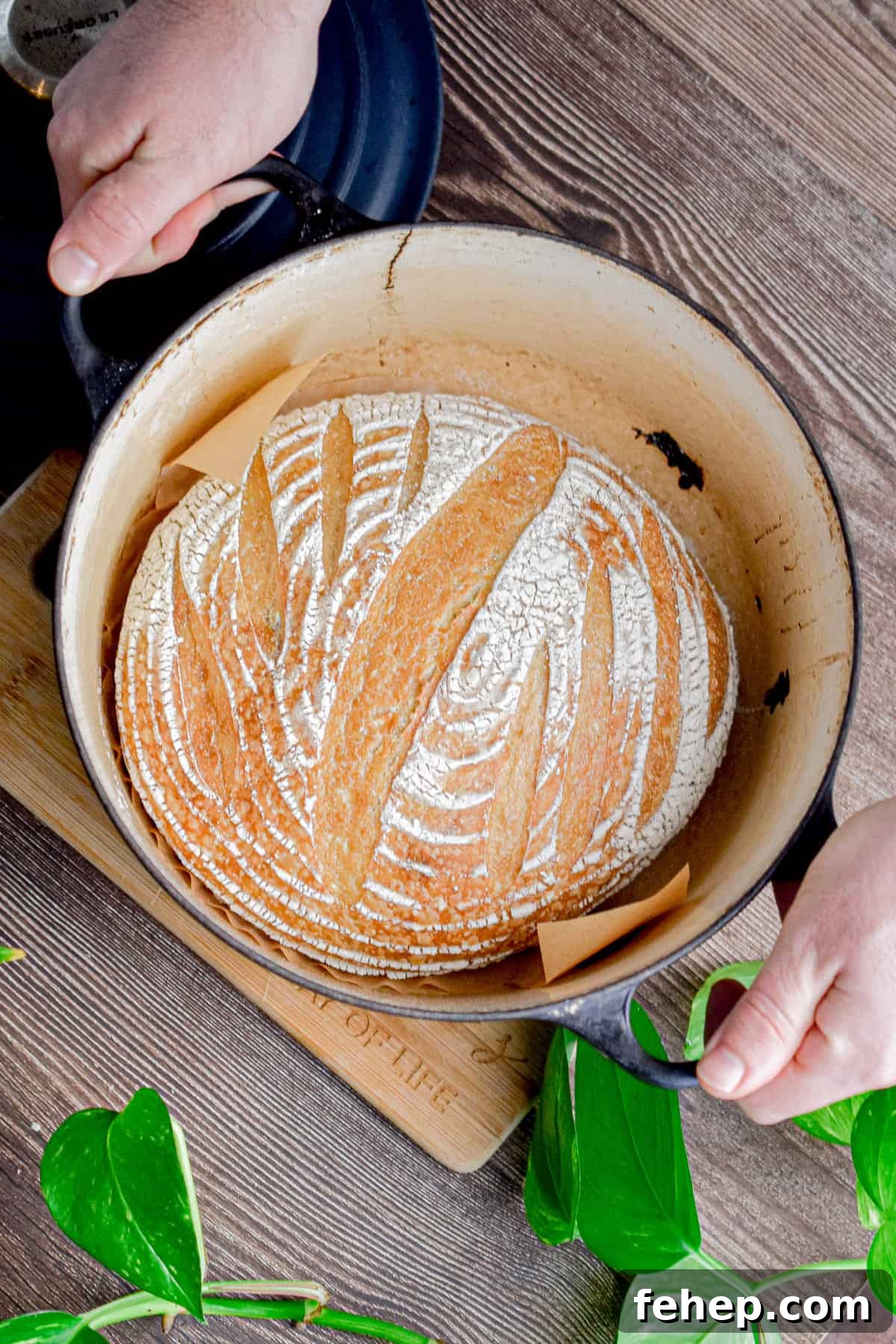
A Dutch oven is one of the most useful tools for baking sourdough. Its thick walls and tight lid trap steam, helping create a crisp, golden crust and excellent oven spring. I use a Dutch oven for most of my artisan loaves because it reliably produces great results.
If you’re new to sourdough, spend a little time learning common terms so you know what to expect during fermentation and shaping — that will help your loaves turn out well. Once you’re comfortable, you can try other recipes like sourdough English muffins, sandwich loaves, or French-style bâtards.
This Dutch oven sourdough is an ideal first loaf: simple, straightforward, and forgiving.
What is Sourdough Bread?
Sourdough is made from flour, water, salt, and wild yeast captured and maintained in a starter. Unlike commercial yeast, a sourdough starter relies on naturally occurring wild yeast and beneficial bacteria to leaven the dough and develop flavor. An active, bubbly starter gives bread its characteristic tang and good rise.
You can create your own starter from scratch, buy one, or get a feed from a friend. Proper feeding and maintenance are essential for a reliable, strong starter.
What is a Dutch Oven?
A Dutch oven is a heavy, heat-retaining pot—often cast iron or enameled—designed with thick walls and a snug lid to distribute heat evenly. It works well for stovetop and oven cooking and is especially helpful for baking sourdough because it traps steam and creates a professional crust.
Beyond bread, a Dutch oven is versatile for soups, roasts, braises, and one-pot meals.
Ingredients to Gather for Dutch Oven Sourdough
You only need a few simple ingredients for this recipe.
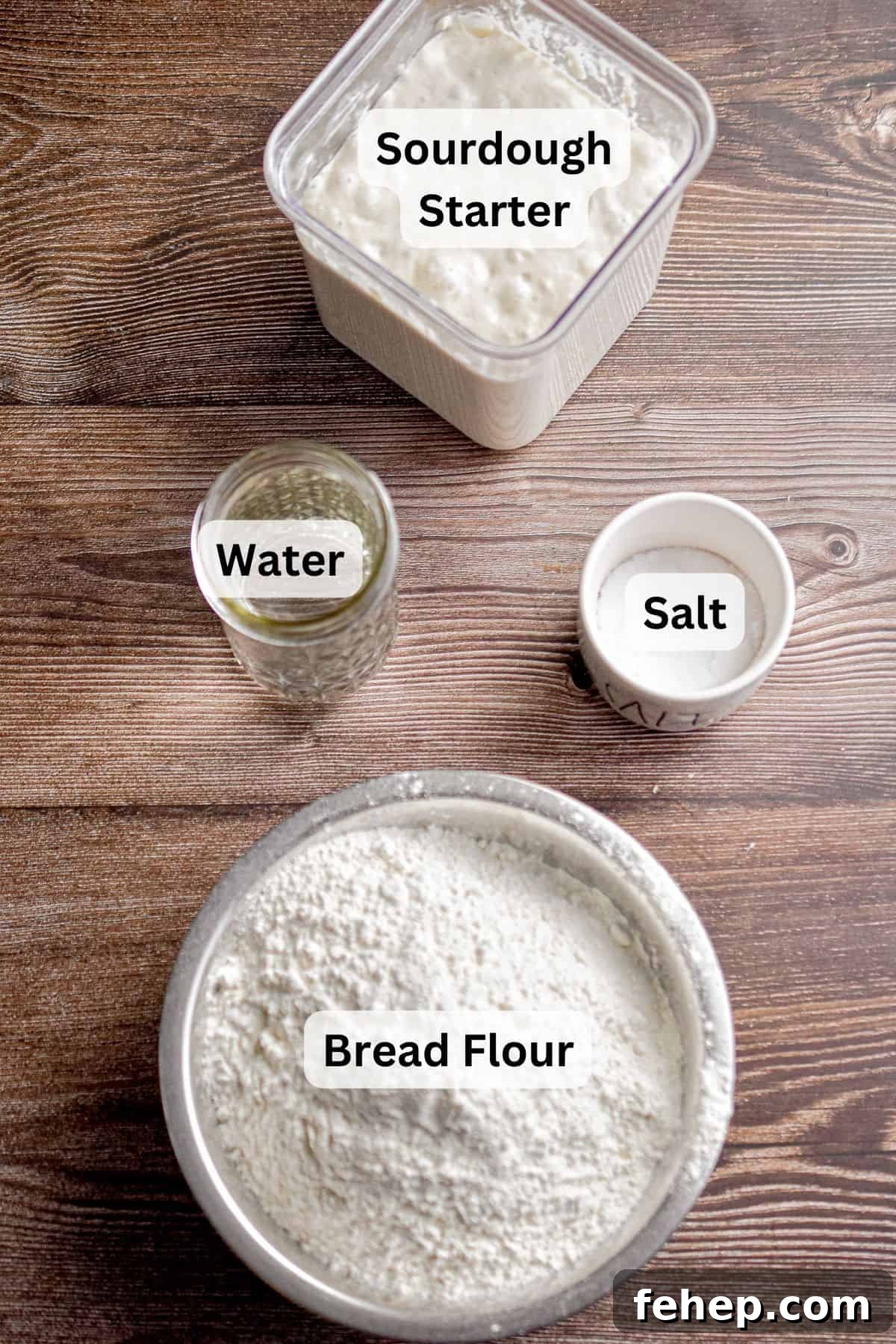
- Active sourdough starter: Fed, bubbly, and ready. A healthy starter ensures good fermentation and oven spring.
- Flour: Bread flour yields better structure, but all-purpose flour works fine. You can also substitute part of the white flour with whole wheat or rye.
- Salt: Use kosher salt when possible. Salt controls fermentation and enhances flavor.
- Water: Filtered water is best to avoid off flavors from tap water.
See the recipe card below for exact ingredient amounts.
Substitutions and Variations
- Change the flour: Swap some or all of the white bread flour for whole wheat or rye to add flavor and nutrition.
- Add mix-ins: Fold in seeds, nuts, cheese, or dried fruit during the last stretch-and-folds for flavored loaves.
- Shape differently: Shape as a boule (round) or bâtard (oval). You can also divide the dough to bake rolls or smaller loaves.
How to Bake Sourdough in a Dutch Oven
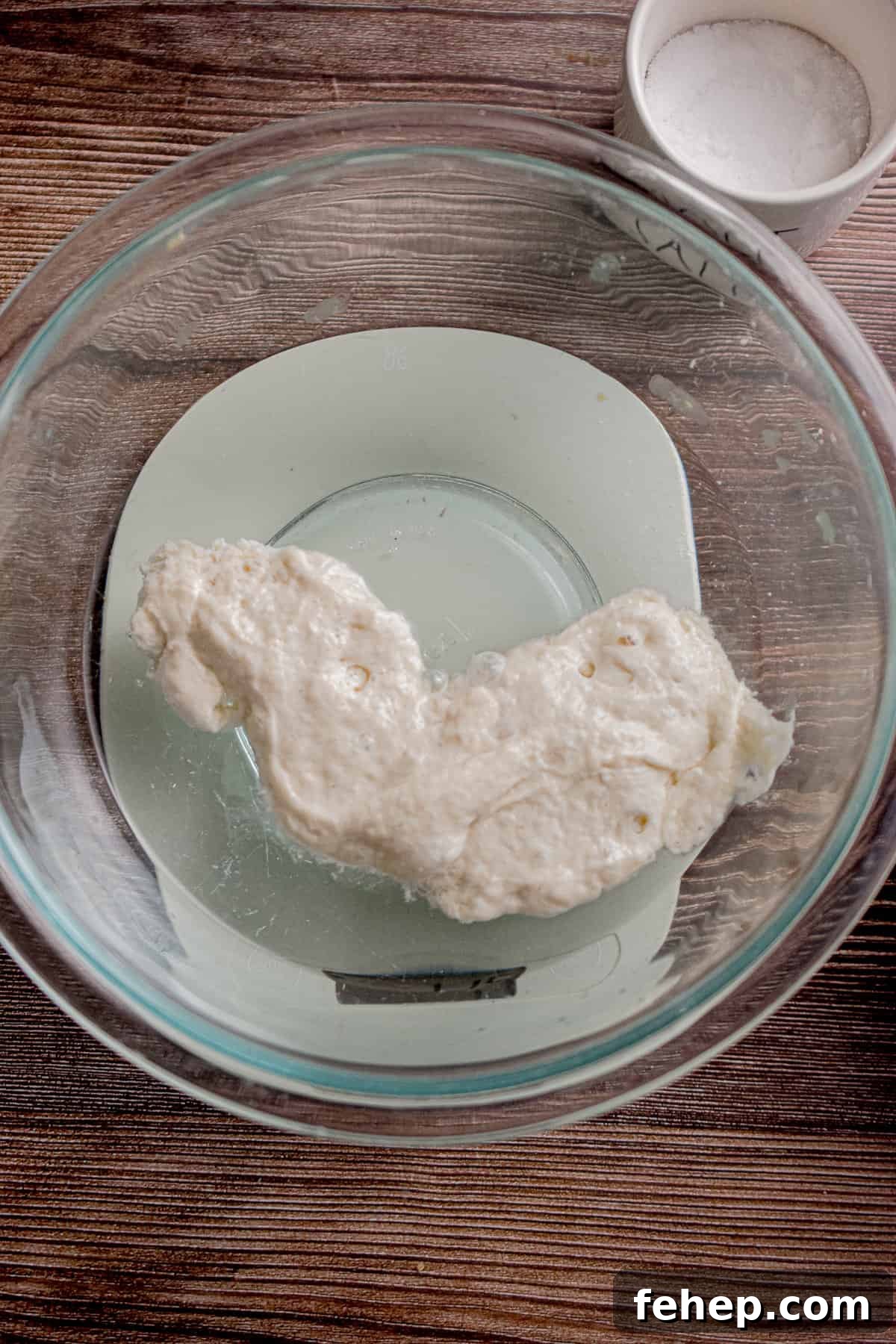
Step 1: In a large bowl combine the water and active sourdough starter, mixing until the starter dissolves into the water.
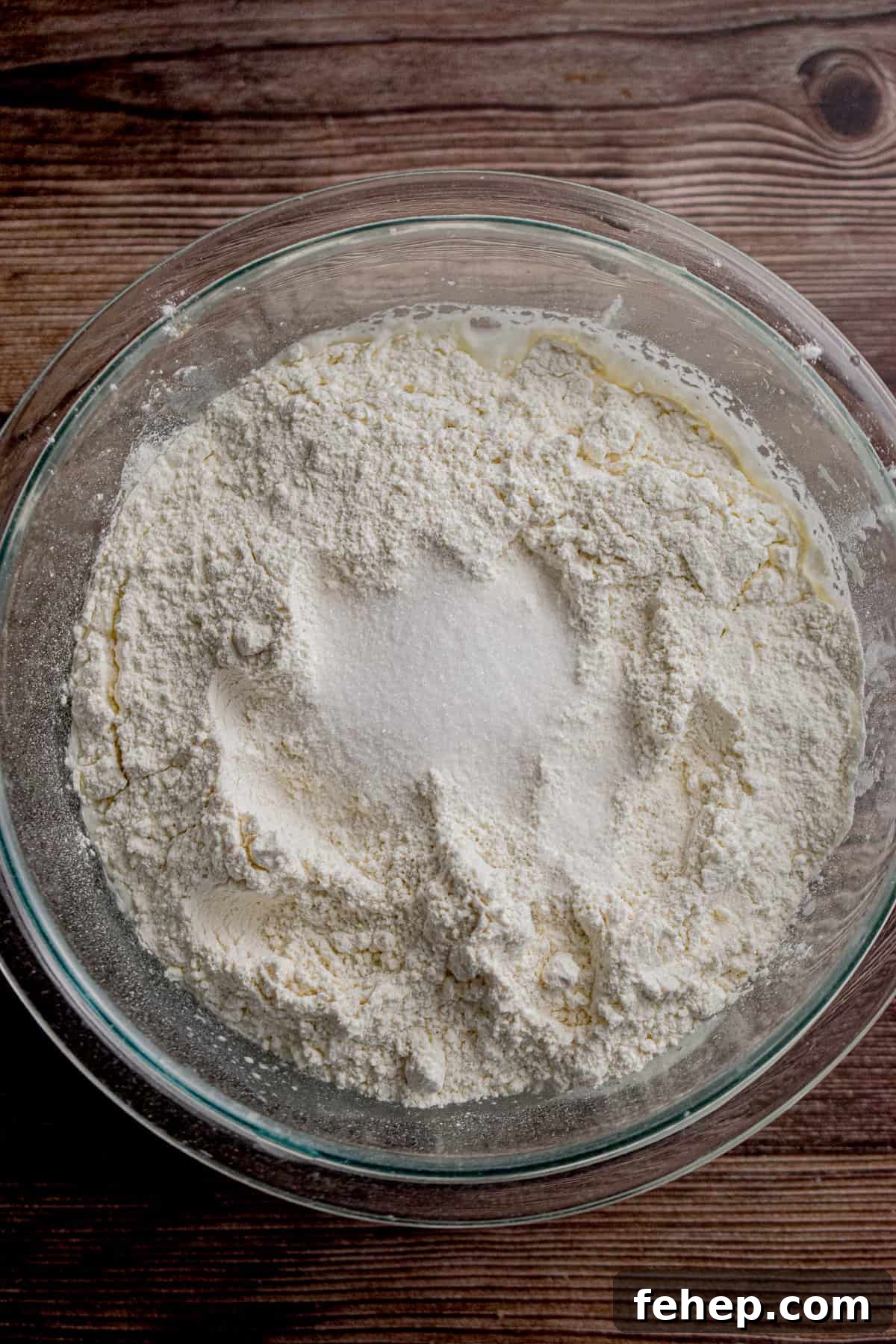
Step 2: Add the flour and salt, then mix until a shaggy dough forms.
Top Tip
Use a kitchen scale for accurate measurements — weighing ingredients leads to more consistent results than volume measurements.
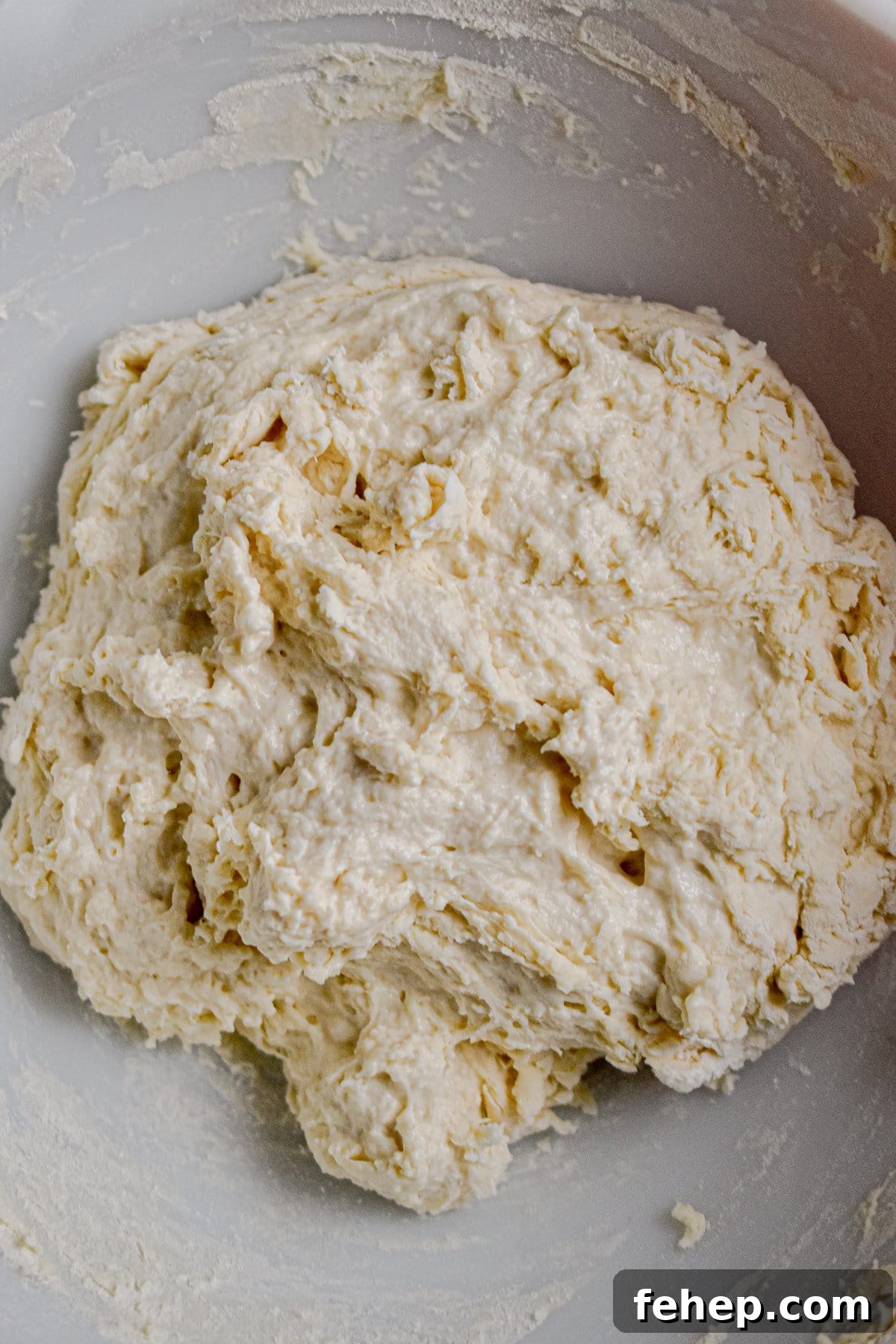
Step 3: Cover the bowl with a damp towel and let the dough rest for 1 hour.
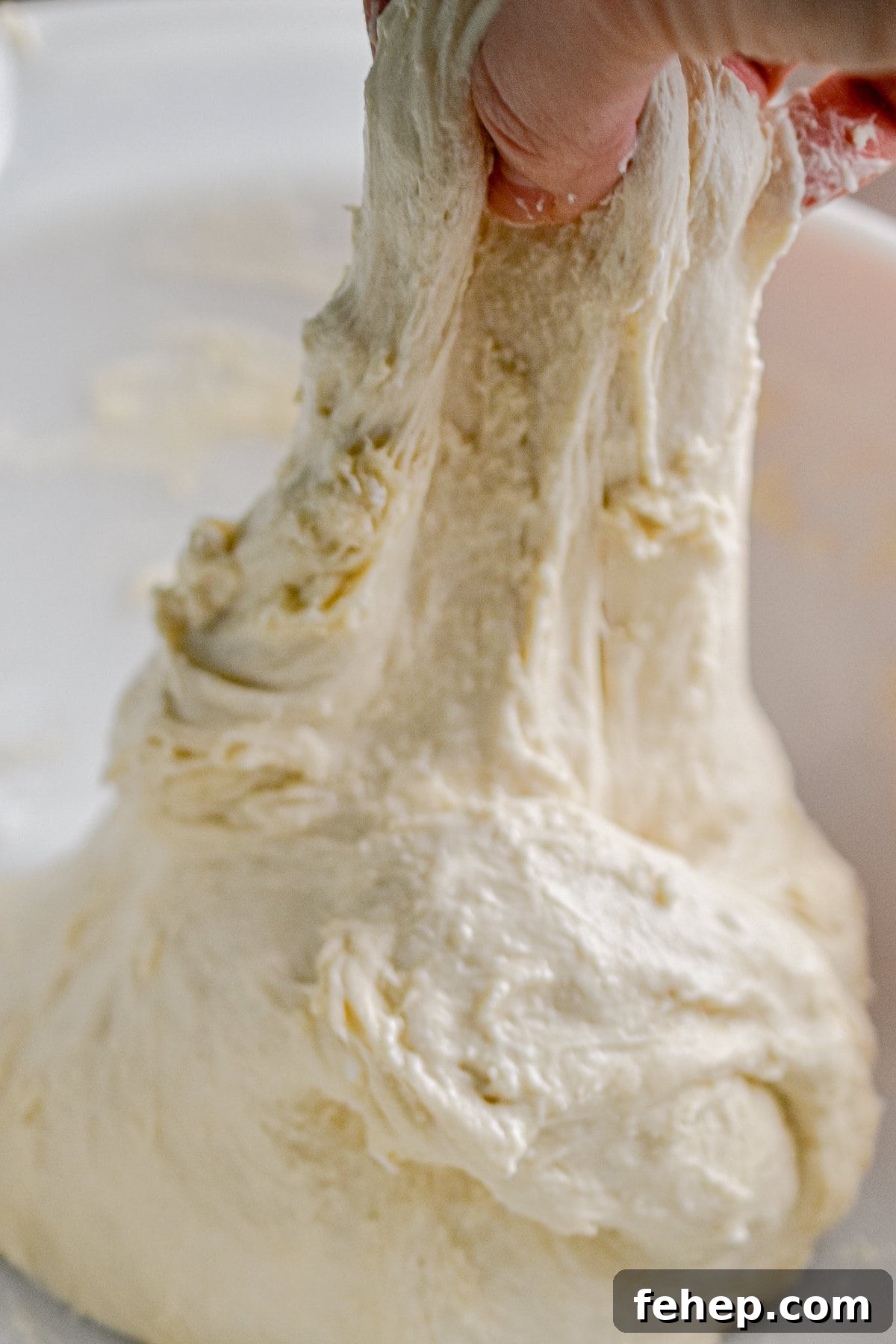
Step 4: After an hour, perform a stretch-and-fold: pull one side of the dough up and fold it toward the center. Repeat on all sides. Repeat this sequence three more times at intervals, then cover and refrigerate or leave to bulk ferment overnight (about 8–10 hours) depending on room temperature.
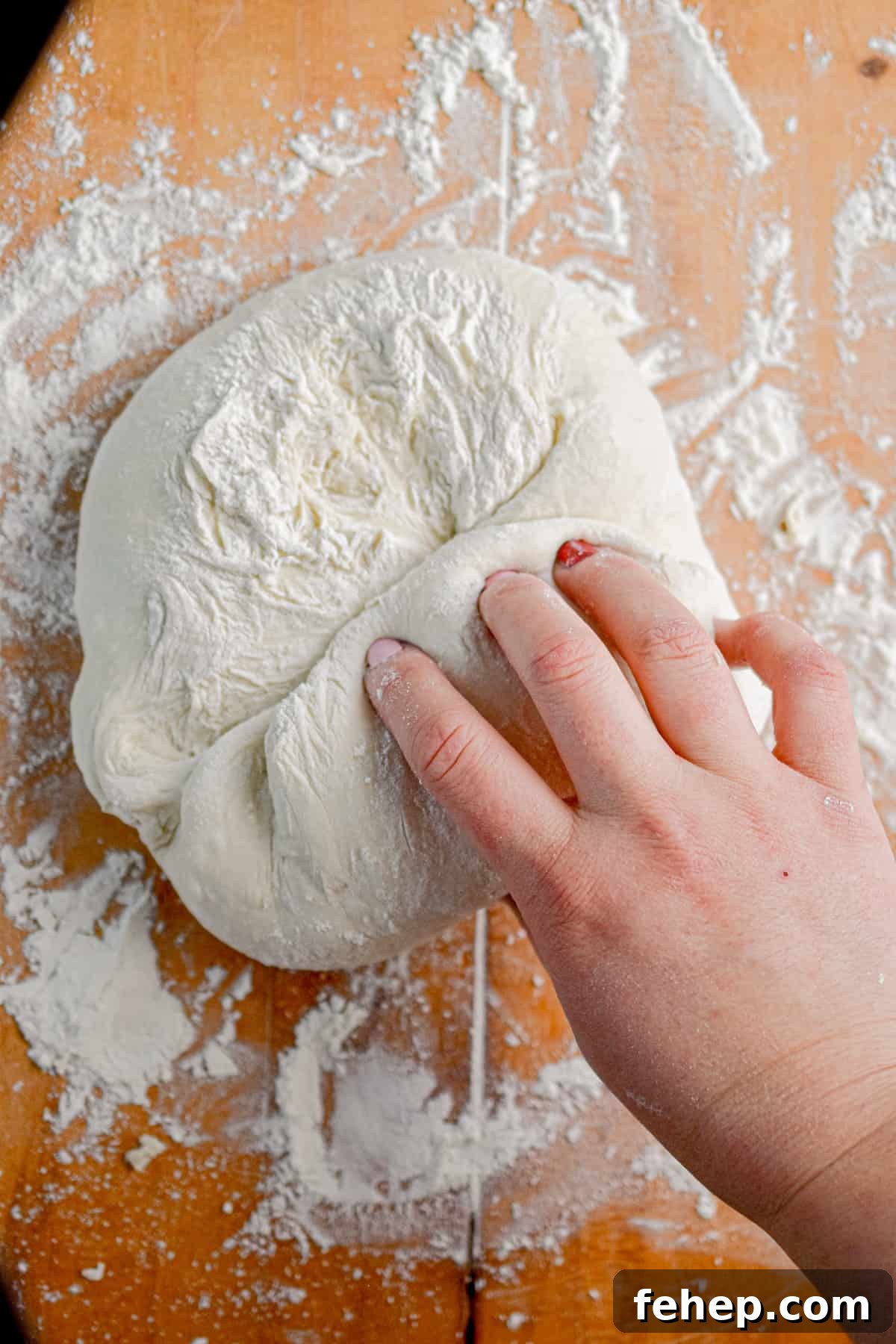
Step 5: On the next day, lightly flour your work surface, turn out the dough, and shape it into a tight boule to develop surface tension. Place the shaped boule into a floured proofing basket (banneton), cover, and chill in the refrigerator for at least one hour.
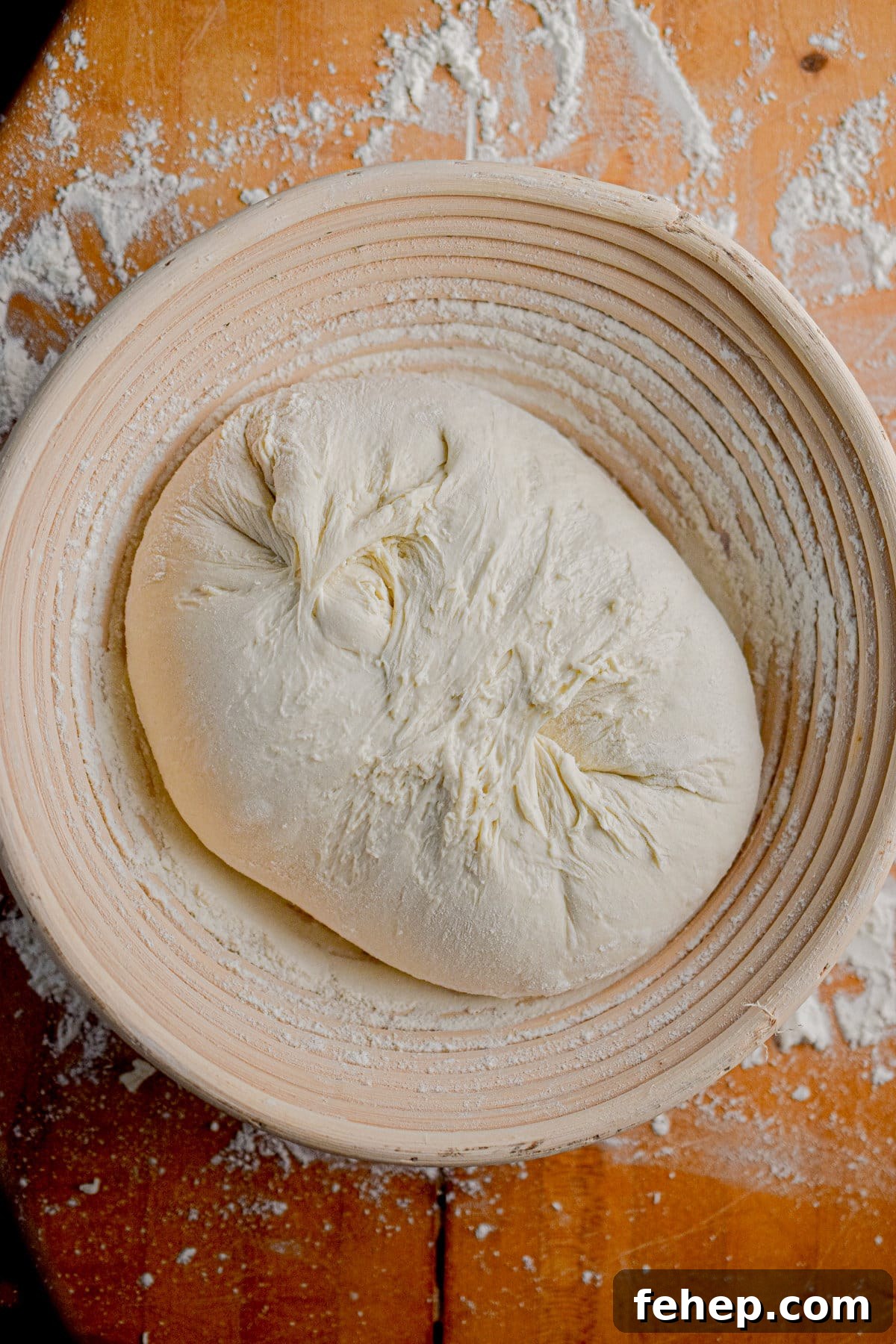
Step 6: Preheat the oven to 450°F (230°C) with the Dutch oven inside. When hot, place the dough on parchment, score a deep slash across the top, carefully transfer it into the preheated Dutch oven, and cover.
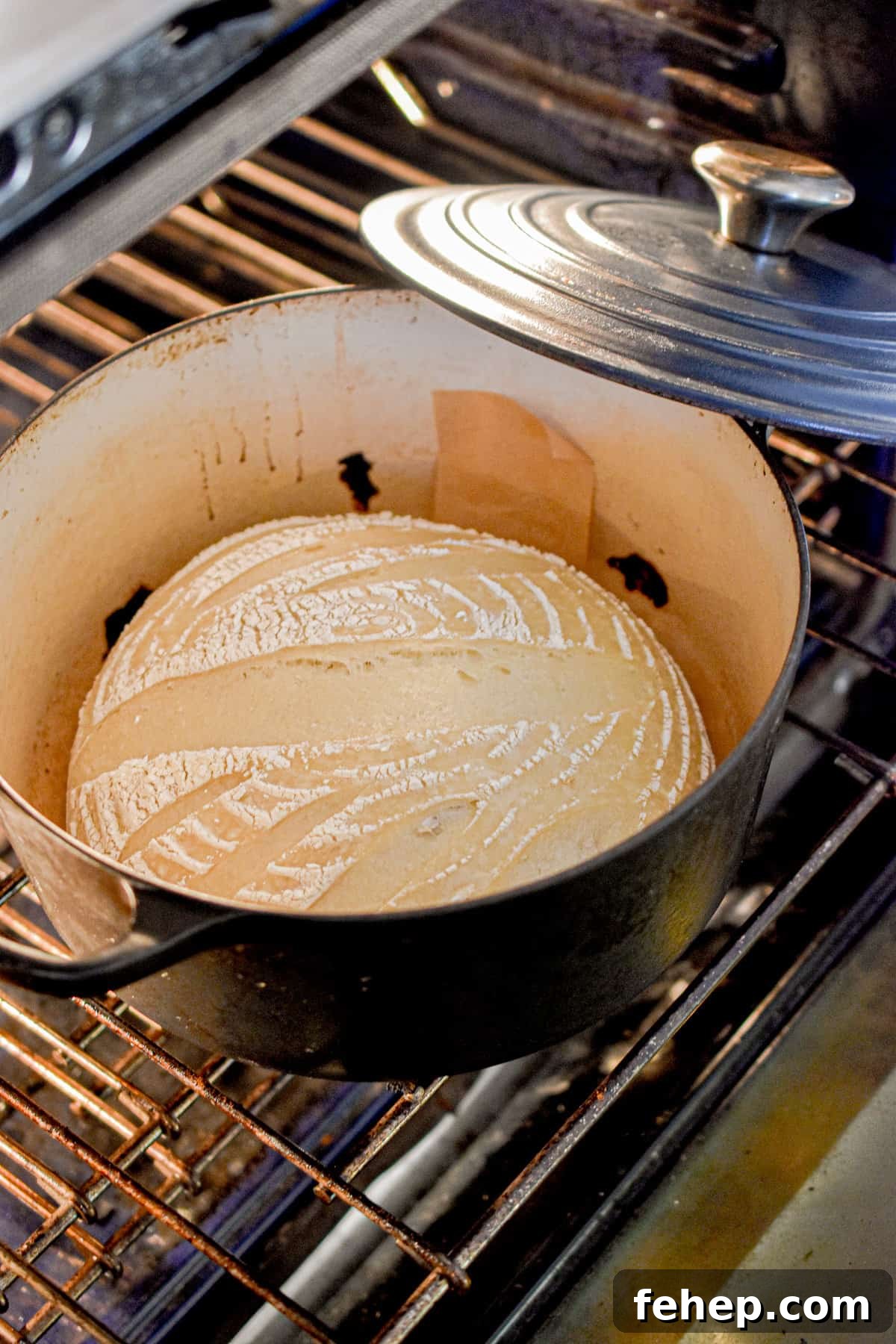
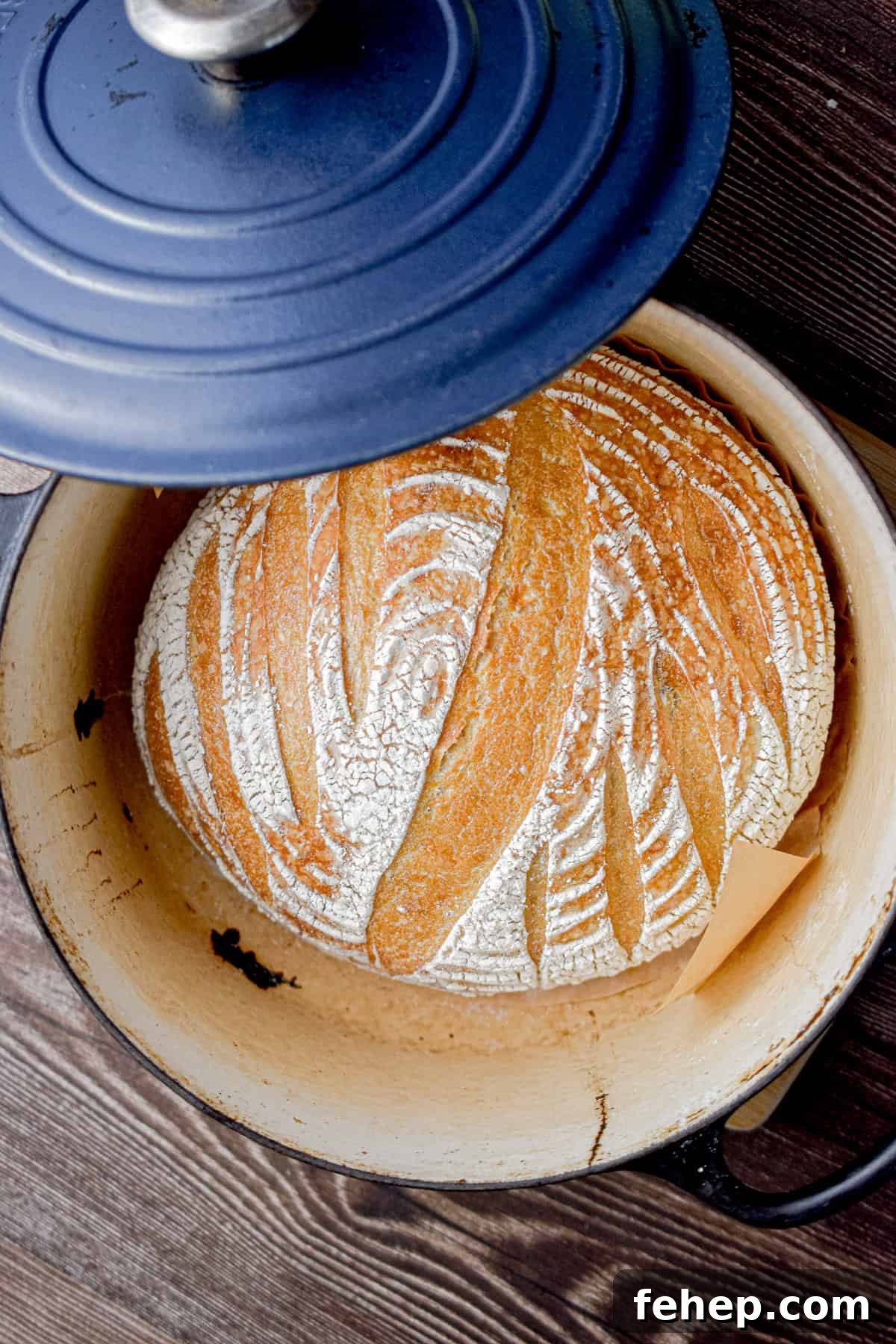
Bake covered for 30 minutes, then uncover and bake another 30 minutes or until the crust is golden and the loaf sounds hollow when tapped on the bottom. Let the bread cool fully before slicing for best texture.
Tips and Tricks
- Starter readiness: Use a fed, bubbly starter. Do the float test by dropping a small spoonful of starter into water — if it floats, it’s ready.
- Watch room temperature: Cooler temperatures slow fermentation; warmer temperatures speed it up. Adjust timing accordingly.
- Score deeply: A deep score gives the loaf a controlled place to expand and improves the final appearance.
- Be patient: Sourdough baking involves learning and occasional variations. Loaves can behave differently day to day based on starter activity and temperature.
Sample Baker’s Schedule
- 8:00 pm – Mix dough; rest 1 hour.
- 9:00 pm – First stretch-and-fold.
- 9:30 pm – Second stretch-and-fold.
- 10:00 pm – Final stretch-and-fold; bulk ferment overnight.
- 7:00 am – Shape into a boule and place in proofing basket; refrigerate covered.
- 8:00 am – Preheat oven with Dutch oven inside.
- 8:30 am – Bake for about 1 hour (30 min covered, 30 min uncovered).
How to Store Dutch Oven Sourdough
Keep leftover bread at room temperature in a plastic bag for a few days. For longer storage, freeze the cooled loaf in a resealable plastic bag for up to three months. Thaw at room temperature before serving.
Stale bread is useful too — use it for breadcrumbs or in stuffing recipes.
Troubleshooting
- Flat or dense loaf: Likely under- or over-fermented. Adjust fermentation time, temperature, or starter amount and be sure bulk fermentation allows for proper dough doubling.
- Gummy crumb: Could be under-baked or over-hydrated. Confirm doneness using the tap test (hollow sound) or a thermometer (about 210°F/99°C internal).
- Excessive sourness: Caused by long fermentation or an older, very active starter. Shorten fridge time or reduce starter percentage.
- Poor oven spring: Improve gluten development with thorough stretch-and-folds, correct shaping, and proper proofing.
- Sticking to basket: Generously flour the banneton with rice flour or a flour mix to prevent sticking.
- Starter problems: Refresh with regular feedings, maintain a consistent schedule, and adjust hydration if needed.
Recipe FAQs
Stretch-and-fold builds gluten structure and helps distribute yeast and gases evenly without intensive kneading.
You would need a gluten-free starter and gluten-free flours formulated for bread to make an entirely gluten-free sourdough.
Yes — you can retard the shaped dough in the refrigerator for up to 24 hours. Keep it covered and bake when you’re ready.
📖 Recipe
How to Bake Sourdough in a Dutch Oven
Equipment
- Kitchen scale
- Mixing bowl
- Dutch oven with lid
Ingredients
- 375 g filtered water
- 85 g active sourdough starter
- 15 g salt
- 500 g bread flour (or all-purpose)
Instructions
- In a large bowl, combine the water and sourdough starter. Mix until the starter dissolves into the water.
- Add the flour and salt, mixing until a shaggy dough forms.
- Cover the bowl with a damp towel and let the dough rest for 1 hour.
- Perform a stretch-and-fold: pull one side of the dough up and fold it toward the center. Repeat on all sides. Repeat this routine three more times, then cover and let the dough bulk ferment overnight (about 8–10 hours) depending on temperature.
- On the next day, flour your work surface, turn out and shape the dough into a tight boule. Place it in a floured proofing basket and refrigerate covered for at least 1 hour.
- Preheat the oven to 450°F (230°C) with the Dutch oven inside. Place the dough on parchment, score a deep slash on top, and carefully transfer it into the hot Dutch oven.
- Bake covered for 30 minutes, then uncover and bake an additional 30 minutes until golden brown. Remove and cool completely before slicing.
Notes
- Make sure your starter is active and bubbly before mixing. Feed it ahead of time for best results.
- Bread flour gives more structure, but all-purpose flour works if that’s what you have.
- Use a kitchen scale for consistent and accurate measurements.
|
Carbs: 45 g
|
Protein: 7 g
Nutrition info is an estimate.
Tried this recipe?Share your results and tips with other bakers.